Straight answer · 3 min read
Do You Handle the Cost-Share Paperwork?
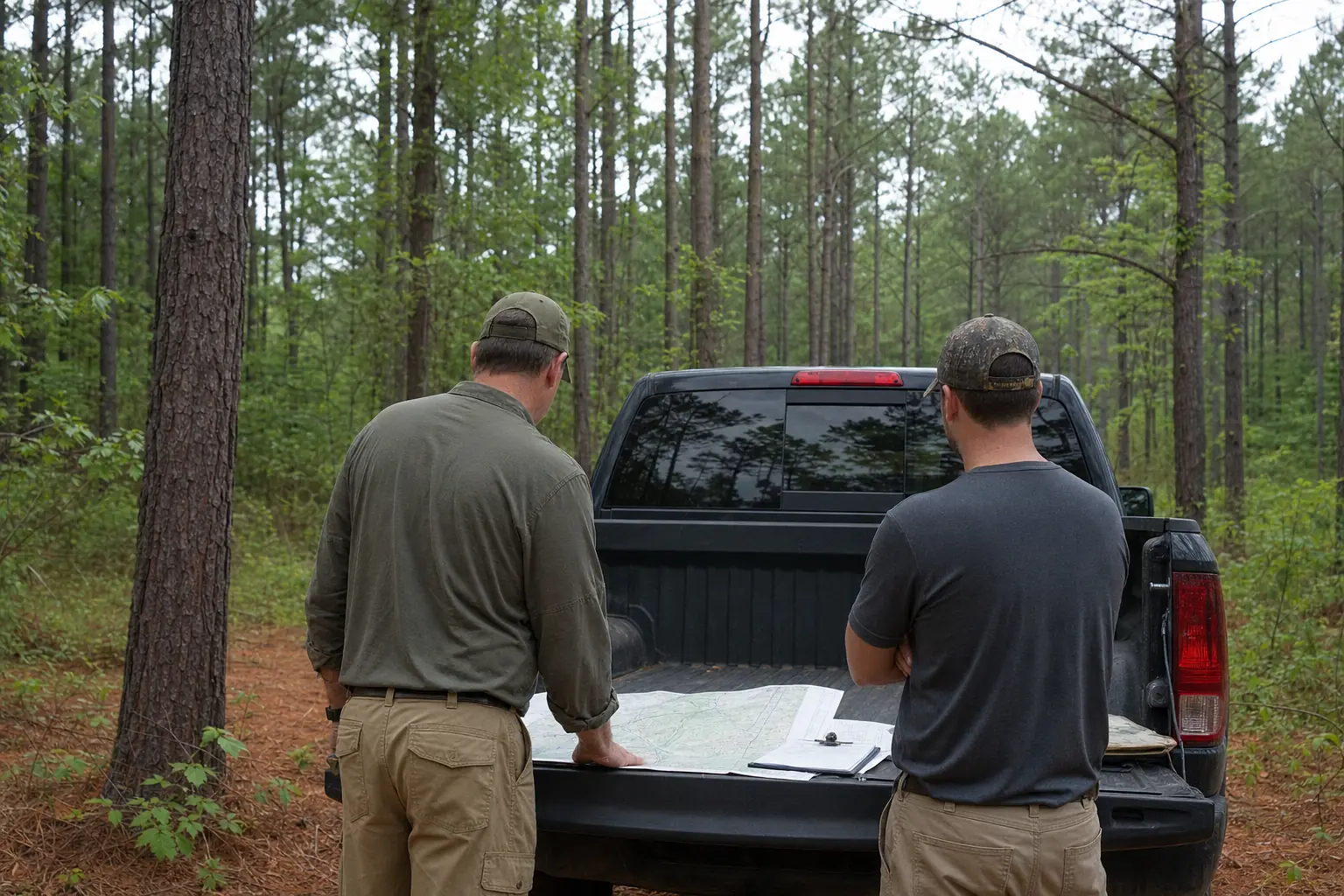
Part of it. You file the application and the claim as the landowner, with the Georgia Forestry Commission or, for EQIP, your USDA Service Center. We handle the paperwork on the land side: the measured acres and map, a quote itemized by practice, the current terms confirmed with the program office, and itemized invoices and photos for your claim.
Landowners ask this because the programs look like paperwork first and land work second. In practice the paperwork splits in two: the program’s forms belong to you, and the records that prove the work was done belong to whoever did it. We keep our part in order, because a claim is only as good as the records behind it.
What you file and what we prepare
| Document | Who prepares it | What it’s for |
|---|---|---|
| The application | You, the landowner | Filed with the Georgia Forestry Commission or the USDA Service Center |
| Measured acres and a stand map | Sawnee Land Clearing | Shows the forest acres, the stands and the treatment areas |
| Stand prescription | Your consulting forester, where the work needs one | Thinning targets, marked trees, streamside zones |
| Quote itemized by practice | Sawnee Land Clearing | Matches the scope in your application to the work |
| Current terms, confirmed | Sawnee Land Clearing, with you and the program office | Rates, minimums and dates checked before you file |
| Invoices itemized by practice | Sawnee Land Clearing | Acres or feet of each practice, with dates |
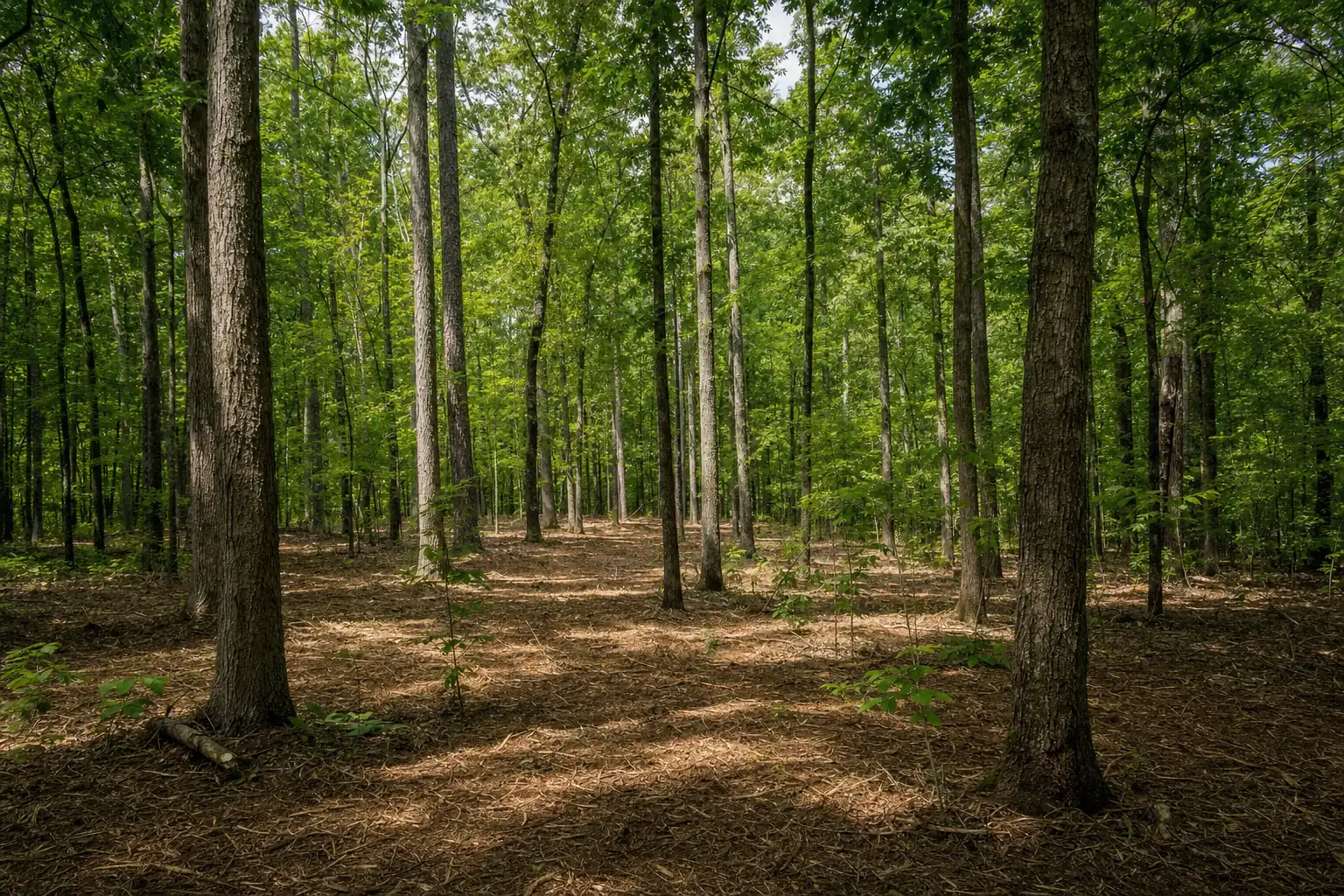
| Before-and-after photos | Sawnee Land Clearing | The stand before and after each practice |
| The claim | You, the landowner | Submitted to the program once the work is done |
Program figures and sign-up windows are set annually and are current as of November 4, 2026. We confirm every figure with the Georgia Forestry Commission or NRCS before any application. This page explains how programs work; it is not a guarantee of eligibility or reimbursement.
Every program sets its own forms and its own record rules, and they change. We confirm the current figures and what the office wants to see before any application.
What our invoices show
The invoice is the record a program office reads most closely. A single line reading “land clearing, 25 acres” doesn’t tell it which acres got which practice. Ours break the job out:
- Each practice on its own line. Understory mulching, thinning, firebreak and invasive treatment listed separately.
- Quantities. Acres for area work, linear feet for firebreaks.
- Dates. When each practice started and finished.
- Location. A map or sketch showing where each practice was done.
- Work outside the programs. A food plot or a woods road billed on separate lines, so it never gets mixed into the program file.
When each piece arrives
- 1After the walkMeasured acres, a stand map and notes on which practices the work corresponds to.
- 2Before you fileA quote itemized by practice, and the current terms confirmed with the program office.
- 3As each practice finishesDated photos and the invoice lines for that practice.
- 4At the finishThe full set, organized by practice, ready for your claim.
If a forester is involved, we send the same records to the forester for the stand file. See working with a consulting forester.
If you don’t live on the land
Plenty of forest land around Forsyth County belongs to owners who live in Atlanta or out of state, or to heirs who inherited a tract together. The paperwork works the same way for them. We walk the land with your forester or with you on a video call, send the map and the quote by email, and send dated photos as each practice finishes. You review and sign your own application and claim from wherever you are.
If several heirs own the land, settle who signs as the landowner before the program’s deadline. The office will want to know. More on that situation in estate and inherited property cleanup.
What we won’t do
We don’t sign or file the application or the claim. Those are the landowner’s. We don’t tell you whether you’ll be accepted; the program office decides. And we don’t put a reimbursement figure on a quote or an invoice. The programs pay by their own published schedules, never as a share of our price, and the office confirms your amount after you apply.
That line keeps your file clean. A contractor’s quote that promises a reimbursement is a promise the contractor can’t keep. The steps from first walk to claim are laid out in how the application works.
One contract, one set of records
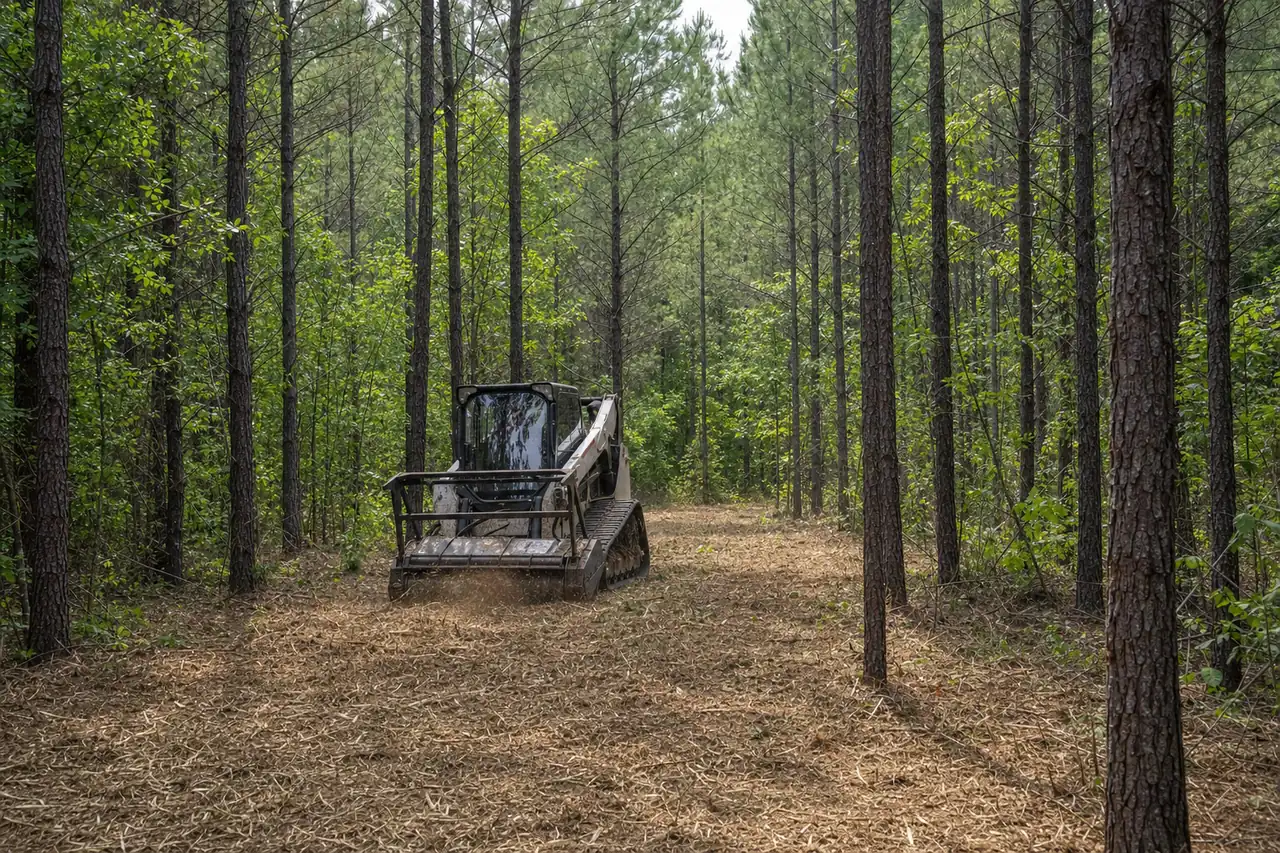
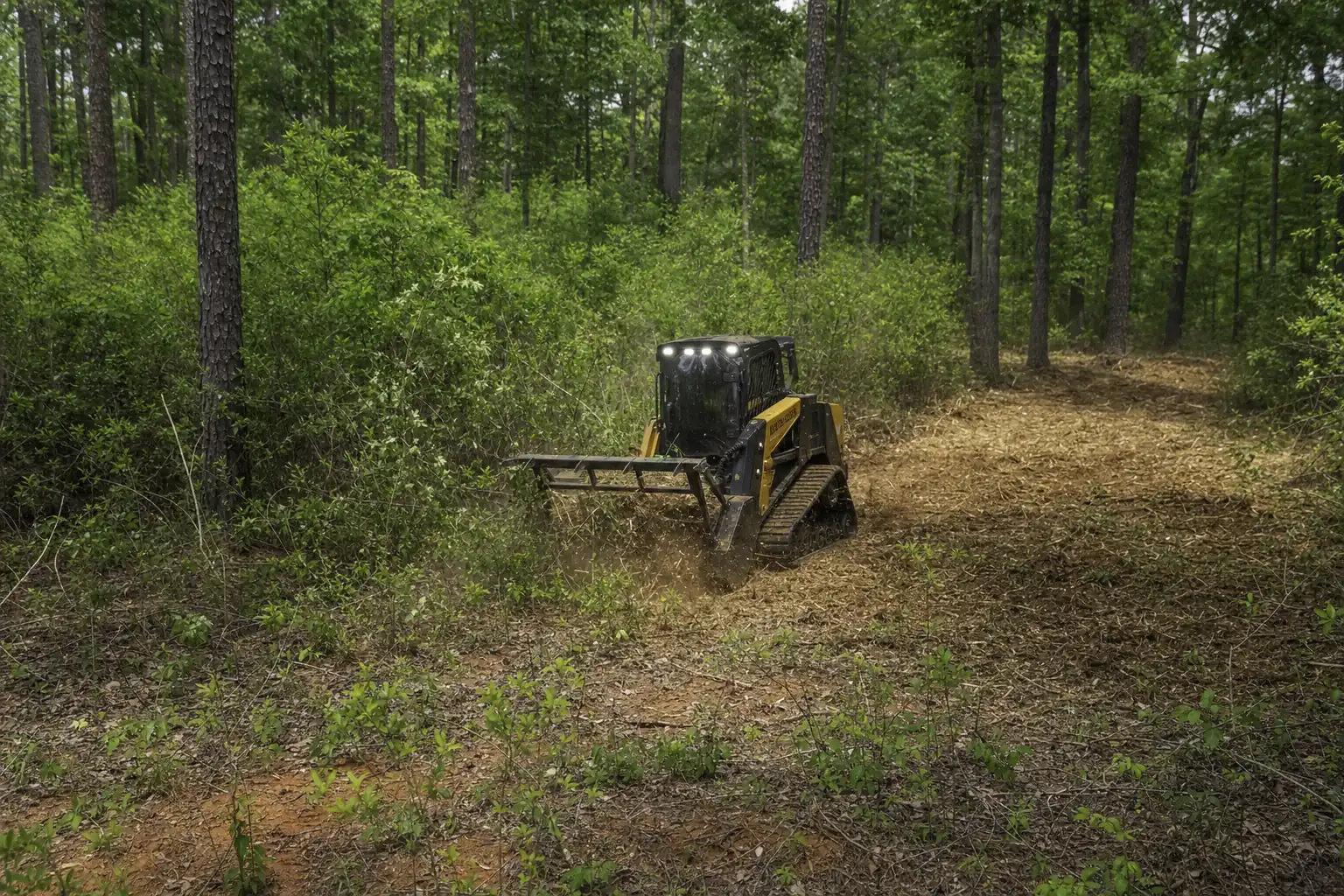
A conservation plan usually spans several practices: thinning, understory mulching, a firebreak, privet treatment. A single-machine operator does one of those and tells you to hire three companies for the rest, and then you’re collecting three sets of invoices in three formats for one program file. We run the whole plan on one contract, so the records come from one place, itemized by practice, in one format.
The work itself grows back in places. Mulched understory and thinned stands sprout hardwoods within a season or two, and firebreaks need mowing to stay open. The cost-share hub covers each program in brief.
FAQ
More about the paperwork
- Will you fill out the application for me?
- No. The application is the landowner's, and so is the signature. We give you what goes into it: the measured acres, a map of the stands and a quote with each practice on its own line, so your application describes the work exactly.
- Can you talk to the program office for me?
- We confirm current figures and terms with the program office before any application, and we're glad to be on the call with you. Decisions about your application stay between you and the office.
- What if the office asks for more records after the work?
- Send us the request. Our records for the job are organized by practice, with dates, maps and photos, so we can send what the office asks for.