Straight answer · 3 min read
When Is the Sign-Up Window for Georgia’s Forest Incentives Program?
Sign-up for Georgia's Resilient Forest Incentives Program runs June 15 to July 3. The Georgia Forestry Commission sets the dates each year and can change them, so we confirm them with the program office before you apply. The Invasive Plant Control Program and the Southern Pine Beetle Prevention Program set their own dates, and federal EQIP takes applications year-round.
The window is short, and the landowners who use the program are the ones who did their planning in the months before it opened. A landowner who first hears about the program after the window closes has to wait a year, so the useful question is less “when is it” than “what has to be done by then.”
Each program keeps its own calendar
| Program | When you apply |
|---|---|
| Resilient Forest Incentives Program | June 15 to July 3 |
| Invasive Plant Control Program | A yearly deadline set by the program; we confirm it before you apply |
| Southern Pine Beetle Prevention Program | Set by cycle, and it has moved between years; we confirm it before you apply |
| Federal EQIP | Year-round at the USDA Service Center, grouped by batching deadlines each fiscal year |
Program figures and sign-up windows are set annually and are current as of November 4, 2026. We confirm every figure with the Georgia Forestry Commission or NRCS before any application. This page explains how programs work; it is not a guarantee of eligibility or reimbursement.
The only date on this page we can confirm is the Resilient Forest Incentives Program window. Dates you find elsewhere online for the other two state programs may belong to an earlier cycle. We confirm every date with the program office before any application.
Work backward from the window
The application itself doesn’t take long. What takes time is knowing what to apply for: which acres, which stands, which practices. That work fits the months before the window.
- 1WinterWalk the land with us. Leaf-off shows the stands, the privet and the old roads.
- 2Early springBring in a forester if thinning or site prep is likely, and get the prescription written.
- 3SpringMatch the work to the program's practices and confirm the terms with the office.
- 4The windowYou file during June 15 to July 3, with our quote itemized by practice.
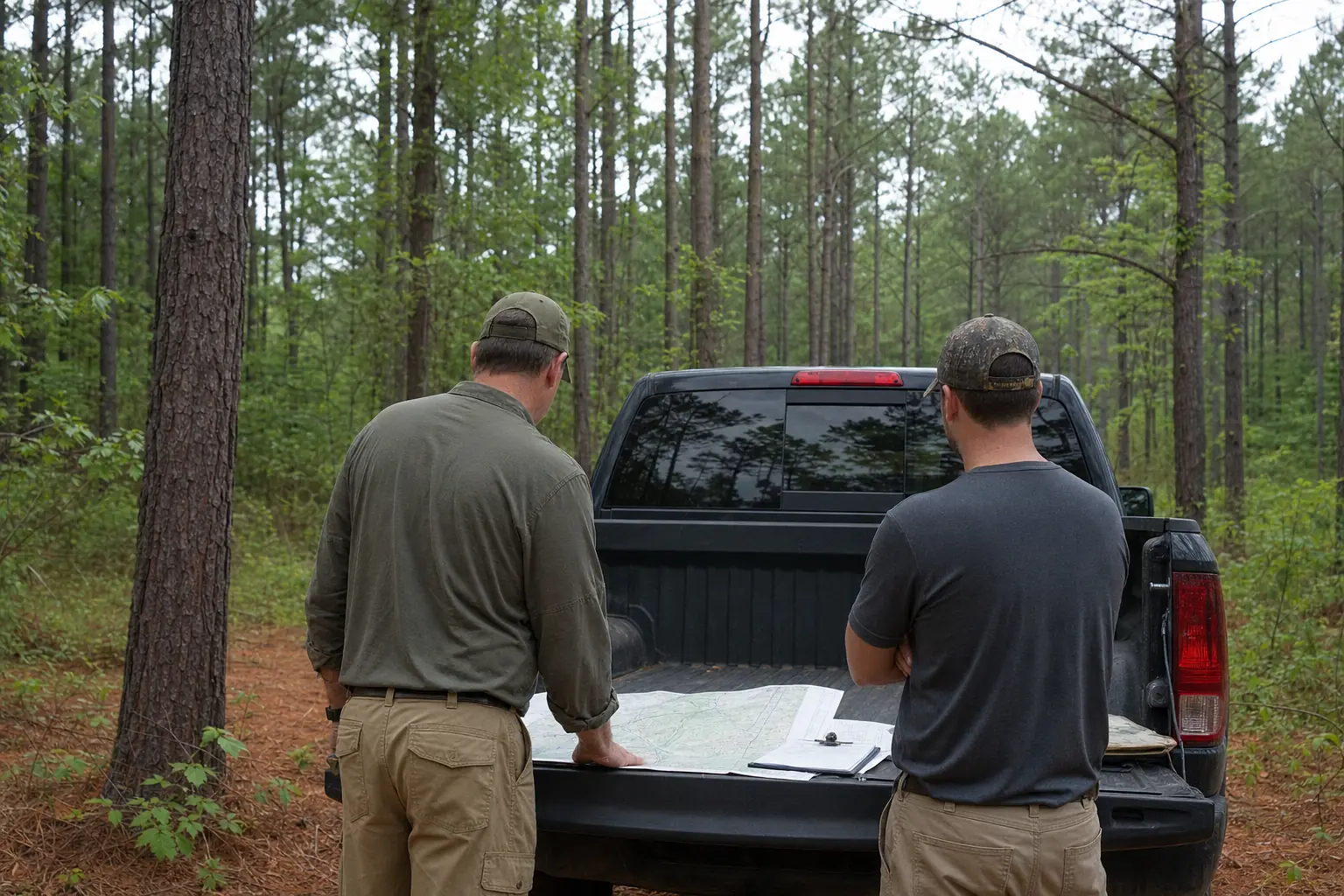
Winter is a good time for the first walk around Cumming. With the leaves down you can see how crowded a pine stand is, where the privet runs in the creek bottoms, and where rock and old fence sit before a machine finds them. See the best time of year to clear land.
What to have done by the window
- Forest acres measured, with each stand mapped
- A forester’s prescription, if the work includes thinning or site prep
- Each piece of work matched to a practice on the program’s schedule, and anything that doesn’t fit set aside
- Current rates, the minimum and the dates confirmed with the program office, with a dated note of the call
- A quote itemized by practice, so the scope in your application matches the work
We do the first, third and fifth with you on the walk and in the quote, and check the fourth with you and the office.
After the window closes
Once you’ve applied, the program office reviews the application and decides. The work follows acceptance. Ask the office how it treats any work started before then, since its rules on timing are the ones that count.
When you’re accepted, we schedule the work for dry ground. Tracked machines on saturated red clay leave ruts, so a wet stretch can move a start date. We keep each practice’s records as the work finishes: acres, dates, a map and photos for your claim.
If you missed it this year
- Plan for next year. Walk the land now, and have the plan and measurements ready long before the next window.
- Look at the other programs. Federal EQIP takes applications year-round. The Invasive Plant Control Program and the beetle program keep their own dates.
- Do the work outside a program. Some jobs shouldn’t wait, such as privet spreading down a creek or a beetle spot next door. The quote is priced on the work, never on a reimbursement, so it doesn’t change.
Brush and privet keep growing while you wait. Mulched ground also comes back within a season or two, so any plan, program or not, should include maintenance mowing or a follow-up pass.
One plan, ready for the window
A plan worth filing usually covers several practices: understory mulching, thinning, a firebreak, privet treatment. A single-machine operator can quote one of those and tells you to hire three companies for the rest, which is hard to line up before a short deadline. We price the whole plan on one contract, itemized by practice, so your application describes the work exactly. You apply as the landowner, and we do the work and keep the records. Start with the program guide, how the application works or the cost-share hub.
FAQ
More about sign-up dates
- Does the window change every year?
- It can. The Georgia Forestry Commission sets the dates for each year's sign-up, so a date you read online may be last year's. We confirm the current window with the program office before you apply.
- Can the work start before I'm accepted?
- Ask the program office first. Its rules on timing decide whether work done before acceptance can be claimed. We schedule program work after acceptance unless the office tells you otherwise.
- When should I call you?
- In winter or early spring. That leaves time to walk the land, bring in a forester if the stand needs one, match the work to the program's practices and confirm the terms before the window opens.
- Is there a sign-up window for EQIP?
- Not in the same way. NRCS takes EQIP applications through the year at your local USDA Service Center and groups them by batching deadlines it sets each fiscal year. Ask the Service Center for the next one.