Straight answer · 4 min read
Is Bradford Pear Invasive in Georgia and Should I Remove It?
Yes. Bradford pear is a variety of Callery pear, and Callery pear is on the target list of Georgia's Invasive Plant Control Program. One ornamental tree in a yard is a tree service job. Wild Callery pear spreading through old fields, fence rows and road frontage on acreage is land work: mulch it in place, then treat the sprouts.
Pear filling your field? A plan in one business day.
Bradford pear was the street and subdivision tree of choice across Georgia for decades, and plenty of Forsyth County yards still have one. The trouble starts with what that tree’s offspring are doing in the old field down the road.
How a yard tree turns into a thicket
Bradford pear is one variety of Callery pear. Once other Callery pear varieties were planted nearby, the trees began cross-pollinating and setting small fruit. Birds eat the fruit and drop the seed along fence rows, field edges and road frontage, and the seedlings grow into wild Callery pear: thorny, dense and fast to take over open ground.
That’s the plant Georgia treats as invasive. Callery pear is on the target list of Georgia’s Invasive Plant Control Program, alongside privet, kudzu and wisteria.
Program figures and sign-up windows are set annually and are current as of November 4, 2026. We confirm every figure with the Georgia Forestry Commission or NRCS before any application. This page explains how programs work; it is not a guarantee of eligibility or reimbursement.
How to spot wild Callery pear
- White bloom in early spring. Wild pear covers itself in white flowers before most trees leaf out. On a drive along road frontage in early spring, the white patches in the old fields are hard to miss.
- Thorns. The planted Bradford pear is smooth. Its wild offspring often carry stiff thorns on the branches, which make a thicket hard to walk through.
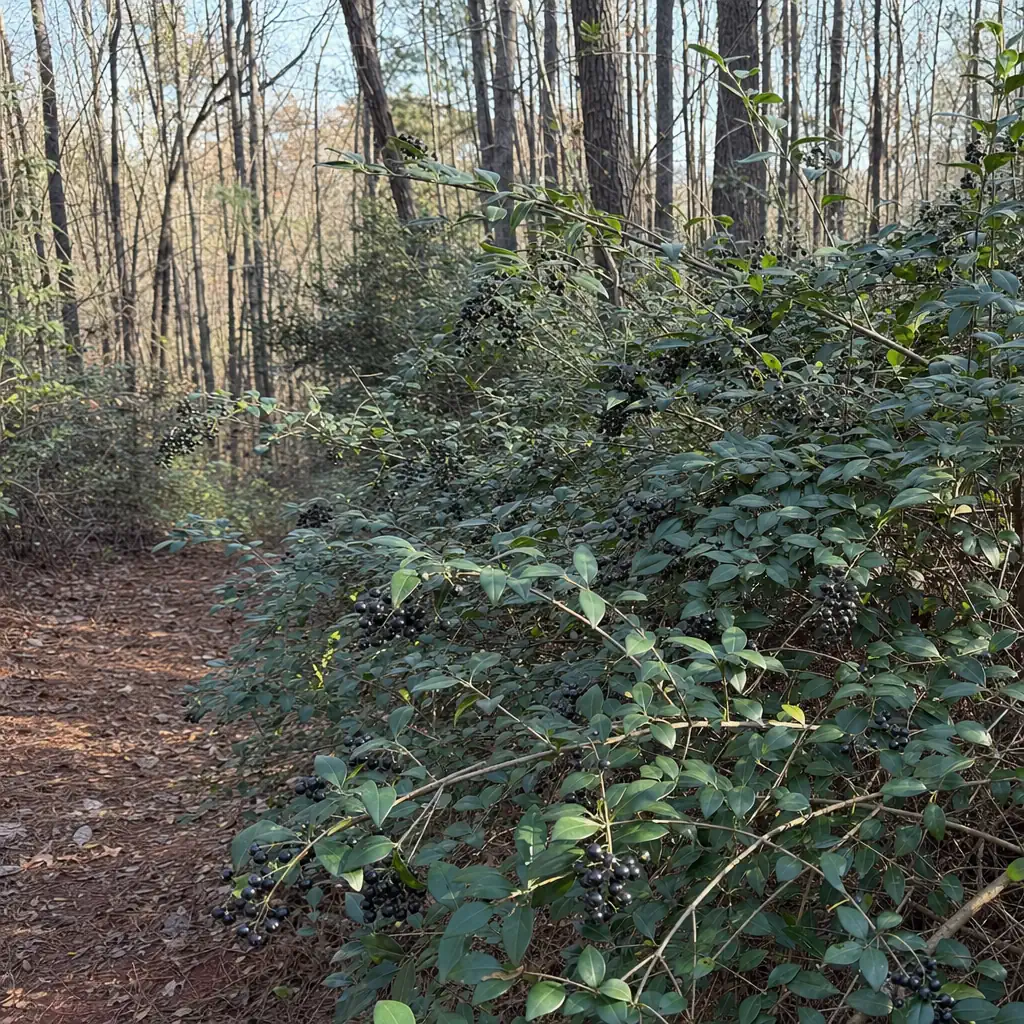
- Where it grows. Old pasture, fence rows, the edges of cleared lots and road shoulders, often mixed with privet, autumn olive and sweetgum.
- Glossy leaves that hang on. The leaves stay green late into fall, after many native trees have turned.
If a field on your land has gone white every spring for the last few years, that’s Callery pear filling it in. More on its neighbors in other invasive plants we clear.
Should you remove it?
| What you have | What usually fits |
|---|---|
| One Bradford pear in the yard | A tree service. We’re a land company and work in acres. |
| Wild pear filling an old field | Mulch it in place, then treat the sprouts. This is our work. |
| Pear along fence rows and frontage | Mulch the strip and treat the regrowth, often with the privet in it |
| Pear across forest land of ten acres or more | Ask about the state program before the work starts |
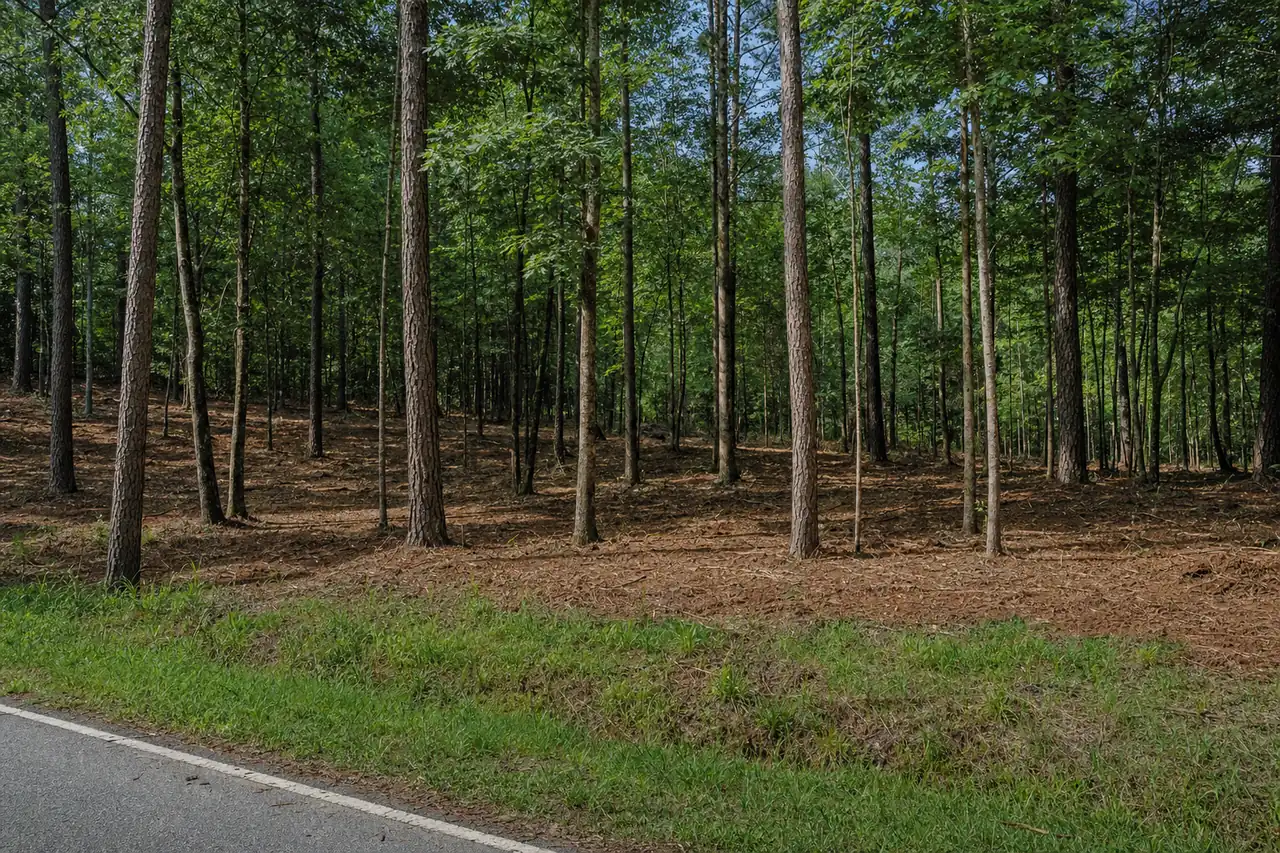
| Land going on the market | Clear the frontage so buyers see woods, not a white wall |
A single yard tree is your call. Wild pear spreading through acreage is worth dealing with early, while the stems are small and the thorny thickets haven’t closed in.
If you keep a yard tree, know what it does. Any planted pear that sets fruit is a seed source for the fields around it, including your own back acreage. Owners who are clearing wild pear off their land often take the yard tree out at the same time, so the field doesn’t refill from the yard. That part goes to a tree service; the acreage comes to us.
How we remove it on acreage
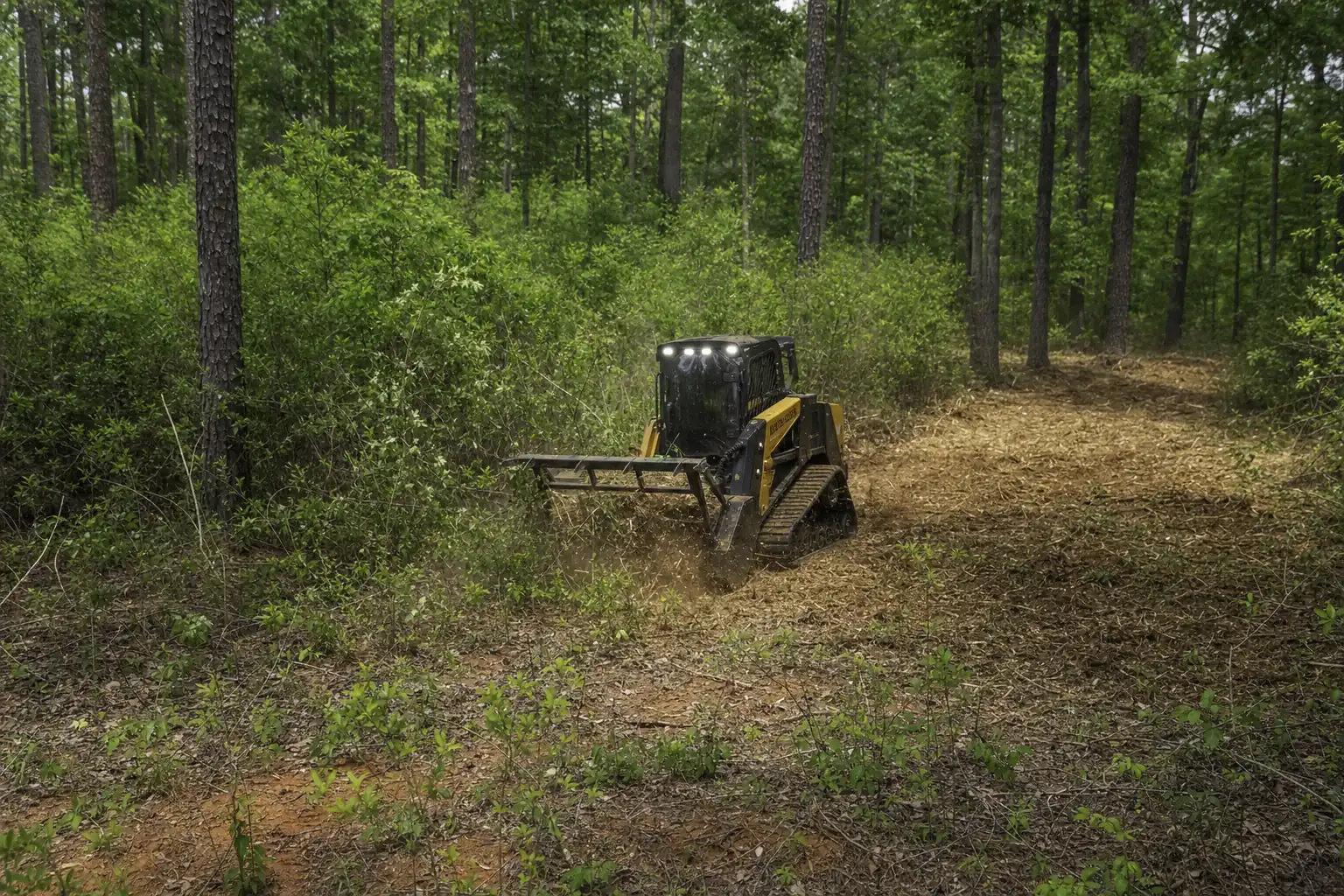
Wild Callery pear handles like other woody invasives. A forestry mulcher grinds the thicket where it stands and leaves the chips on the ground, with no burn pile and no haul-off. Bigger trunks get felled first. Pear resprouts from the stumps and roots, so licensed applicators treat the regrowth afterward, following the product label.
Herbicide applications are performed by licensed applicators in accordance with the product label.
On most old fields around Cumming, pear, privet and saplings under 4 inches mulch at about $1,200 to $2,500 an acre. Fields where the pear has grown into trees 4 to 8 inches across run about $2,500 to $4,000. Small jobs carry a $1,200 to $2,000 minimum, and treatments are quoted on top.
Ranges are estimates for Forsyth County and the surrounding area based on job density, terrain, access and acreage. Your written quote is the only price that applies to your property.
Georgia’s program and what it needs
The Invasive Plant Control Program reimburses private forest landowners for invasive control that combines mechanical treatment with herbicide. It has an ownership minimum the Georgia Forestry Commission confirms and a treatment area of at least three acres, and it caps reimbursement per landowner. It pays by its own rules, and the program office decides whether a job fits. We confirm the current terms with the program office before any application. See does Georgia pay for invasive plant removal and the Invasive Plant Control Program.
After the pear is gone
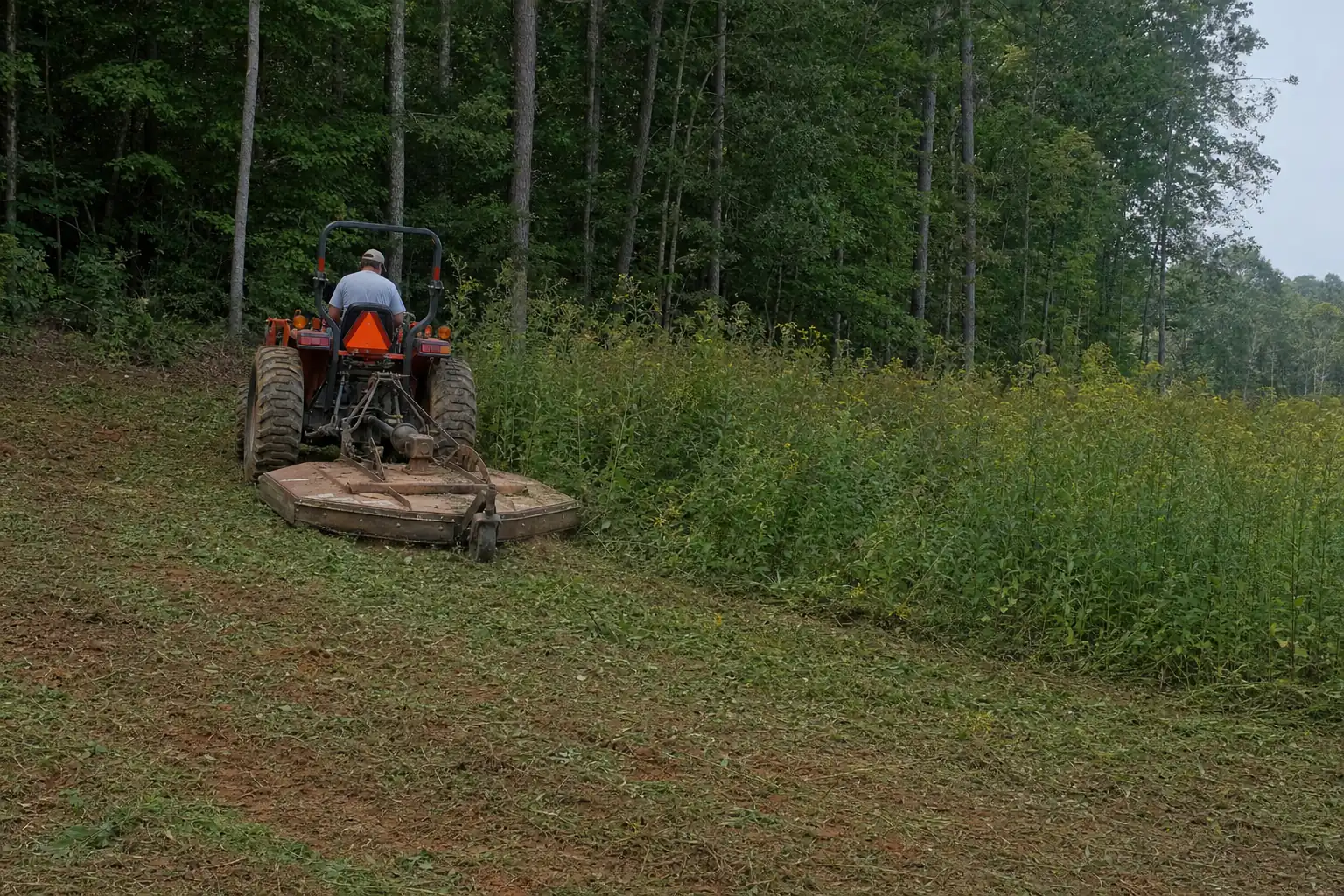
Seed in the soil and fruit from pear trees nearby keep seedlings coming for a while, so plan on a walk each spring, when any survivor shows white. Sweetgum and briars move into the open ground too. Mowing once or twice a year keeps a field open; see maintenance mowing. For land headed to market, land for sale preparation covers the frontage work, and the invasive plant removal hub covers the rest.
FAQ
More about Bradford and Callery pear
- Does cutting down a Bradford pear kill it?
- Usually not. Callery pear resprouts from the stump and roots. On acreage, the regrowth gets treated by licensed applicators after the mulching pass so it doesn't come back as a thicket.
- Why are there white-flowering trees all over the old fields?
- That's wild Callery pear. Birds spread the seed from planted pears, and the seedlings fill open ground fast. The white bloom in early spring is the easiest way to see how far it has spread.
- Will you remove one Bradford pear from my yard?
- That's a job for a tree service. We work in acres: old fields, fence rows and frontage where wild pear has taken over, usually mixed with privet.