Privet & Invasives · 6 min read
How to Spot Chinese Privet in Winter (and Why Winter Is the Time)
Chinese privet is semi-evergreen, so from December through February it is the green layer still in leaf under the bare hardwoods across Forsyth County. A winter walk shows where it grows and how far it has spread. Winter is also when it gets treated: Georgia forestry guidance puts the dormant-season window at November through February.
Found privet this winter? A plan in one business day.
The green band you notice in January
A lot of privet calls start the same way. Someone drives the county road past their back acres in January, the oaks and sweetgums are bare, and along the creek or the old fence row there is a band of green about head high. It was there all summer. In summer it blended into everything else.
That band is almost always Chinese privet. Winter is the one season when it gives itself away from the road, and it happens to be the season when it should be treated. If you own wooded land around Cumming and have wondered whether privet has moved in, the next few weeks are the time to find out.
Why privet stays green when the woods go gray
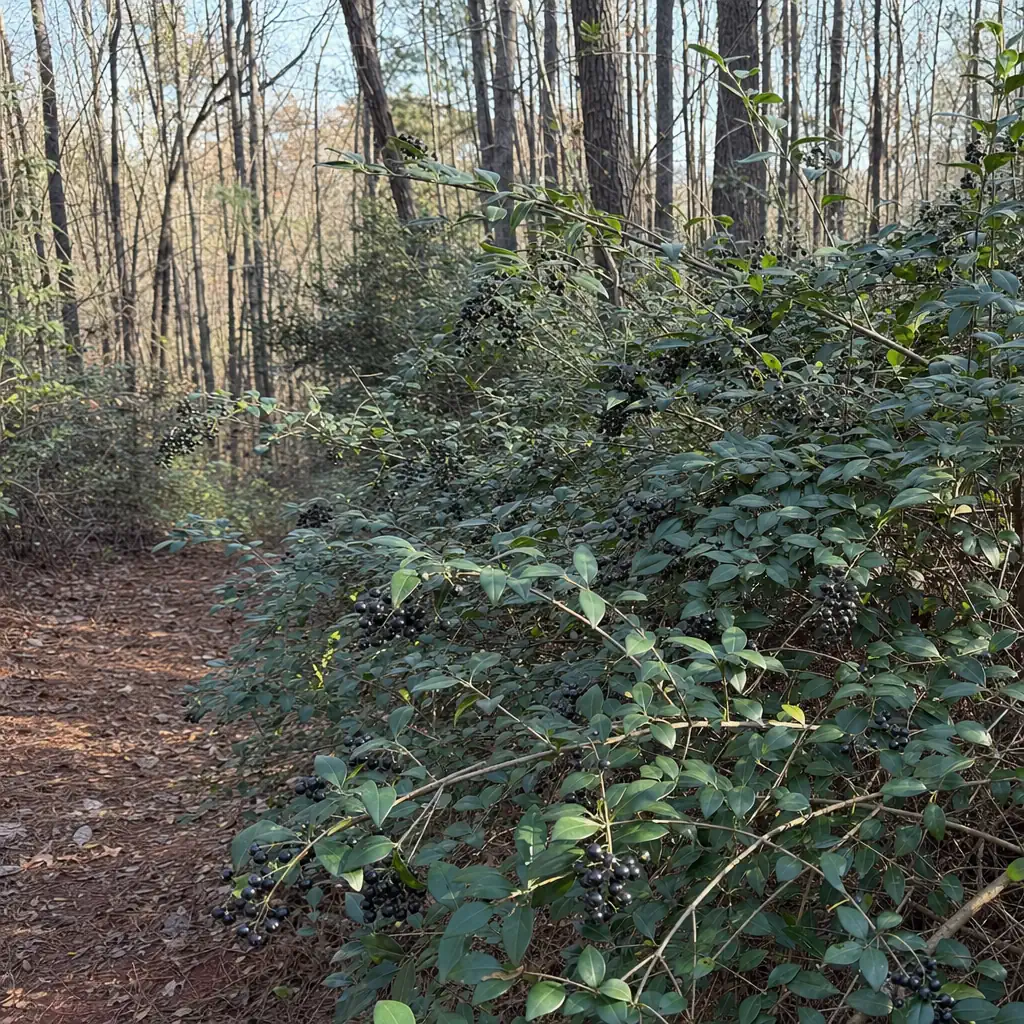
Privet is semi-evergreen. Through a North Georgia winter it holds most of its small oval leaves while the native shrubs and young hardwoods around it drop theirs. Its clusters of dark purple to black berries hang on into winter too. Stand at the edge of the woods in December and the understory reads in two colors: gray stems and brown leaf litter, and a green layer that doesn’t belong.
Up close, three things confirm it. The leaves sit in opposite pairs along the twig, two at each joint. The plant grows as a clump of many smooth gray-brown stems from one base. The berries come in clusters. Two plants in the same woods can fool you from a distance. Japanese honeysuckle also stays green and has paired leaves, but it climbs and twines instead of standing on its own. American holly is evergreen, with stiff spiny leaves and red berries. Our guide to identifying Chinese privet covers the leaves, flowers and lookalikes season by season.
Where to look on a winter walk
Birds eat the berries and drop the seed wherever they perch, and privet handles shade and wet ground. That puts it in the same handful of places on most Forsyth County tracts.
| Where | What you see in winter | Why it’s there |
|---|---|---|
| Creek bottoms | A solid green layer along the flat beside the water | Shade, wet soil, and birds moving up and down the creek |
| Fence rows | A straight green line across an open or grown-up field | Birds sit on the wire and drop seed below it |
| The old house site | A dense patch near an old chimney, foundation or driveway | A hedge someone planted decades ago, now seeding the tract |
| Road frontage | A green wall along the ditch line | Sun at the edge and bird traffic along the road |
| Under the pines | Green between the ground and the lowest limbs | Privet tolerates the shade a pine stand casts |
Along Big Creek, Settingdown Creek and the branches that feed them, the creek bottoms are often the worst of it. Start there if your land has water on it, and plan on wet boots.
Mapping what you find
A winter walk can tell you more than whether you have privet. It can tell you how much, where the edges are, and how hard the job will be. You don’t need a forester for this part.
- 1Drive the edgesLook along the frontage and any field lines first, where the green shows from a distance.
- 2Walk the low groundFollow the creek or the wettest draw, where thickets run thickest.
- 3Flag the edgesTape or a phone map pin at the corners of each patch.
- 4Take three photosA wide shot, a shot of the stems from inside, and a twig close-up.
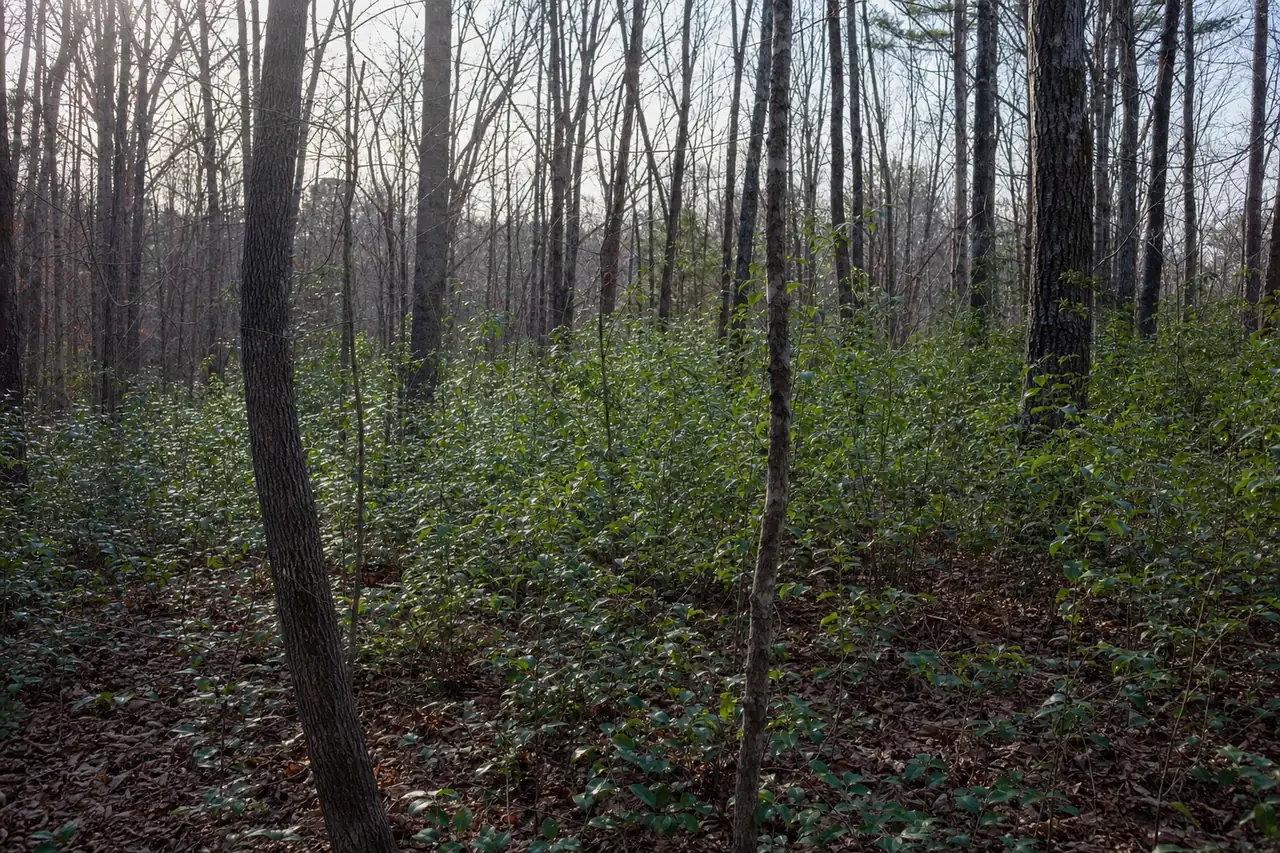
The photos matter more than people expect. The wide shot shows how tall and solid the thicket is. The stem shot shows whether you are looking at a few seasons of growth or privet grown up into small trees. The close-up settles whether it’s privet at all. If there is a creek, a ditch or a steep bank next to it, photograph that too. Water and slope change how the work runs and what the county requires near the stream.
Note roughly how many acres the patches cover. Density and acreage are the two things that set the price, and a rough outline from the owner saves time on our walk. What that comes to is in what privet removal costs per acre.
Why winter is also the treatment season
The same leaves that make privet easy to see make it easy to treat. Herbicide works through the leaves, and in winter privet is one of the few plants still carrying any. The native plants you want back are dormant and bare, so there is less of them in the way. UGA Extension names late fall as the best time to treat privet, and Georgia forestry guidance gives the dormant season, November through February.
Timing changes the result. In Forest Service trials, spring and fall treatment controlled nearly all the privet. Summer treatment, with everything in full leaf, left about a third of it alive.
What the timing research found
- Nov to Feb
- The dormant-season treatment window in Georgia forestry guidance
- 93 to 100%
- Privet control from spring and fall treatment
- 67 to 69%
- Privet control from summer treatment
Herbicide applications are performed by licensed applicators in accordance with the product label.
Licensed applicators do the treatment on our jobs, following the product label, including its rules near creeks. Our page on the best time of year to treat privet walks through the calendar season by season.
What a winter find turns into
What you found on the walk decides the next step, and not every patch needs a machine.
- Scattered plants. A few shrubs along a driveway or a fence with open ground around them can be treated standing, in the same winter window.
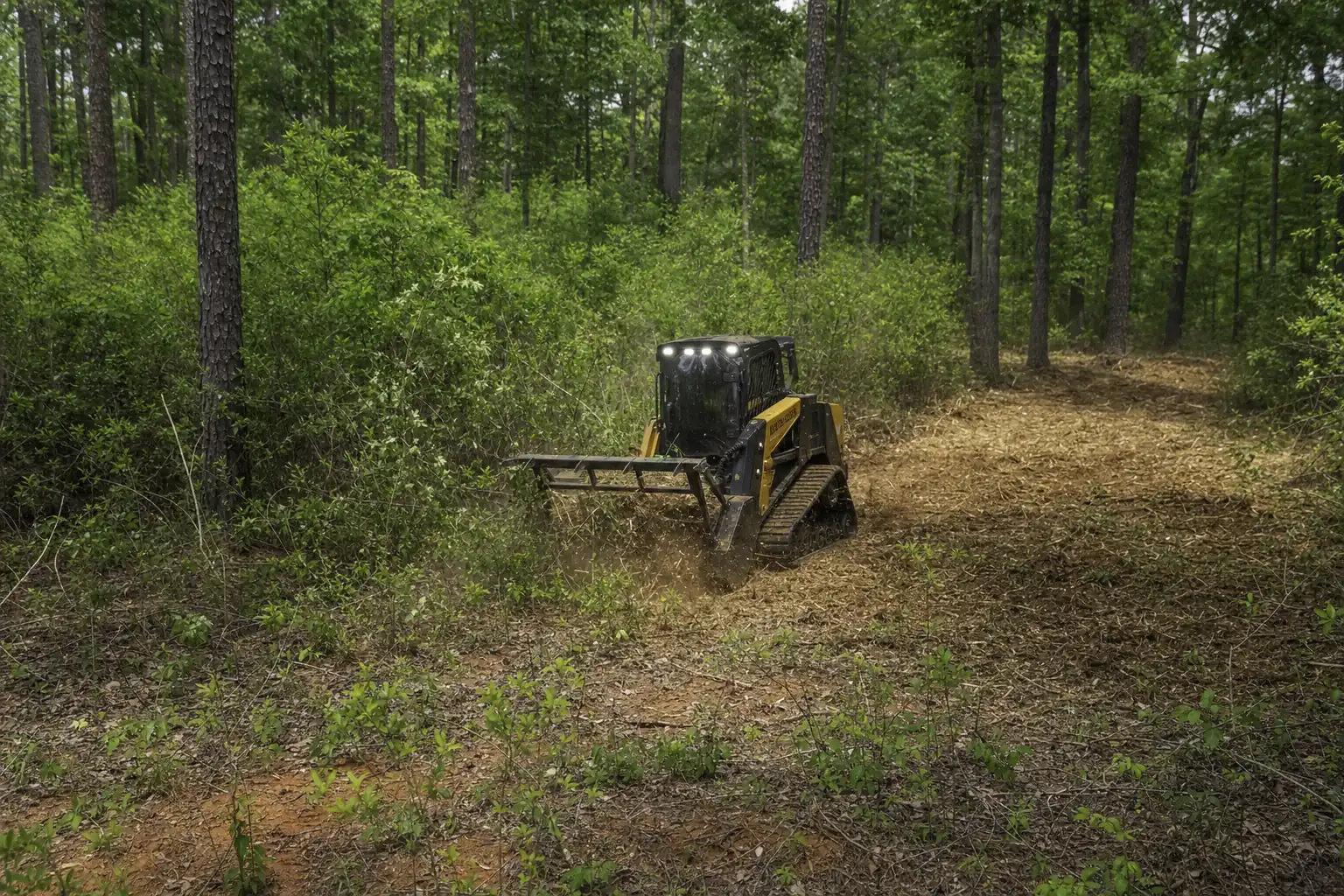
- A thicket. A head-high wall on acreage gets mulched in place first. Spraying a standing thicket leaves a dead brown wall you still can’t walk through.
- Privet along a creek. The work is planned around the stream buffers before anything starts. See privet removal along creeks.
A thicket runs on a longer calendar than people expect. The mulcher levels it, but the roots stay alive and send up an even flush of sprouts the next growing season. Those sprouts need to leaf out before they are treated, so the first treatment goes on the following fall or winter, and the second the season after. A thicket you find this January is often mulched this year and first treated next winter. Why cutting privet doesn’t work explains the roots.
One honest limit: winter is also when red clay stays wet. We don’t run tracked machines on saturated ground, so a rainy stretch can push a mulching date back a few weeks. The treatment calendar follows the regrowth, so a late start costs less than a rutted creek bottom.
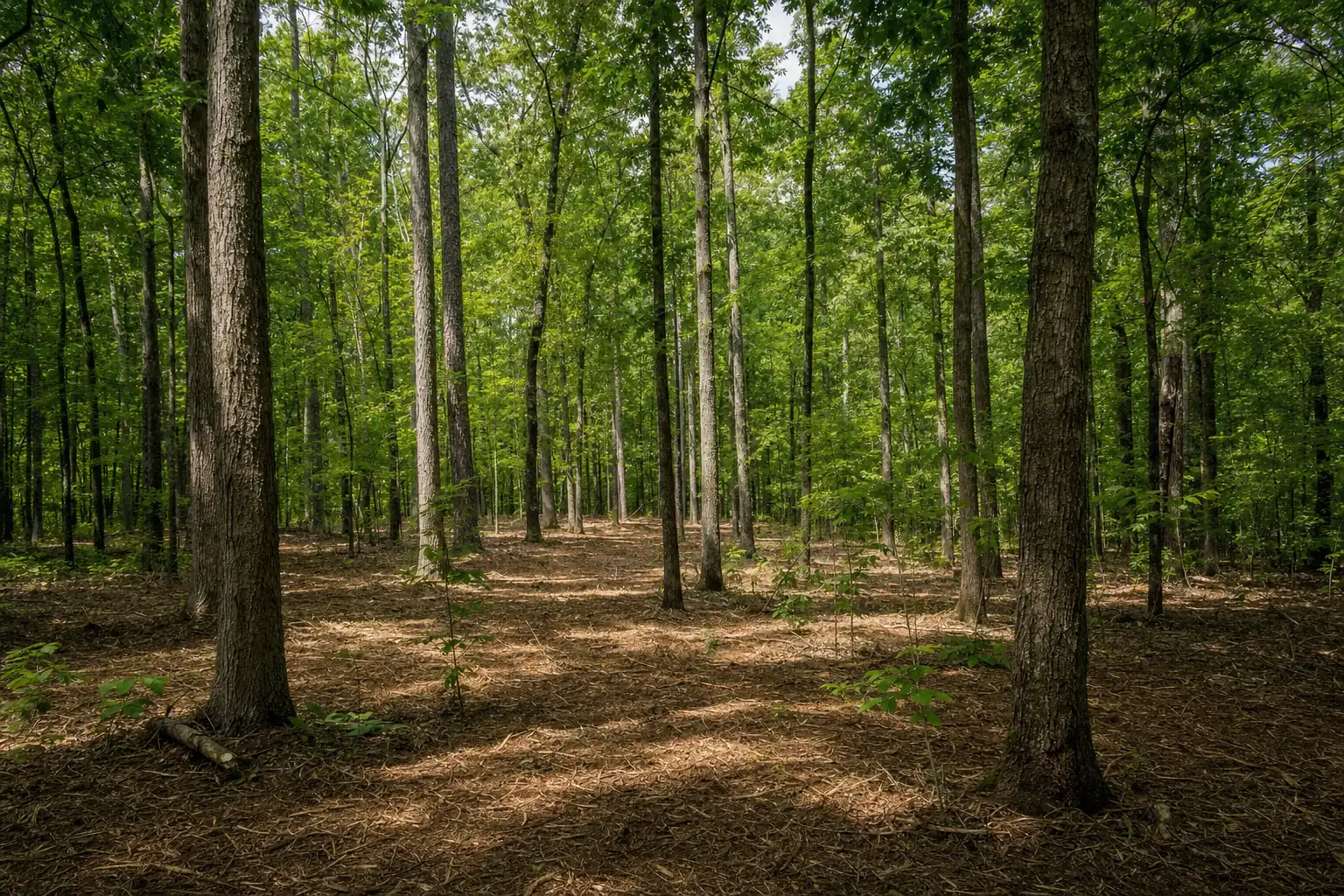
The pairing holds up over time. In a Forest Service study in North Georgia creek bottoms, privet that was mulched and then treated showed about 7 percent re-infestation after five years, and native plants covered about 70 percent of the treated plots against about 20 percent where privet stayed.
Next winter’s walk
Treatment kills the plants that are there. It doesn’t stop seed already in the soil or berries the birds carry in from the neighbor’s fence row, so seedlings show up the year after. The same green-in-winter cue makes them quick to find while they are small. A walk each December or January, with spot treatment where you find them, keeps a cleared tract clean.
Ground you want kept open also needs mowing once or twice a year, because sweetgum and briars move into the light where privet used to be. We set that up as maintenance mowing on the same contract. The full picture of privet, kudzu and the other invasives in the county is on our invasive plant removal page.