
Straight answer · 3 min read
Do I Have to Call 811 Before Land Clearing?
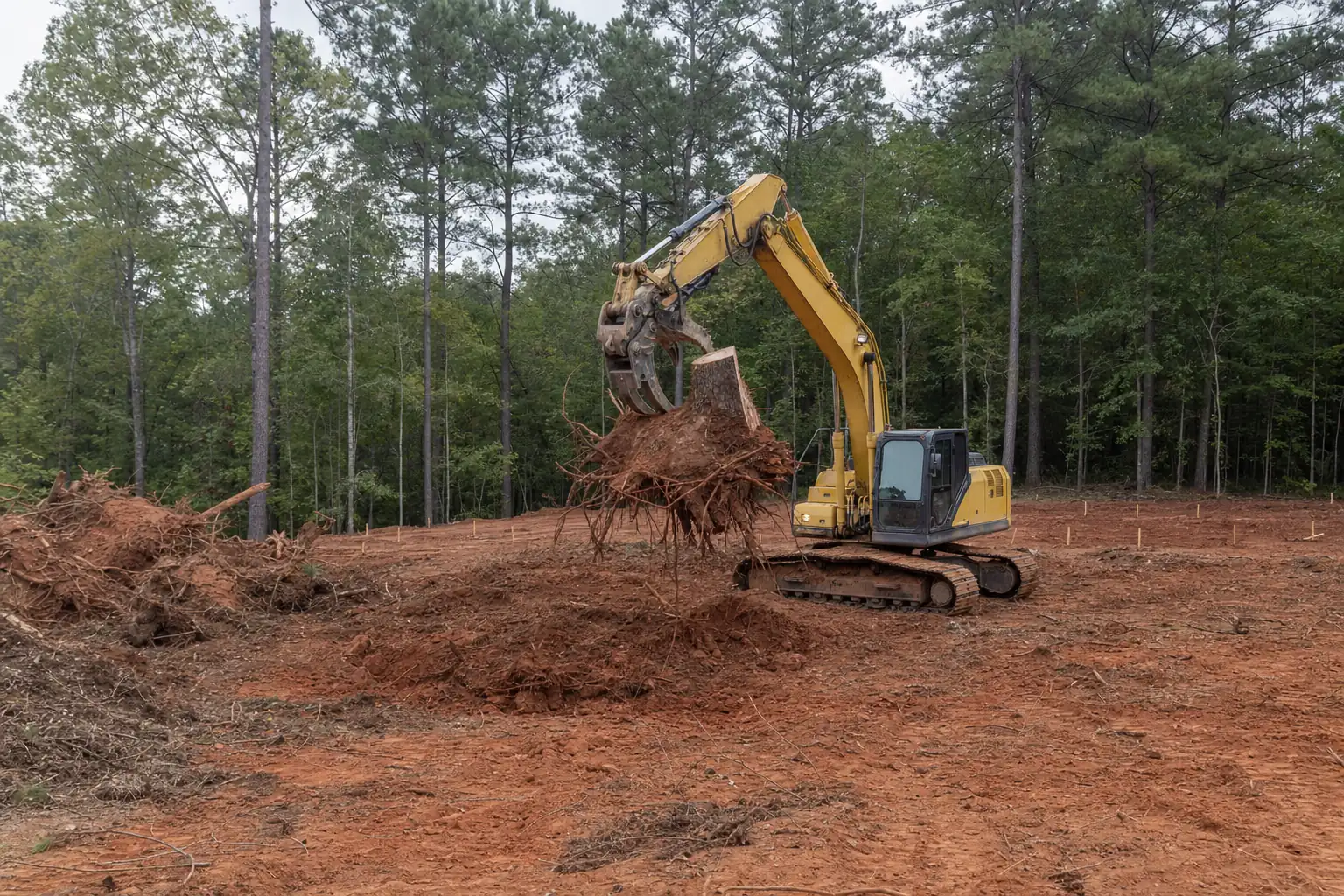
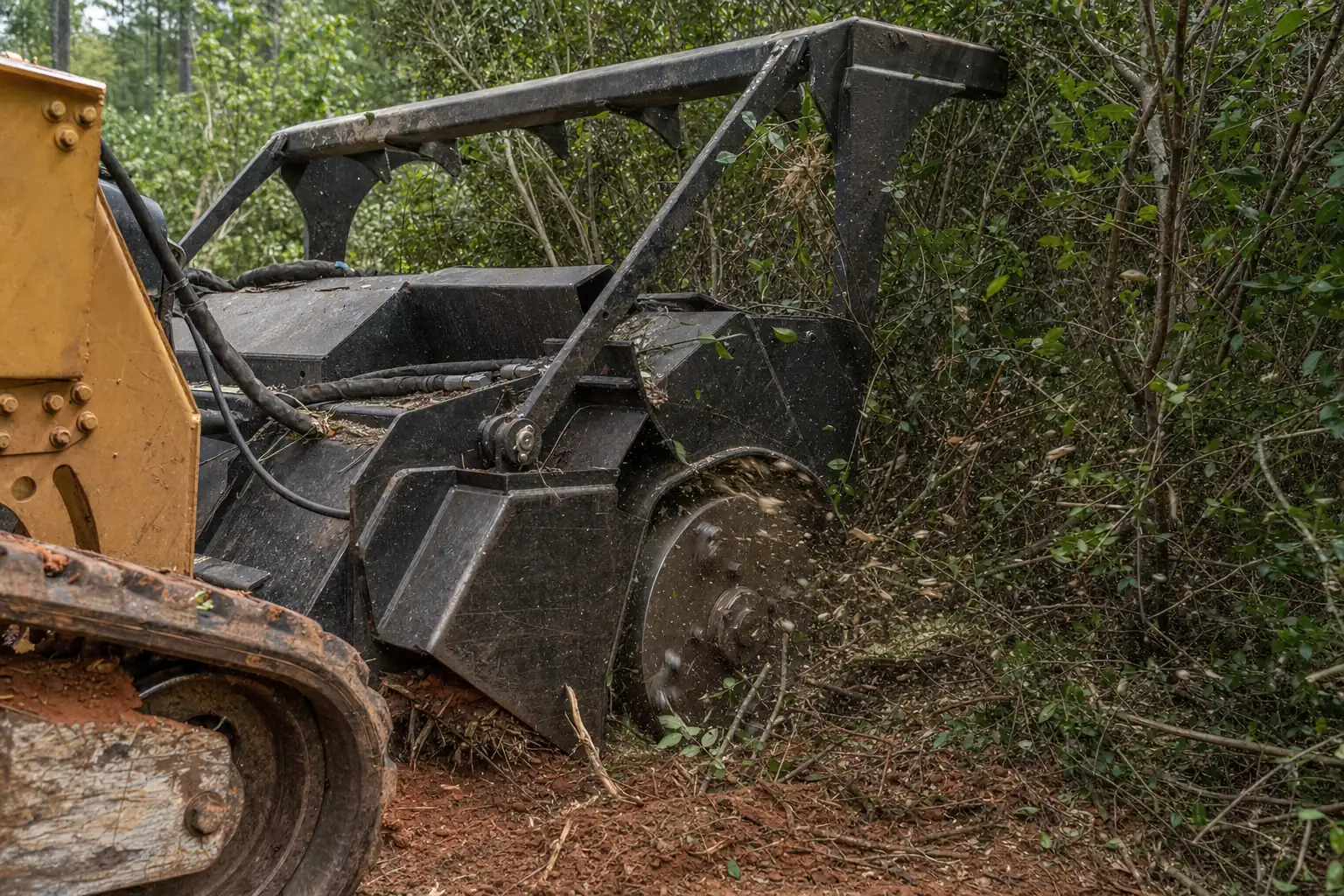
Yes, before any clearing work that moves earth. Georgia 811 asks for at least three business days' notice before mechanized digging, grading, boring or demolition, and a locate ticket stays valid for 30 days. We treat stump pulling, grubbing and grading as digging and call before them. Mulching standing brush works above the ground.
Clearing quoted, locates handled, in one business day.
Georgia 811 is the state’s one-call center for buried utilities. You file a locate ticket, and the utilities mark their lines before anyone digs. Land clearing sits in an odd spot with it. A forestry mulcher grinds brush above the ground, while a dozer pulling stumps or an excavator digging out a root ball moves earth like any other excavation.
What Georgia counts as digging
Georgia’s utility protection law defines excavating as any operation that uses mechanized equipment to move earth. Georgia 811 asks for notice before mechanized digging, grading, boring or demolition. On a clearing job, we sort the work this way:
| Work | Moves earth? | We call 811 first |
|---|---|---|
| Mulching standing brush and saplings | No, the head works above the ground | Not as excavation; we still ask about buried lines on the walk |
| Pulling stumps and grubbing | Yes, root balls come out with the soil around them | Yes |
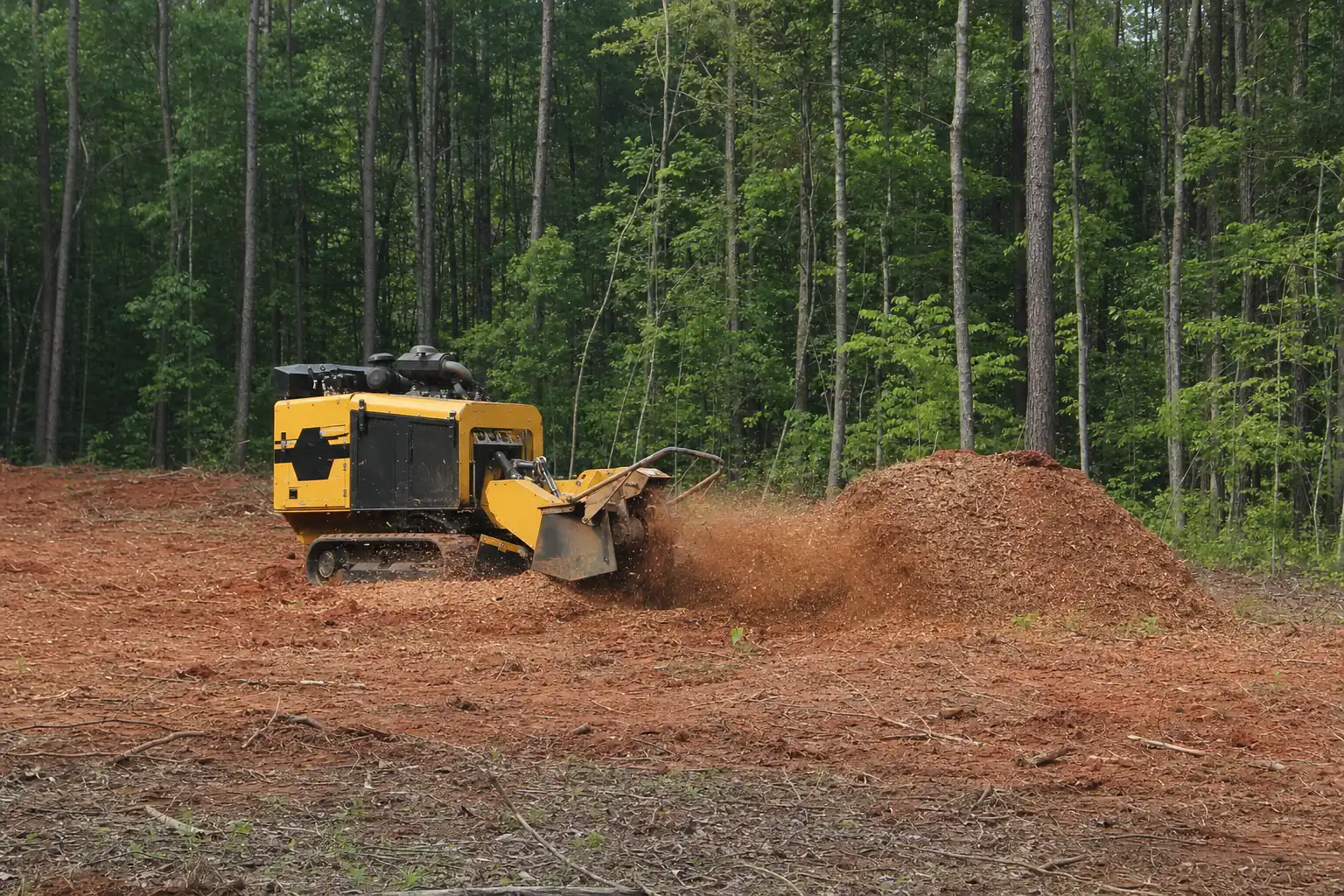
| Grinding stumps below grade | Yes | Yes |
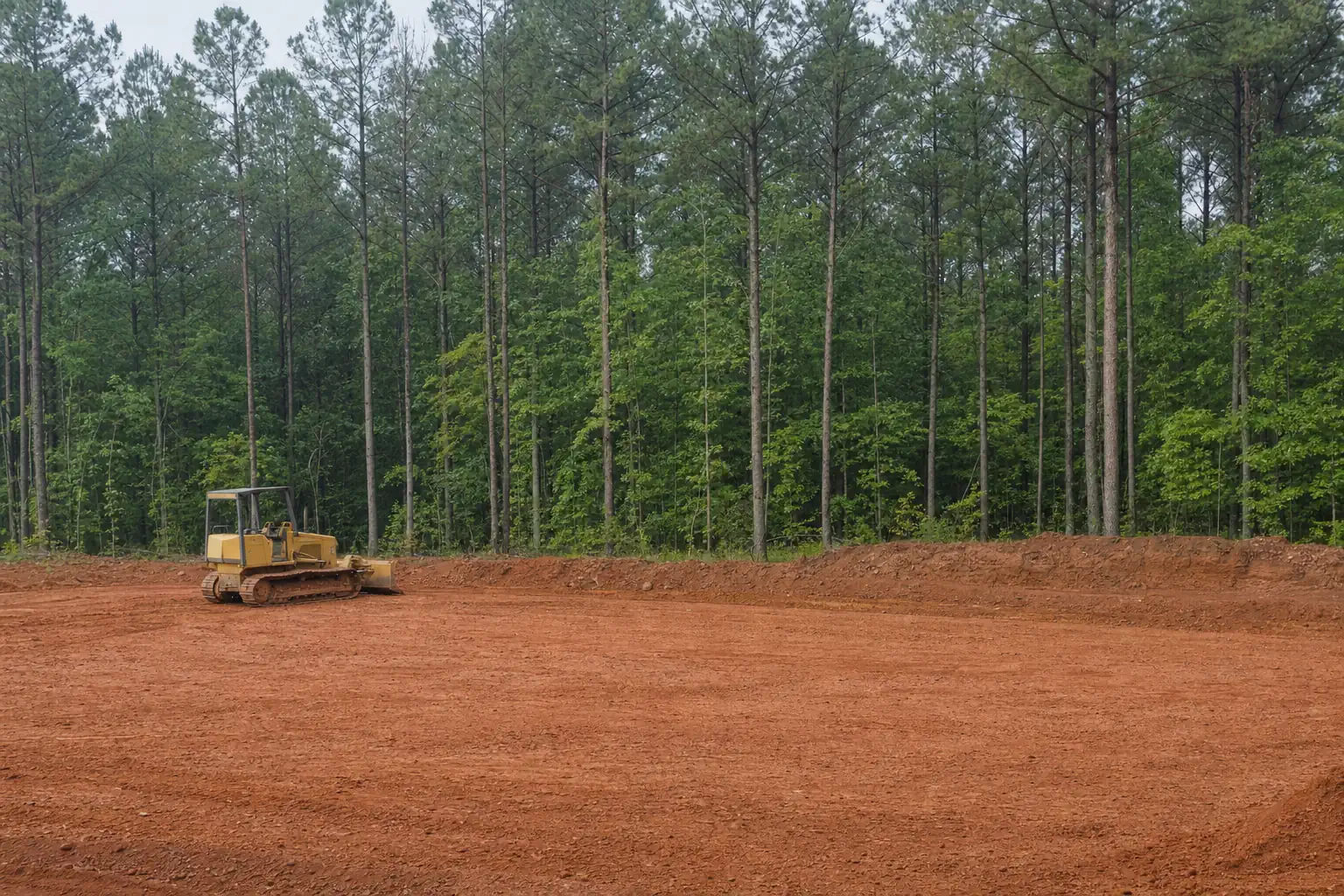
| Grading a pad or driveway | Yes | Yes |
| Trenching for utility runs | Yes | Yes |
That sorting is our reading of the law, not an official ruling. When a job sits on the line between the two, we call.
The timing
Georgia 811 timing
- 3 business days
- Notice Georgia 811 asks for before digging
- 10 working days
- Most notice you can give ahead of the dig
- 30 days
- How long a locate ticket stays valid
Permit thresholds, fees and buffer widths are those published by Forsyth County and the State of Georgia as of November 4, 2026. Confirm current requirements with the issuing authority before work begins. This is not legal advice.
The statute sets the minimum at 48 hours, starting the next business day. Georgia 811 asks for three business days, and that’s the number we plan around. A ticket filed too early expires before the dig, and a job that runs past 30 days needs a fresh ticket. Wet red clay pushes plenty of start dates around here, so we file close to the real start, not the hoped-for one.
Where it matters on a land job
Most of the mulching on a wooded homesite never touches the ground. The work that does comes at the end:
- The building pad. Stumps under a slab or footing come out, and the pad gets graded. See do stumps have to come out before a building pad.
- The driveway. A driveway cut from the county road crosses the frontage, which is where buried lines tend to run. More on access road and driveway clearing.
- Utility runs. Trenches for power, water or a septic line from the house site.
- Below-grade stump grinding. Grinding past flush to plant grass or lay sod.
Lines only you know about
The utilities mark their own lines. Anything you or a past owner buried is yours to point out: the feed to a well house or a barn, irrigation lines, a septic tank and its drain field, a buried dog fence. Older homesteads and inherited farm land tend to have a few of these, and nobody has a map.
These matter even on a mulching-only job. A tracked machine with a mulching head is heavy, and a drain field or a shallow water line under it can crack. Walk the property with us, tell us what you know is down there, and we flag it so the machine stays off it. On an estate or inherited property where nobody is around to ask, we look for the tank lid, the well house and the cleanouts before the machine unloads.
How we handle it
- 1Walk the siteWe note the frontage, any visible utility markers, and where stumps, grading or trenches are planned.
- 2File the ticketBefore any grubbing, grading or trenching, inside the three-business-day window.
- 3Check the marksPaint and flags confirmed on the ground before the excavator or dozer starts.
- 4Dig to the marksMachines keep clear of marked lines, and the ticket gets renewed if the job runs long.
Calling 811 is separate from the county permit. A clearing job that disturbs an acre or more, or works within 200 feet of state waters, still needs a Forsyth County land disturbance permit. Both get settled before work starts, and both sit on the one contract with the stump grinding, grading and pad prep. A cleared lot grows back within a season or two unless it’s built on or kept up with maintenance mowing. The rest of the rules are on the erosion control and permits page.
FAQ
More about 811 and land clearing
- Does forestry mulching need an 811 call?
- Mulching standing brush works above the ground and doesn't move earth, so we don't treat it as excavation. Pulling stumps or grading afterward does move earth, and we call before that work starts.
- Do I need to call 811 to grind stumps flush?
- Grinding a stump flush with the ground, the way a mulcher leaves it, doesn't dig below grade. Grinding below grade to plant grass or lay sod does move earth, and we call before it.
- How far ahead should I call 811 in Georgia?
- Georgia 811 asks for at least three business days' notice, and no more than 10 working days before the digging starts. The ticket is good for 30 calendar days, so a job that slips past that needs a new one.
- How do I contact Georgia 811?
- Dial 811 or file a locate request online with Georgia 811. On our jobs, we file the ticket before any grubbing, grading or trenching, so you don't have to.
- Does an 811 ticket replace the land disturbance permit?
- No. The locate ticket and the county permit are separate. Clearing an acre or more, or clearing within 200 feet of state waters, still needs a Forsyth County land disturbance permit before work starts.
Keep reading