
Planning guide · 8 min read
How Much of Your Land Should You Actually Clear?
For a house in Forsyth County, clear the footprint, a working margin around it, the driveway, the utility runs and the septic area, and leave the rest wooded or underbrushed. Disturbing an acre or more brings a county land disturbance permit, so we measure the clearing on the walk and you know which rules apply before work is scheduled.
A clearing plan for your lot in one business day.
Start from what the land is for
The right amount of clearing follows from the plan. A house needs a different footprint of open ground than a food plot, a listing or a pasture. Before anyone talks acres, decide what the land has to do in the next few years, and clear for that.
| Plan | What usually gets cleared | What can stay |
|---|---|---|
| Building a house | Footprint, working margin, driveway, utility runs, septic area | Everything else, wooded or underbrushed |
| Selling the land | Road frontage, the best building spot, a path through the middle | The back of the tract, so buyers see woods |
| Hunting land | Plots, shooting lanes, trails and firebreaks | Bedding areas and screening cover |
| Pasture or a horse field | The grazing area and fence lines | Shade trees and creek edges |
| Using the woods you have | Underbrush, privet and saplings only | The canopy |
Each plan has its own page: clearing land to build a house, land-for-sale preparation and laying out hunting land. The rest of this guide covers the most common question we get around Cumming: how much of a wooded lot to clear for a house.
What a house lot needs cleared
A builder needs room to build, and a family needs room to live. That adds up to less than most people expect.
- The footprint. The house, garage and any porch or deck, staked from the plan.
- A working margin. Room around the footprint for machines, the concrete truck and a laydown area for lumber and trusses. Your builder will tell you how much they need.
- The driveway. A corridor from the road to the garage, wide enough for the trucks that build the house. See driveway clearing.
- Utility runs. Open lines for water, power and septic so the trencher doesn’t fight brush.
- The septic area. The brush comes off, but heavy machines stay off it so the soil isn’t packed.
- A yard, if you want one. Grass needs sun, and a lawn under a full canopy struggles.
Stumps come out under the slab and the driveway, and get ground flush everywhere else. That stump work and the pad grading are site preparation, which follows the clearing on the same contract.
Questions to settle before the walk
A few answers change the clearing plan more than anything we see on site. Think them through, or bring your builder’s answers with you:
- Where does the house sit? High ground near the road, or a knoll at the back of the lot with a long drive to reach it.
- Septic or sewer, well or county water? A septic field and a well rig each need their own space and access.
- Do you want a lawn? Grass means sun, and sun means opening the canopy on the south side of the house.
- How much will you mow? An acre of open ground is an acre to cut every summer.
- What should the neighbors see? A wooded strip along a side line keeps both houses private.
- Is there a date? A closing or a builder’s start sets the order the work happens in.
Keeping the big trees near the house
Mature oaks, poplars and pines near a house give shade and add value, and a tree that took decades to grow can’t be bought back. On the walk we flag the keepers with you and mark root zones near the foundation so the machines stay off them. Trees inside the footprint or the driveway come out. Trees a few steps outside it can often stay if nobody parks a loader on their roots for a month.
Working around twenty flagged trees takes longer than clearing everything, and it costs a bit more. Most owners decide it’s worth it. A forestry mulcher can work right up to a keeper without pushing it over, which a dozer can’t. More in can you keep the big trees and clear the rest.
Underbrush the rest instead of clearing it
The ground you don’t build on doesn’t have to stay a thicket or turn into lawn. Underbrushing takes out the briars, privet, vines and saplings under the big trees and leaves the canopy. You get woods you can see into and walk through, with shade over the house and leaves still covering the clay.
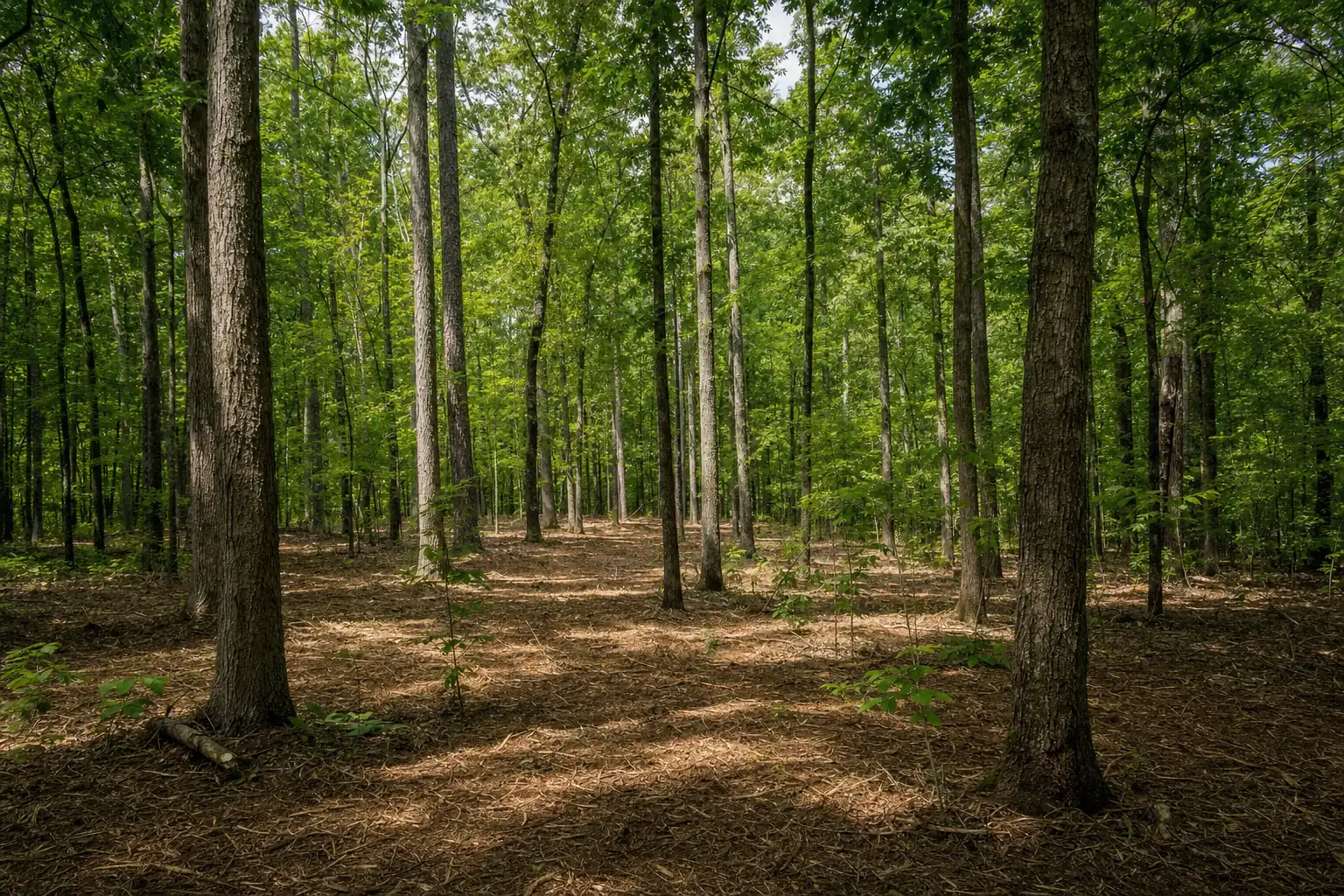
Underbrushing usually prices in the light band, about $1,200 to $2,500 an acre around Cumming, against $2,500 to $4,000 for clearing mixed growth with trees 4 to 8 inches across. Clearing less and underbrushing more is the most common way to bring a lot’s number down.
Ranges are estimates for Forsyth County and the surrounding area based on job density, terrain, access and acreage. Your written quote is the only price that applies to your property.
Underbrush Clearing: Open the Woods, Keep the Canopy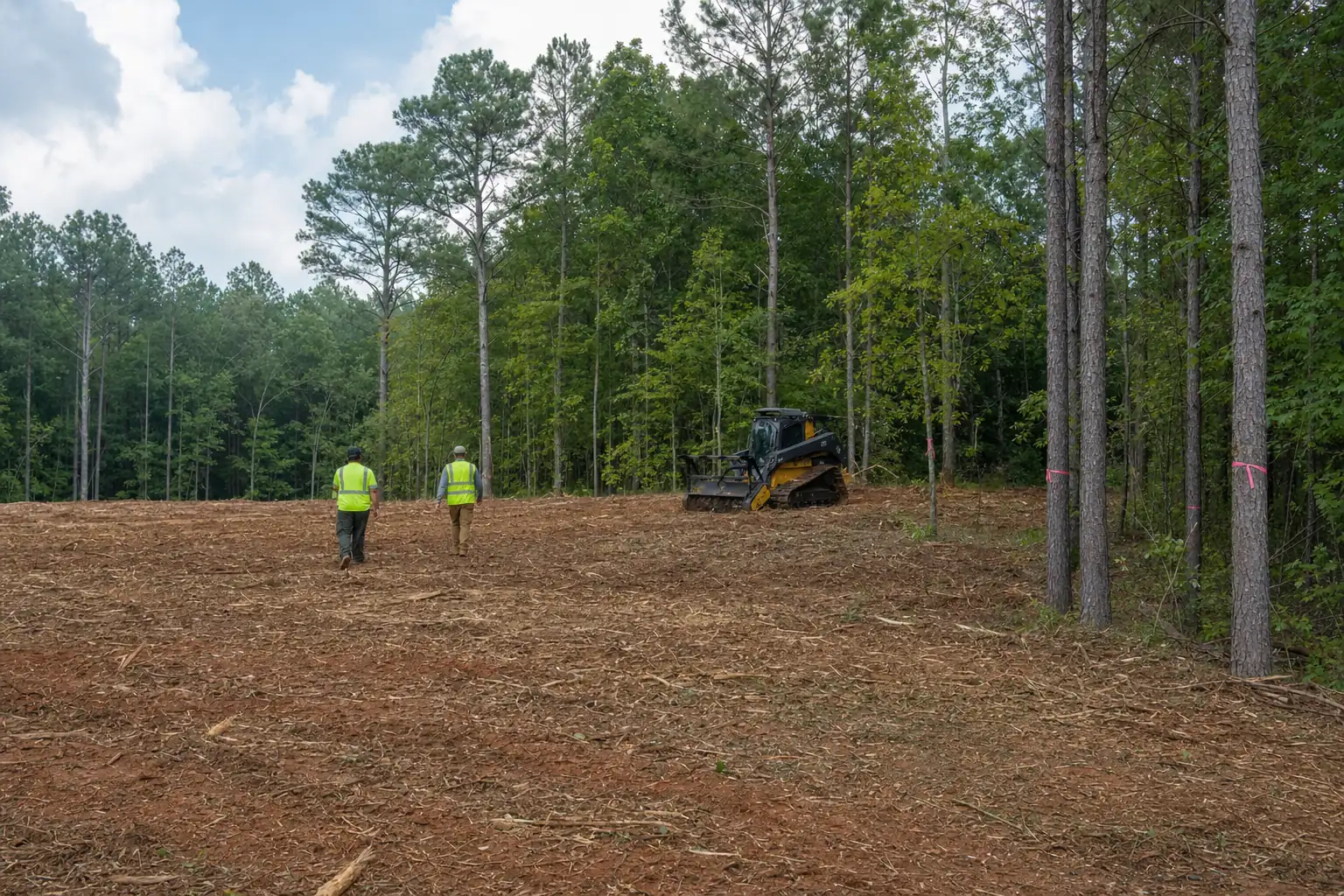 Lot Clearing for New Homes and Small Acreage
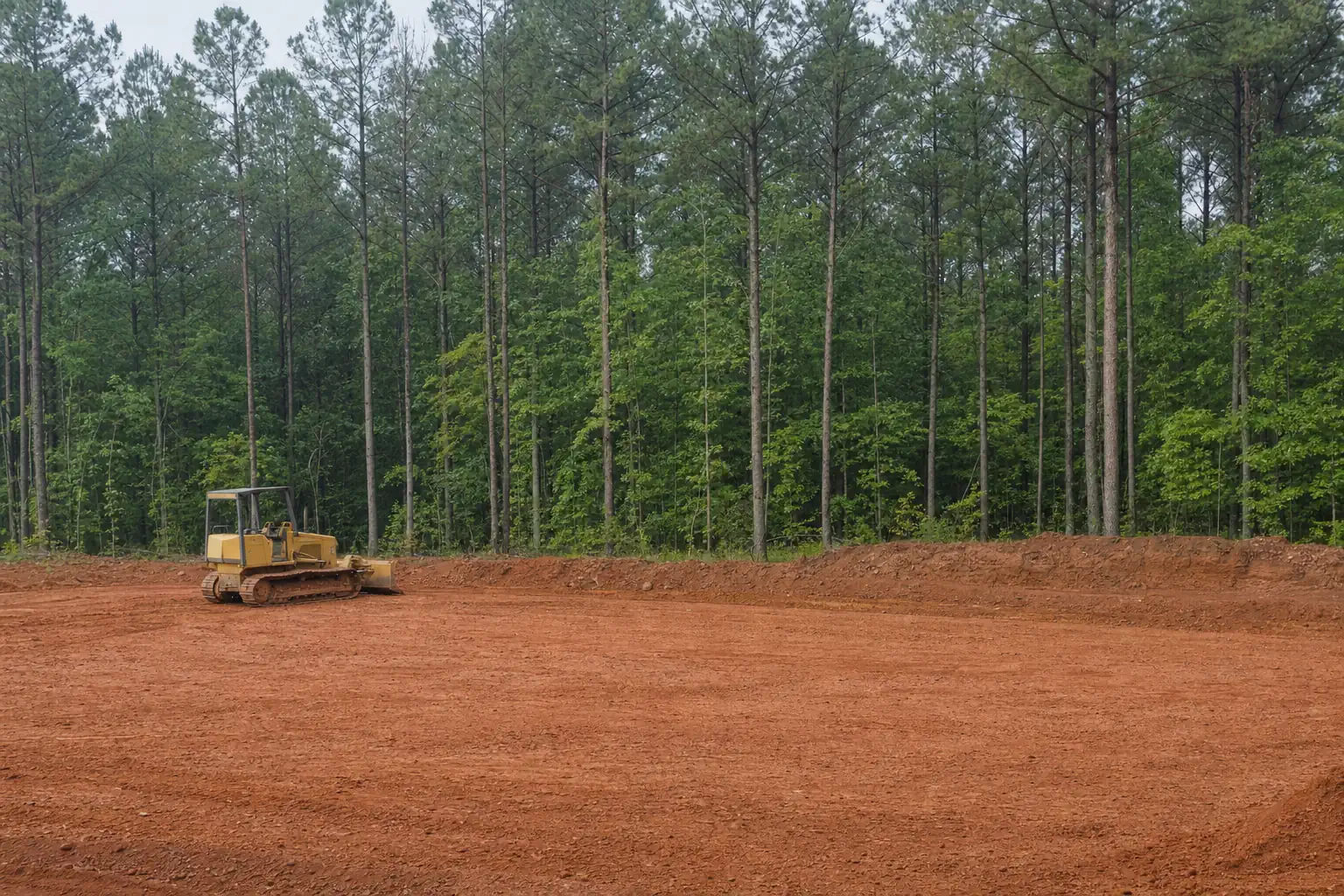 Site Preparation: Pads, Driveways, Utility Runs, Staging
Clearing for a sale, a plot or a pasture
Land you’re selling. Buyers want to see the road frontage, the best building spot and enough of the interior to picture a house. Clearing the whole tract takes away the woods many buyers are paying for, and it costs more than the listing needs. Open the frontage, the homesite and a path through the middle, and cut the property lines so the survey crew and the buyer can find the corners.
Hunting land. Deer use the edges. Clear plots, shooting lanes and trails, and leave the bedding areas and the screening cover between the road and the stand. Plot size follows the tract and what you plant. See how big a food plot should be.
Pasture. Clear the grazing area and the fence lines, keep a few shade trees in the field, and leave the creek edges wooded. Old pasture gone to sweetgum and privet often needs only the regrowth taken off, which prices in the light band.
The county’s lines: acreage, creeks and buffers
Forsyth County counts clearing as land disturbance. The amount you clear, and where you clear it, decides which rules apply.
Forsyth County lines that shape a clearing plan
- 1 acre
- Disturbance that triggers a county land disturbance permit
- 200 ft
- Distance from a creek or other state waters that brings a smaller site under the permit
- 50 + 25 ft
- Forsyth's undisturbed stream buffer plus impervious setback
- $250
- The county's listed clearing and grubbing permit fee
Permit thresholds, fees and buffer widths are those published by Forsyth County and the State of Georgia as of November 4, 2026. Confirm current requirements with the issuing authority before work begins. This is not legal advice.
Size the clearing to what the house and the land need, then let the rules follow. If the right plan disturbs an acre or more, the permit, the erosion plan and the silt fence are part of the job, and we run them. A lot that is part of a larger subdivision plan, or sits close to a creek, can need a permit at a smaller size. Creek buffers stay wooded whatever the size of the job. We measure the clearing and find the creeks on the walk, so you know before anything is scheduled. Forsyth’s tree ordinance exempts a homeowner removing trees on their own property outside the zoning buffer, and new single-family homes not in a major subdivision. See permits to clear land in Forsyth County and how close to a creek you can clear.
More cleared ground means more to keep up
Every acre you open is an acre that grows back. Sweetgum, privet and briars sprout from cleared ground within a season or two, and an open acre needs mowing once or twice a year to stay open. Woods left standing take care of themselves. Before you clear the back two acres for a someday-pasture, decide who’s going to keep them mowed. Our bush hogging and maintenance mowing covers it on a yearly plan.
Bare clay is the other cost. Red clay on a Piedmont slope washes in the first hard rain if nothing covers it. Mulched ground keeps a layer of chips over the soil. Ground scraped for a pad or a drive needs silt fence and straw or seed until something grows. The less bare ground you make, the less you pay to hold it in place.
If your land backs onto a big wooded tract, open ground and thinned brush near the house also change how a brush fire would reach it. See wildfire risk at the wooded edge of Forsyth County.
Three lots we see around Cumming
The one-acre lot in south Forsyth. Mixed pine and hardwood between two finished houses, a short driveway, sewer or septic. The footprint, margin, drive and utility runs take most of the front half. The back gets underbrushed so the neighbors still see trees. Stumps come out under the pad, and the rest get ground flush.
Five acres up toward Matt. A long driveway climbs from Matt Highway to a knoll. The drive and the homesite around the knoll get cleared, about an acre and a half in all, which puts the job over the county’s permit line. The silt fence goes in on the low side before the first tree comes down. A walking trail and an underbrushed band around the house open up the rest. The back of the tract stays wooded for privacy and deer.
A lake lot near Chestatee. The owner wants a view of the water. We clear and underbrush the private lot to the government line and stop there. The shoreline below that line belongs to the Corps of Engineers, and clearing it for a view or a lawn is not permitted.
Shoreline rules are set by the U.S. Army Corps of Engineers under the 2004 Shoreline Management Plan and were checked on November 4, 2026. A revision is in progress. Confirm with the Lake Lanier Shoreline Management Help Desk before any work near the government line.
More on the lake in lake lot and view clearing.
Clearing in phases
You don’t have to decide everything now. Plenty of owners clear the homesite and drive this year and leave the pasture or the garden for later. The trade-off is the trip: every return visit puts the machine back on a trailer, and small jobs carry a minimum of about $1,200 to $2,000. If you already know the second phase is coming within a year, it often costs less to do both at once. If you’re unsure, clear the part you need and live on the land for a season. You’ll know more about where the sun falls and where you walk.
Deciding on the walk
- 1Stake the houseBring the plan or rough stakes so we see the footprint on the ground.
- 2Flag the keepersWe tie flagging on the trees you want, with root zones marked near the house.
- 3Mark the no-go areasCreek buffers, the septic field, the well and the property line.
- 4Measure and priceCleared, underbrushed and left wooded, each measured and priced on its own line.
The quote that follows shows each zone on its own line, so you can move the boundaries and see what each choice costs. See what a land clearing quote should include and the full range of work on the land clearing page.
Keep reading