Cost-Share Programs · 6 min read
One Contractor, the Whole Job: What a Real Conservation Plan Looks Like
A real conservation plan for a North Georgia forest tract names several practices: understory work, thinning, firebreaks, invasive control. Each takes a different machine or crew. A single-machine operator quotes one piece and tells you to hire three more companies. Sawnee Land Clearing runs the whole plan on one contract, with records itemized by practice.
The plan arrives, and then the phone calls start
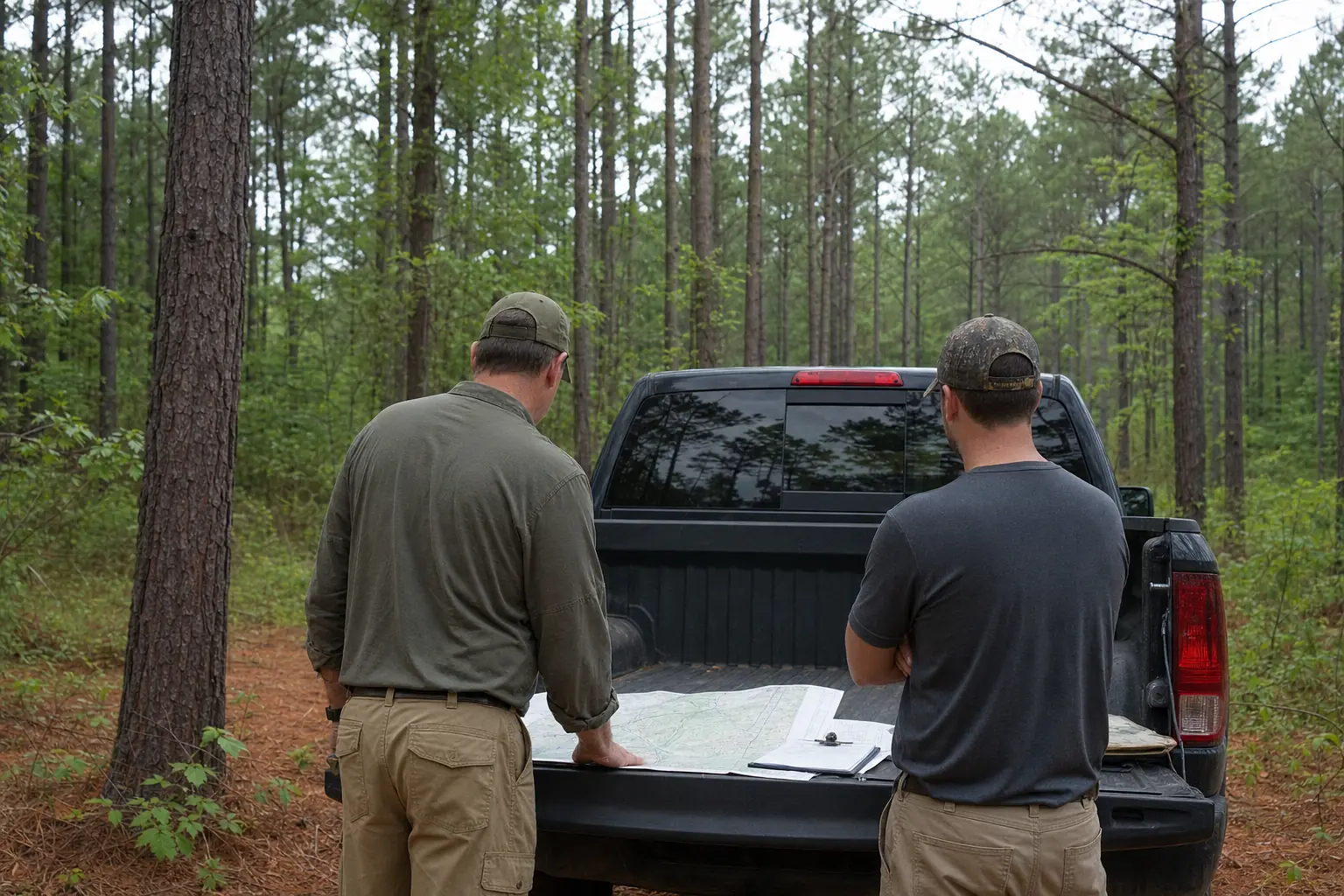
A landowner with forty or fifty wooded acres north of Cumming hires a consulting forester. The forester cruises the timber, walks the creeks and writes a management plan. It comes back as a binder or a PDF: a map of the stands, a prescription for each one, and a list of work with a season next to each item.
Then the landowner starts calling contractors, and finds out the plan is several jobs. The mulching outfit can do the understory. The thinning needs another crew. The firebreaks need a dozer or a disk. The privet along the creek needs licensed applicators. A single-machine operator quotes the one piece their machine does and tells the landowner to hire three more companies for the rest.
That landowner now has a plan, a stack of partial quotes, and the job of making three or four companies show up in the right order.
What a real plan names
Plans differ by tract, but the same kinds of work turn up again and again on North Georgia forest land. Each one needs a different machine or crew.
| In the plan | On the ground | What it takes |
|---|---|---|
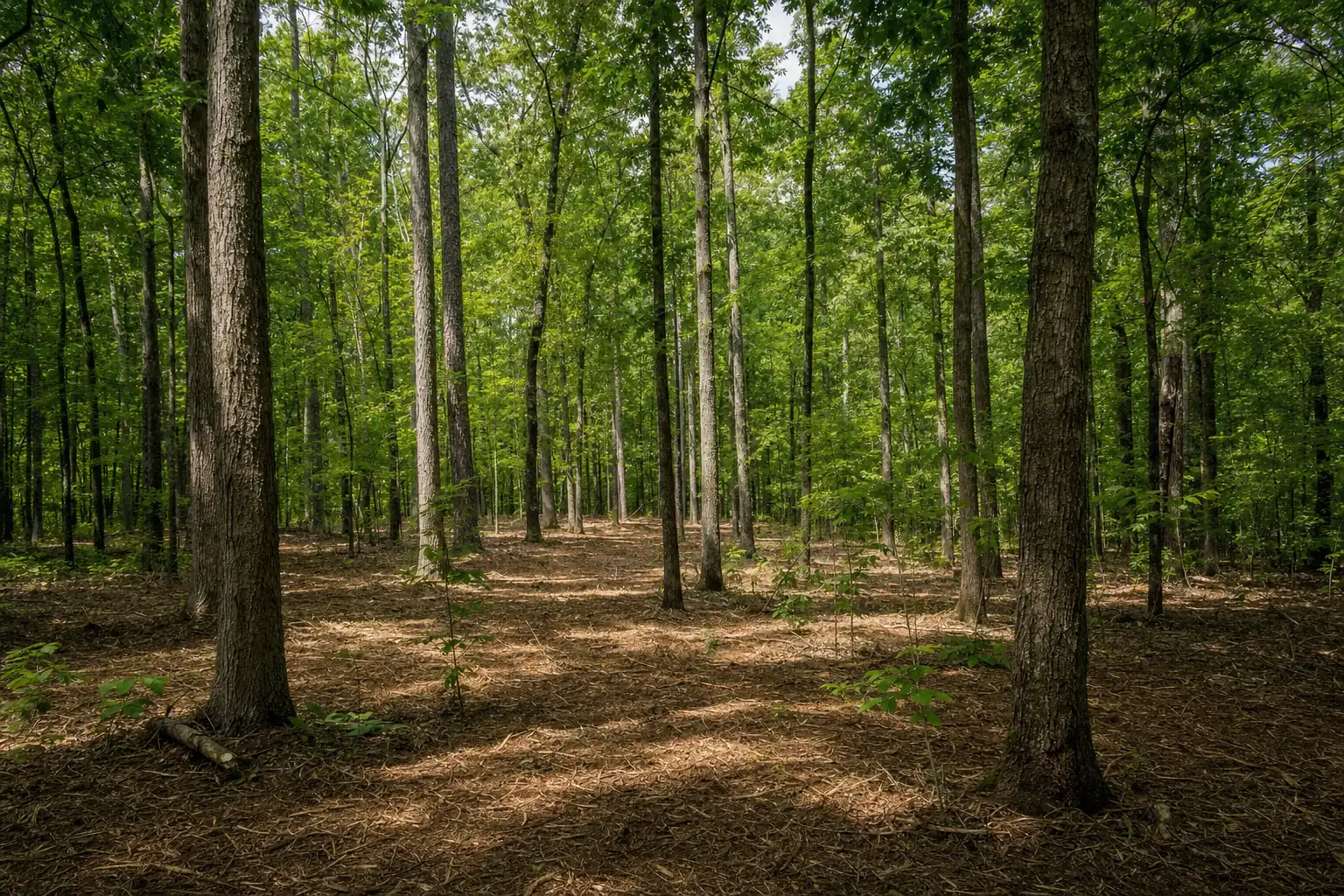
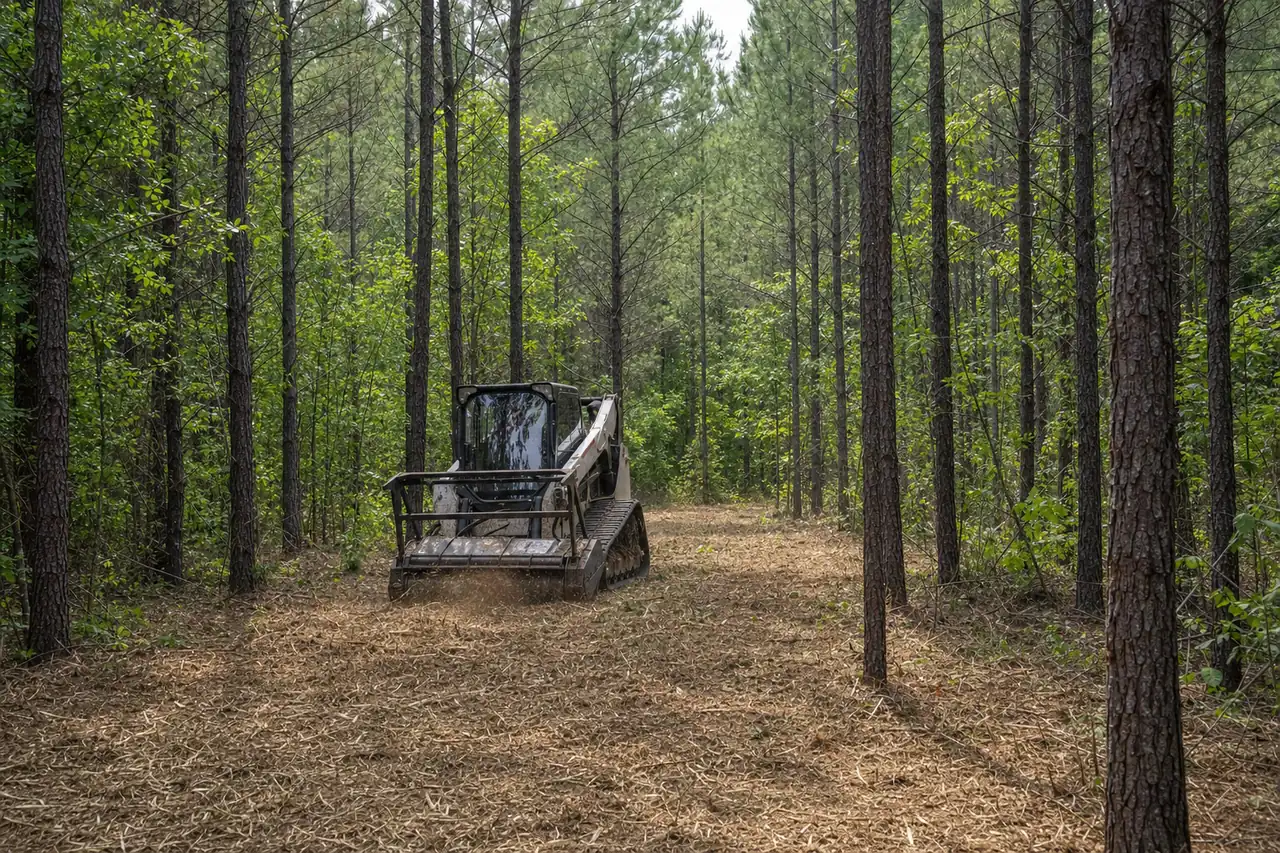
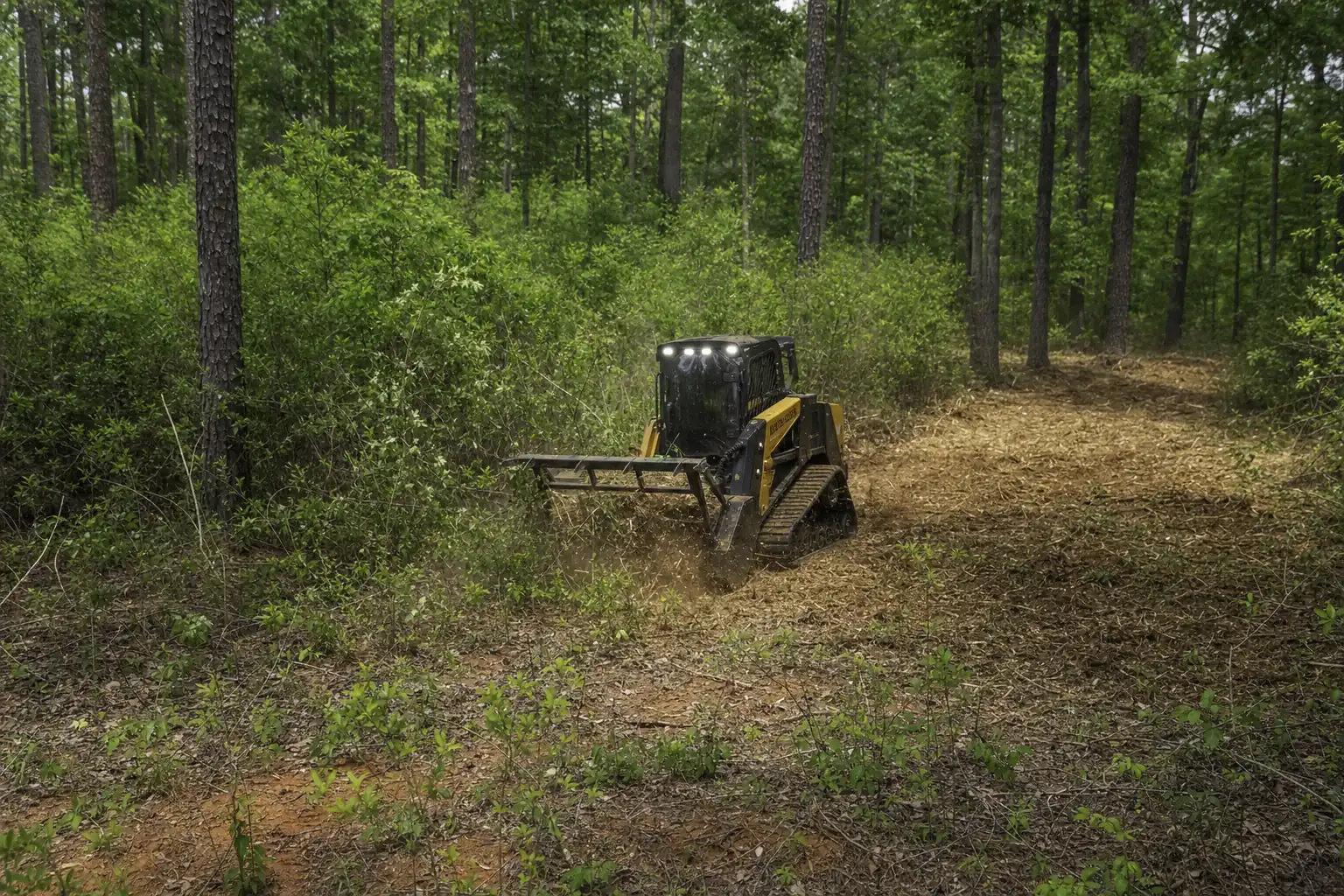
| Understory work | Brush and small hardwoods under a standing canopy, ground in place | A drum mulcher on a track loader |
| Thinning | Crowded stems removed to the forester’s paint so the keepers grow | A thinning crew working to the marks |
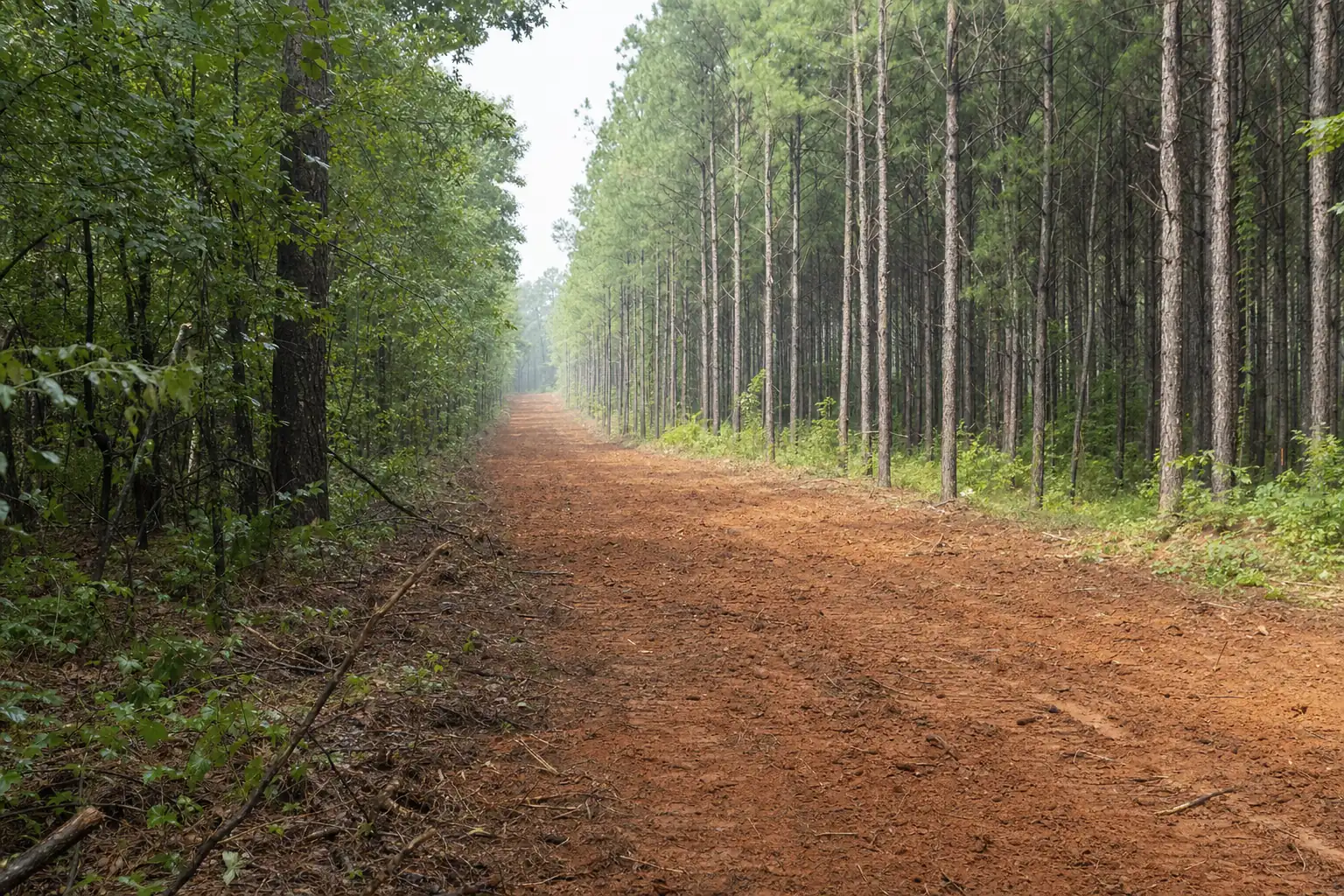
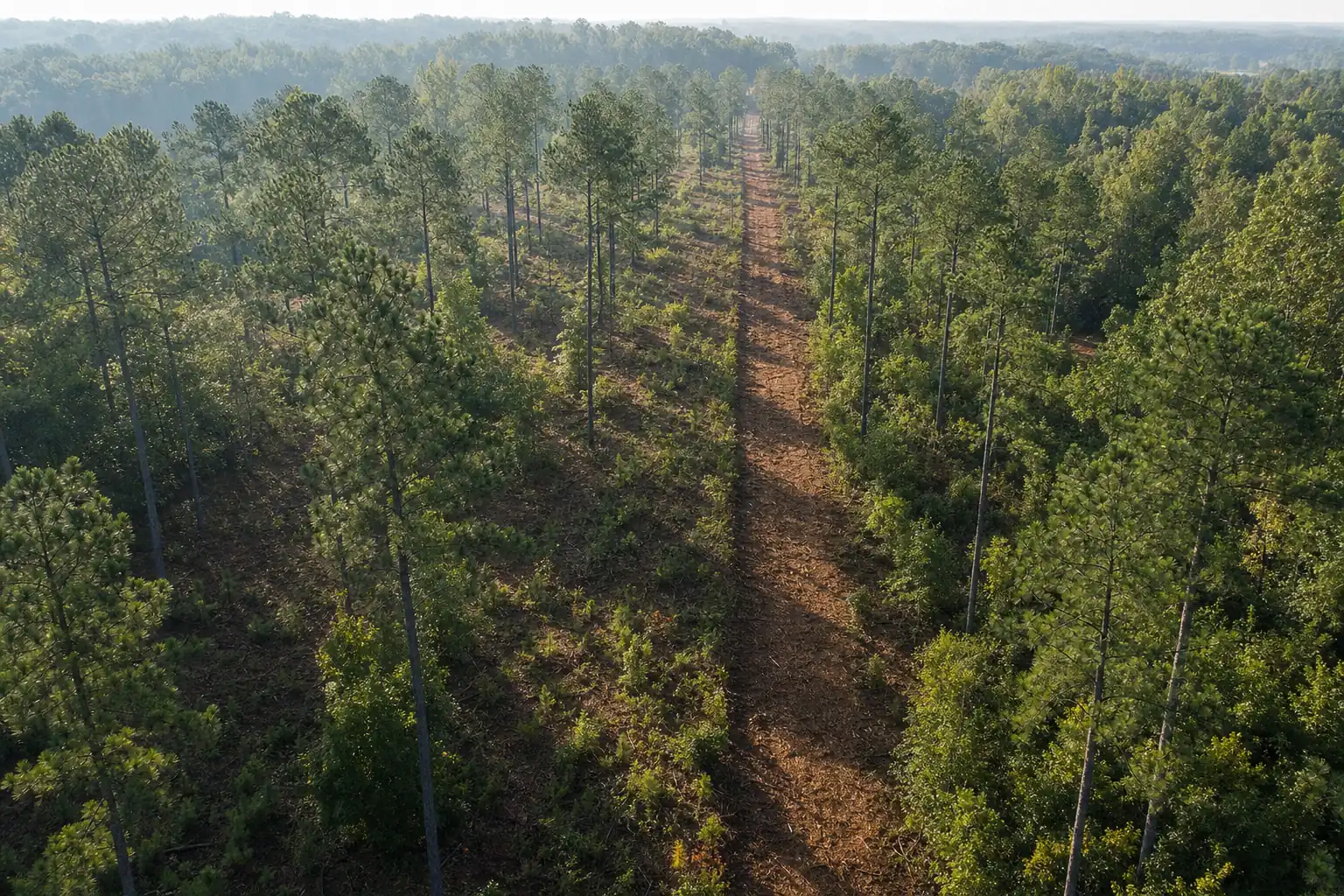
| Firebreaks | Strips down to bare or low-fuel ground around the stands | Dozer or disk work |
| Invasive control | Privet and kudzu cut, then the resprouts treated | A mulcher, then licensed applicators following the label |
| Site preparation | A cut-over tract made ready for planting | Mulching slash and leftover stems, grading the log decks |
Herbicide applications are performed by licensed applicators in accordance with the product label.
A forester’s plan also carries the details that keep a crew from guessing: leave-tree marks, streamside management zone boundaries, which stands get burned and where the lines go. We work from that paper and those marks. See working with a consulting forester.
Where cost-share comes in
Georgia and federal programs reimburse private forest landowners for named practices, and several of the rows in that table match practices the programs list. The Georgia Forestry Commission’s programs list practices such as understory mulching, non-commercial thinning, site preparation and invasive plant control. Federal EQIP lists practices such as Brush Management, Firebreak and Forest Stand Improvement.
Program figures and sign-up windows are set annually and are current as of November 4, 2026. We confirm every figure with the Georgia Forestry Commission or NRCS before any application. This page explains how programs work; it is not a guarantee of eligibility or reimbursement.
A few things about how that works, because they shape how the plan gets run:
- The programs pay by their own schedules. Each program publishes what it pays for each practice. That schedule sets the amount, and it has nothing to do with what any contractor charges.
- The program office decides what fits. A practice on the list describes a kind of work. Whether your job meets the practice’s standard is the program’s call, and we confirm it with the program office before you apply.
- You apply as the landowner. The application and the payment are yours. The state window for the Resilient Forest Incentives Program runs June 15 to July 3, and other programs set their own dates.
- Minimums apply. Each program sets an acreage minimum. See is there a minimum acreage for cost-share?
We won’t put a reimbursement figure on your quote. The quote prices the work. The program office tells you what it will pay after you apply. Which practices each program names is laid out on the cost-share hub.
Three companies, or one contract
Go back to the landowner with the binder. Hiring the plan out piece by piece means three or four quotes in three or four formats, three or four schedules, and nobody responsible for the order the work has to happen in. The thinning crew shows up before the creek zones are flagged. The firebreaks go in after the burn season the forester wanted them for. The privet gets mulched and nobody comes back to treat it.
We run the whole plan on one contract. We plan, price and manage it, and specialist crews run each machine, all working to one written scope. You and your forester have one person to call.
The order the work needs
The pieces of a plan depend on each other. Running them on one schedule is most of the value of one contract.
- 1Flag the creeks and linesStreamside zones, property lines and keep-trees marked before any machine runs.
- 2Thin and mulchThinning to the forester's marks, with the cut stems and the understory mulched in place.
- 3Put in the breaksFirebreaks around the stands, timed ahead of any burn the plan prescribes.
- 4Treat the invasivesPrivet and kudzu resprouts treated in the right season by licensed applicators.
If programs are involved, the work for each practice waits for that program’s acceptance. A plan drawing on more than one program can file twice, months apart, and the schedule follows. See can one property use more than one cost-share program?
Records that match the plan
A lump-sum invoice reading “forestry work, 50 acres” doesn’t help a forester’s stand file or a program claim. Our invoices list each practice on its own line: acres thinned, acres of understory mulched, feet of firebreak, acres treated. Each line carries dates and a map of where the work happened, with before-and-after photos.
The forester can check the work against the prescription, and the program office can see what was done where. We hand that file to you. The full split between what you do, what the agencies do and what we do is in do you handle the cost-share paperwork?
No plan yet?
Plenty of landowners call before a forester has been out. That’s fine. Underbrushing behind the house, a food plot or a shooting lane doesn’t need a forester. Timber work usually does, because someone has to decide which trees stay and what the stand should look like in twenty years.
If you’re thinking about cost-share, a written plan also makes it clear which practices fit your land. We’ll walk the tract with you, tell you what work we see, and point you to a forester where the timber calls for one. When the plan comes back, we price it practice by practice on one scope.
A plan runs for years
The first season of work is the start. Thinned and mulched stands send up hardwood sprouts within a season or two. Firebreaks grow back in and need mowing before they’ll stop a ground fire. Privet sends seedlings into the opened ground the year after treatment.
We build the follow-up into the plan: firebreaks and lines on an annual mowing schedule, privet checked on every visit, and the next stand’s work scheduled when the forester calls for it. Same contract, same person to call, for as long as the plan runs.