Permits & Erosion · 6 min read
Silt Fence Is Not Optional on a Forsyth County Slope
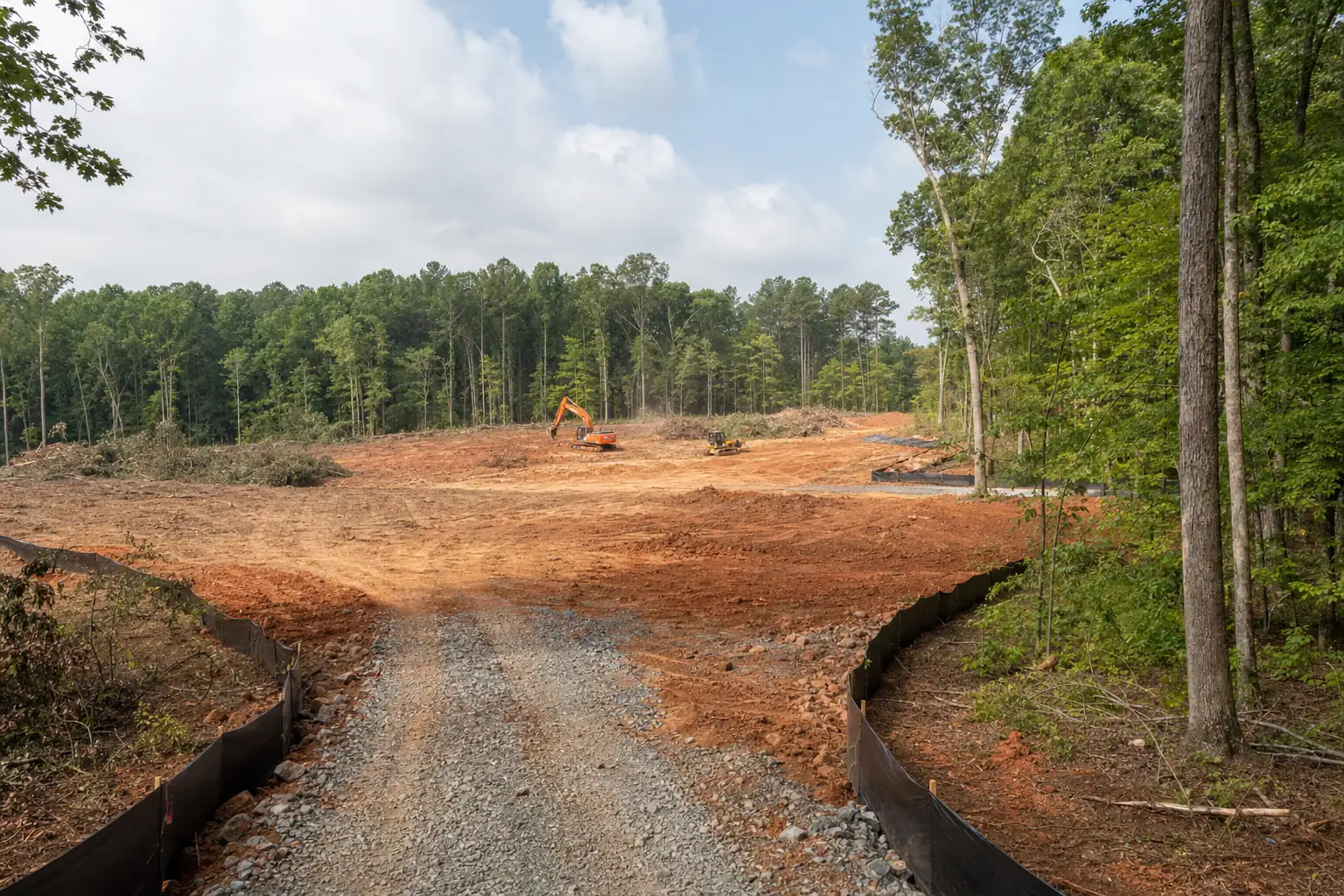
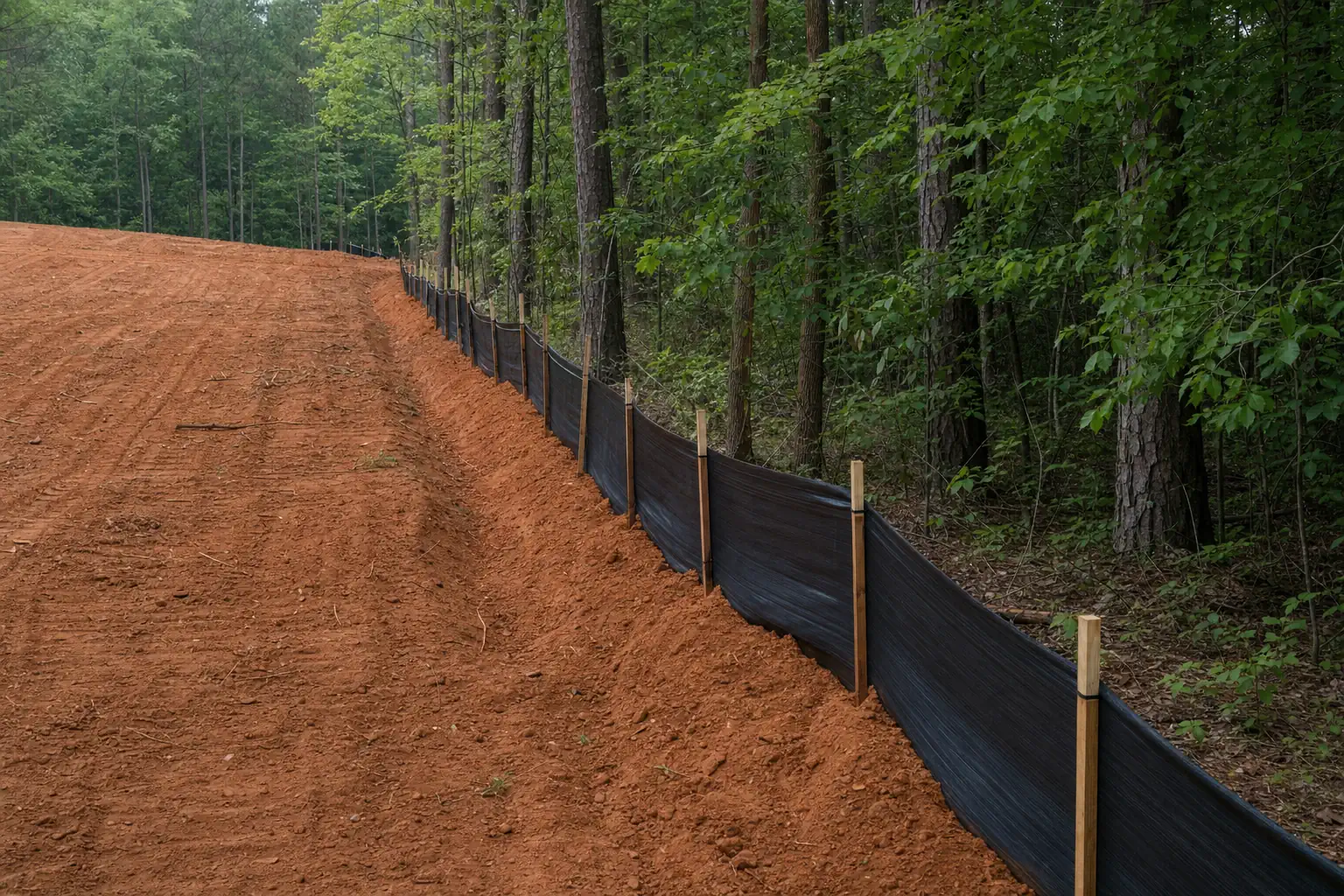
On a sloped lot in Forsyth County, silt fence goes in on the low side before the first tree comes down. Clearing an acre or more, or working within 200 feet of state waters, requires it under the county permit. On smaller sloped jobs we fence anyway, because bare red clay moves in the first hard rain.
Fence and clearing on one contract. Quote in one business day.
One storm on a scraped slope
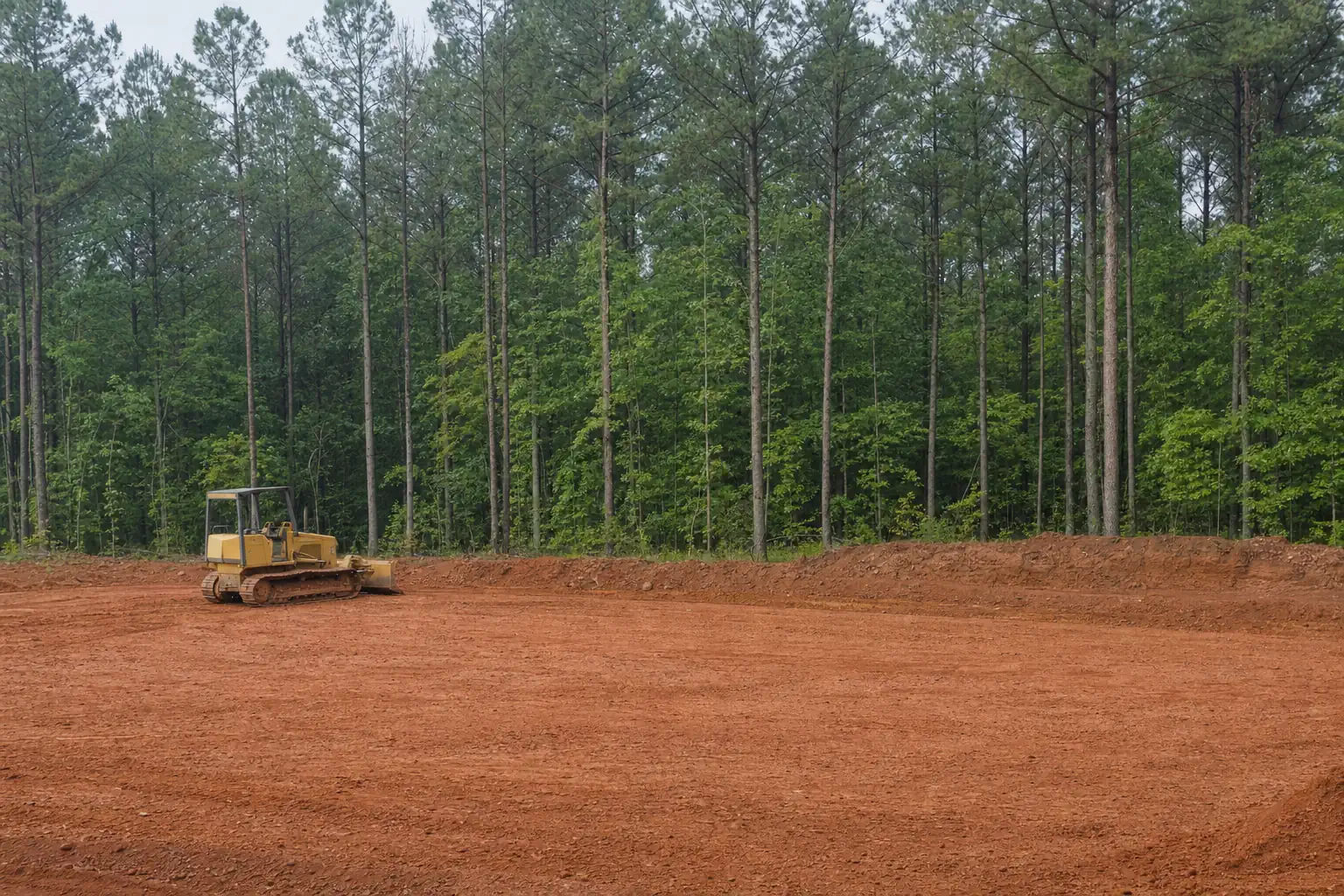
Picture a lot pitched toward the road, cleared the old way: dozed to bare clay, stumps pushed into a pile, nothing between the slope and the ditch. Then an afternoon thunderstorm drops an inch in an hour. By evening the ditch is orange, there’s a fan of red mud across the pavement, and the neighbor downhill has clay in the yard. If a creek sits at the bottom of the hollow, some of the lot is in it.
That’s the problem silt fence exists to stop. On flat ground you can sometimes get away without it. On a Forsyth County slope you can’t, and on many sites the county won’t let you try.
Why slopes here move
Most of the county sits on Piedmont red clay over weathered granite and gneiss, and the land rolls: ridges, hollows and creek bottoms from Sawnee Mountain to the lake. The area gets roughly 50 to 55 inches of rain a year. Under woods, leaves and roots hold that clay in place. Strip the cover and the first hard rain finds every bare foot of it.
The slope sets the speed. A flat quarter acre in an old pasture sheds water slowly. The same quarter acre pitched toward a road ditch or a branch of Big Creek sends it downhill fast, carrying clay as it goes. That’s why we read the slope on a small job before we think about the acreage.
When the county requires it
In Forsyth County, clearing counts as land disturbance. Disturbing an acre or more, or doing any clearing within 200 feet of state waters, needs a county land disturbance permit. The permit brings an approved erosion plan, and the plan puts silt fence and a gravel construction exit on the ground before the first tree comes down.
When the county permit applies
- 1 acre
- Disturbance that brings the county permit
- 200 ft
- From state waters, where even small jobs need it
- $250
- County clearing and grubbing permit fee
- 50 + 25 ft
- County stream buffer plus impervious setback
Permit thresholds, fees and buffer widths are those published by Forsyth County and the State of Georgia as of November 4, 2026. Confirm current requirements with the issuing authority before work begins. This is not legal advice.
Under an acre and more than 200 feet from water, the job is normally exempt from the permit, unless it’s part of a larger plan. The county’s minimum erosion practices still apply, and sediment that leaves your lot is still your problem. On a slope above a road, a creek or a neighbor, we fence the low side on exempt jobs too. The details are in do I need silt fence for a small clearing job.
Where silt fence fails
A fence on the ground isn’t the same as a fence that works. These are the usual reasons it doesn’t:
- Not trenched in. Fabric staked on top of the ground lets runoff slide underneath it. The bottom edge has to be buried.
- In the wrong place. Fence belongs where water leaves the disturbed ground, running across the slope. A line that runs downhill just guides the mud.
- Installed late. Fence that goes up after the clearing has already let the first storm through.
- Never cleaned out. A fence full of clay on the uphill side overtops in the next rain, or lies down under the weight.
- Pulled too early. Fence removed before grass or the next trade’s work holds the ground leaves bare clay with nothing below it.
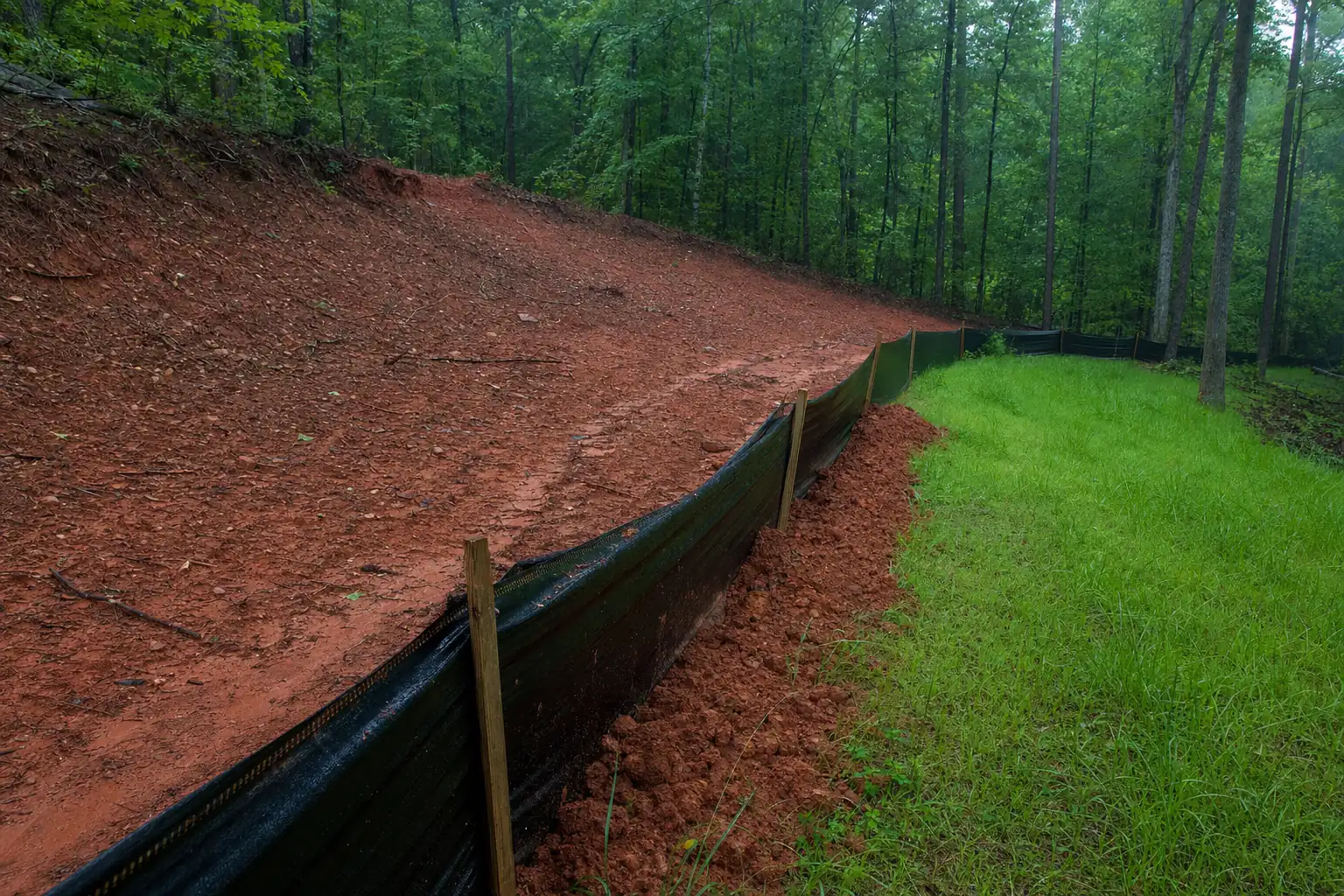
Every one of those is a maintenance or sequencing problem, and they usually come from splitting the job. The clearing outfit leaves, the fence belongs to nobody in particular, and the first person to notice it sagging is the inspector.
Fence first, then the trees
- 1Walk the low sideWhere water leaves the lot, what sits below it, and where trucks will enter.
- 2Fence and exit inSilt fence trenched along the low side and a gravel exit at the drive, before any clearing.
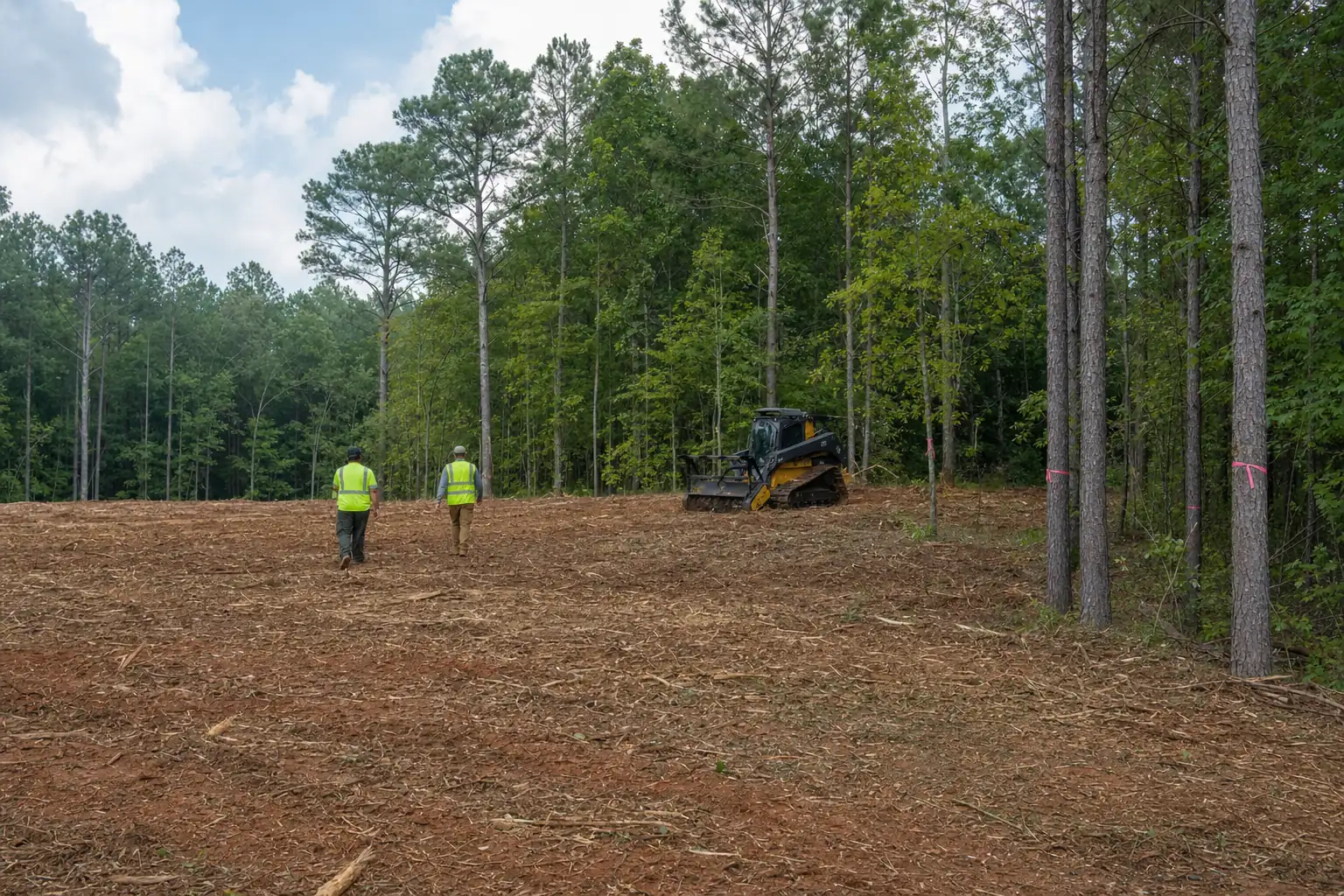
- 3Clear above the fenceThe mulcher works uphill of the fence and leaves chips on the ground.
- 4Keep it workingFence walked after heavy rain, sediment dug out, sagging sections reset.
On a creek tract the fence runs on the upland side of the stream buffer, between the work and the strip that stays undisturbed. On a homesite it wraps the low side of the pad and the drive. The approved plan sets the lines on a permitted job; on an exempt one we set them from the slope on the walk. How we install it is on the erosion control and silt fence page.
After a half-inch rain
On a permitted site the erosion controls get inspected on the permit’s schedule: at least weekly on most sites, and within 24 hours of a half-inch rain. In a wet month here that rain trigger comes around often. Certified personnel do the inspections and keep the records.
Our part is having the fence ready when they arrive. After a heavy rain we walk the line from the low side up, dig out what the fence caught, reset any section that leaned and top up the gravel at the exit. A fence repaired the morning after a storm is a short job. One left for a week is an inspection problem. More in how often erosion control gets inspected.
 Erosion Control and Silt Fence Installation
 Site Preparation: Pads, Driveways, Utility Runs, Staging
 Lot Clearing for New Homes and Small Acreage
Mulch does half the work
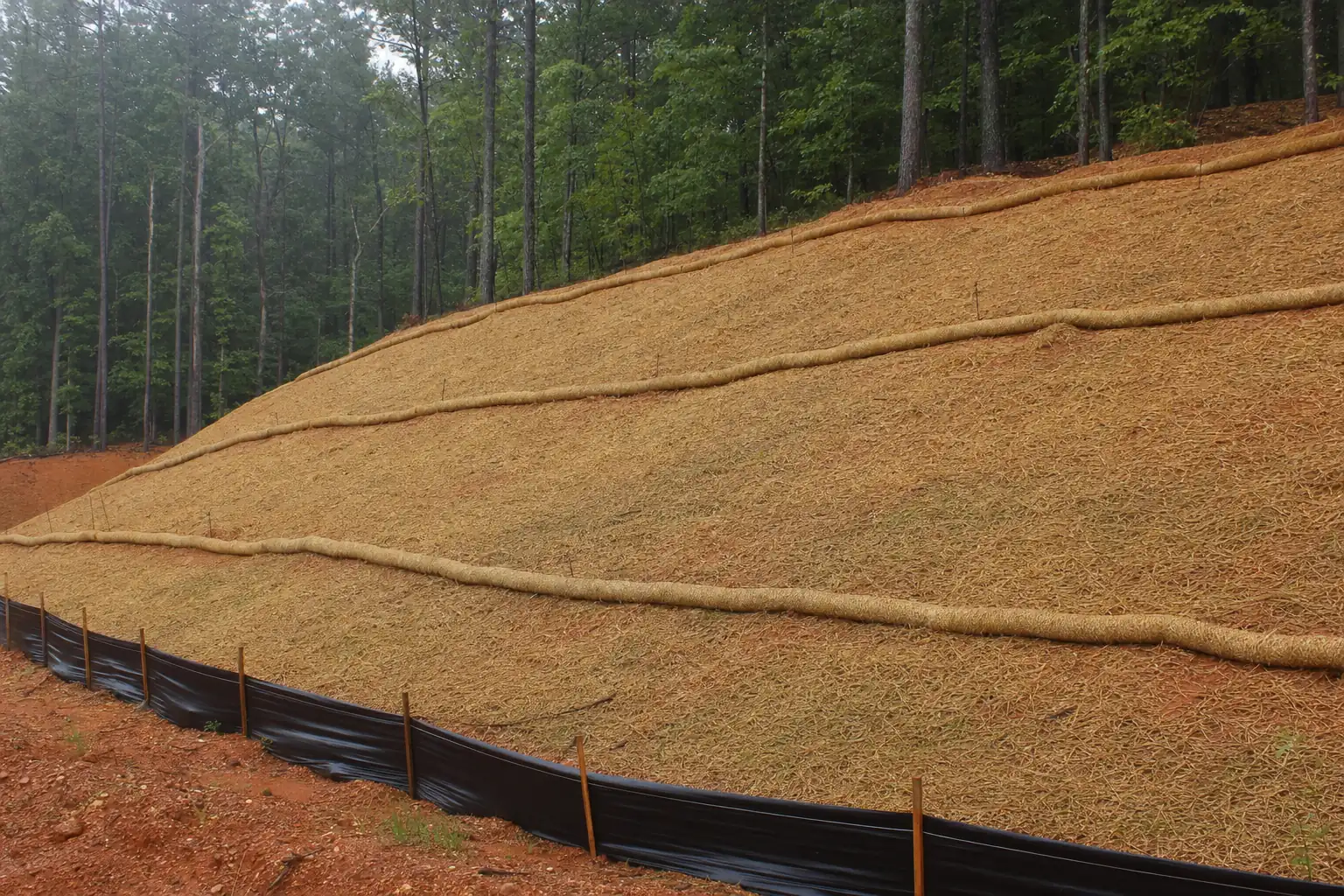
The less bare clay a site has, the less the fence has to hold back. A forestry mulcher leaves a mat of chips everywhere the pad and drive don’t go, and that cover soaks up rain and slows runoff while the ground settles. A scraped lot gives the fence the whole slope to catch. Where stumps come out or a pad gets graded, the ground goes bare, and bare cuts on a slope get straw on top of the fence.
On our quotes the fence is a line on the same contract as the clearing. Silt fence and erosion control run about $500 to $1,200 an acre, depending on the length of the low side, the slope and how long the site stays open.
Ranges are estimates for Forsyth County and the surrounding area based on job density, terrain, access and acreage. Your written quote is the only price that applies to your property.
Measured against clay in the road, a fouled creek or a failed inspection, that’s a small line. See the Georgia Green Book for the state manual that permitted erosion plans are drawn to.
When the fence comes out
The fence stays until the ground holds on its own: grass established, the builder’s work in place, or regrowth and mulch covering the slope. On a lot ahead of a build, it stays through the builder’s work and we pull it when you call. On cleared acreage, the regrowth helps. Sweetgum, privet and briars sprout back within a season or two, and you’ll want maintenance mowing to keep the ground open once the fence is gone. The rest of the county’s rules for clearing are on the erosion control and permits page.