Seasonal · 6 min read
What the Summer Burn Ban Means for Your Clearing Job
From May 1 to September 30, Georgia's summer burn ban stops land-clearing burns in Forsyth County, with or without an air curtain destructor. A clearing job that plans to burn its debris has to wait for October or haul it. A mulching job keeps going, because the brush becomes ground cover and there is no pile to light.
Clear it this summer, no burn pile. Quote in one business day.
The calls that start in late April
Every spring the same kind of question comes in. A builder has a lot to open in June. A landowner has a dozer quote that ends with “burn piles on site.” Someone bought acreage in March and wants the back half cleared before summer. Each of them is about to run into the same date: May 1, when the burn season closes in Forsyth County and stays closed until October.
If your plan involves fire, the ban decides your schedule. If it doesn’t, the ban barely touches you. Which one you’re in is worth knowing before you sign anything.
What the ban covers
Georgia EPD runs a summer open burning ban during ozone season in 54 counties, and Forsyth County is on the list by name. From May 1 through September 30 it prohibits burning yard debris and land-clearing debris. The ban has three exceptions: agricultural burning, prescribed burning for forestry, and campfires. A clearing job fits none of them, and an air curtain destructor doesn’t open a loophole. No land-clearing burn is allowed in the county during those five months.
Permit thresholds, fees and buffer widths are those published by Forsyth County and the State of Georgia as of November 4, 2026. Confirm current requirements with the issuing authority before work begins. This is not legal advice.
Outside the ban, burning machine-cleared debris still runs on tight terms. The Georgia Forestry Commission’s land-clearing permit is good for one day. An open burn has to sit at least 1,000 feet from occupied structures, and an air curtain destructor at least 300 feet from occupied structures and public roads. The Forestry Commission and the county can also call drought bans on short notice. The full rules are in the burn permit guide.
Prescribed fire in a managed pine stand is a separate activity with its own rules. That’s forestry, done under a plan by a trained burn crew, and it’s not a way to get rid of a clearing pile.
Five months with a pile on the ground
A burn-pile job usually starts with a dozer pushing trees, stumps and brush into windrows. In winter that pile can go up on the next permit day, if the distances work. Start the same job in May and the pile sits. It sits through June and July and the storms of August, and the earliest it can burn is October.
The calendar for a burn-pile job in Forsyth County
- May 1 to Sept 30
- No land-clearing burns, air curtain or not
- 5 months
- How long a summer pile waits for the season
- 1,000 ft
- Distance from occupied structures for an open burn
- 1 day
- How long a land-clearing burn permit lasts
Permit thresholds, fees and buffer widths are those published by Forsyth County and the State of Georgia as of November 4, 2026. Confirm current requirements with the issuing authority before work begins. This is not legal advice.
Around Cumming the distance rule bites hardest. In the subdivision belt and down the 400 corridor, 1,000 feet from a pile in any direction usually reaches somebody’s house. Plenty of lots can’t meet it in any month, which means the pile was always going to be hauled, ground or left. The ban just makes that obvious sooner.
The jobs the ban hits hardest
Some summer work can’t wait for October, and a burn plan leaves each of these stuck.
| Job | What the ban does to a burn plan | What we do instead |
|---|---|---|
| Food plot cleared by July | Debris can’t burn until after the late-summer planting window | Mulch the plot in place so the ground can be worked |
| Summer storm timber | Downed trunks sit as fuel until October | Mulch the tops, grind the trunks on site |
| Builder with a summer start | The lot holds a pile while the schedule slips | Mulch around the pad, stumps out where the slab goes |
| Old windrow already on the land | Still can’t be lit, and it’s grown over | Feed it through a horizontal grinder |
The food plot case catches hunters every year. A fall plot gets planted in late August or September, so the clearing has to be done by July. Plan it with the North Georgia food plot calendar. For storm work, what storm cleanup costs covers pricing.
Why we never needed the burn
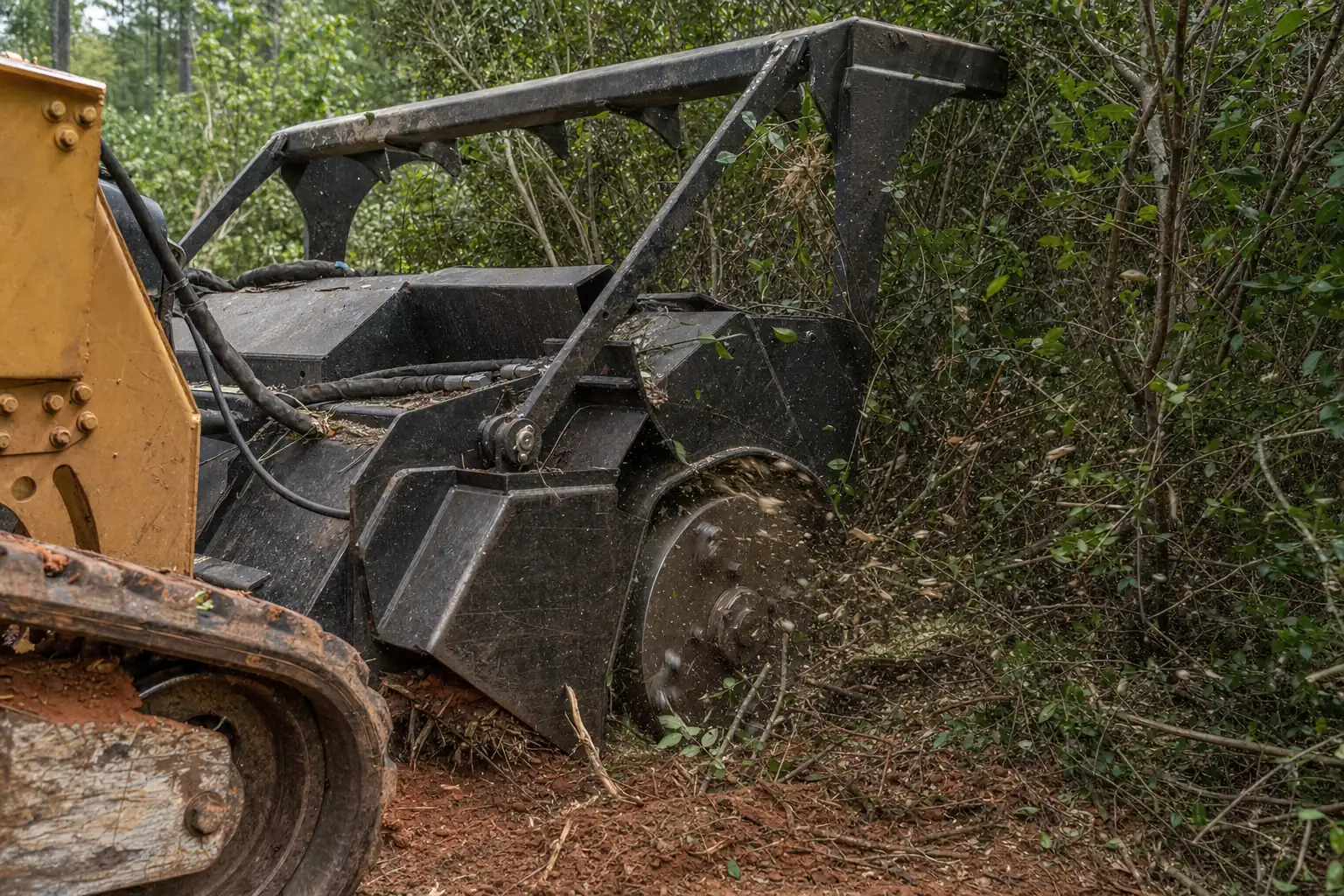
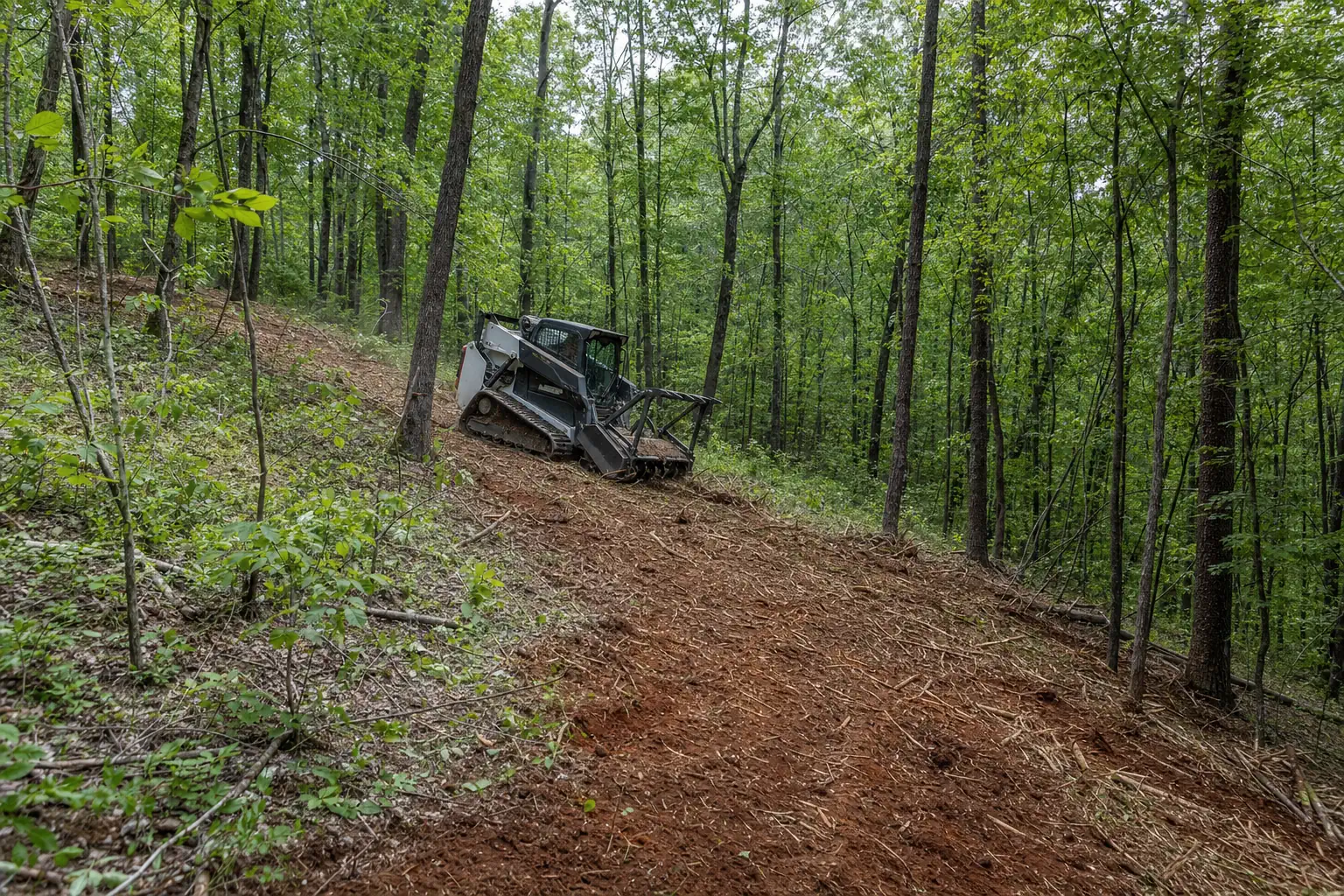
We mulch in place. A forestry mulcher grinds brush and trees where they stand and spreads the chips across the ground as a mat over the clay. There’s no pile, so there’s nothing for the ban to stop, no burn permit to pull and no fire watch on a dry afternoon. The question on a summer job is the same one we ask in January: is the ground firm enough for a tracked machine?
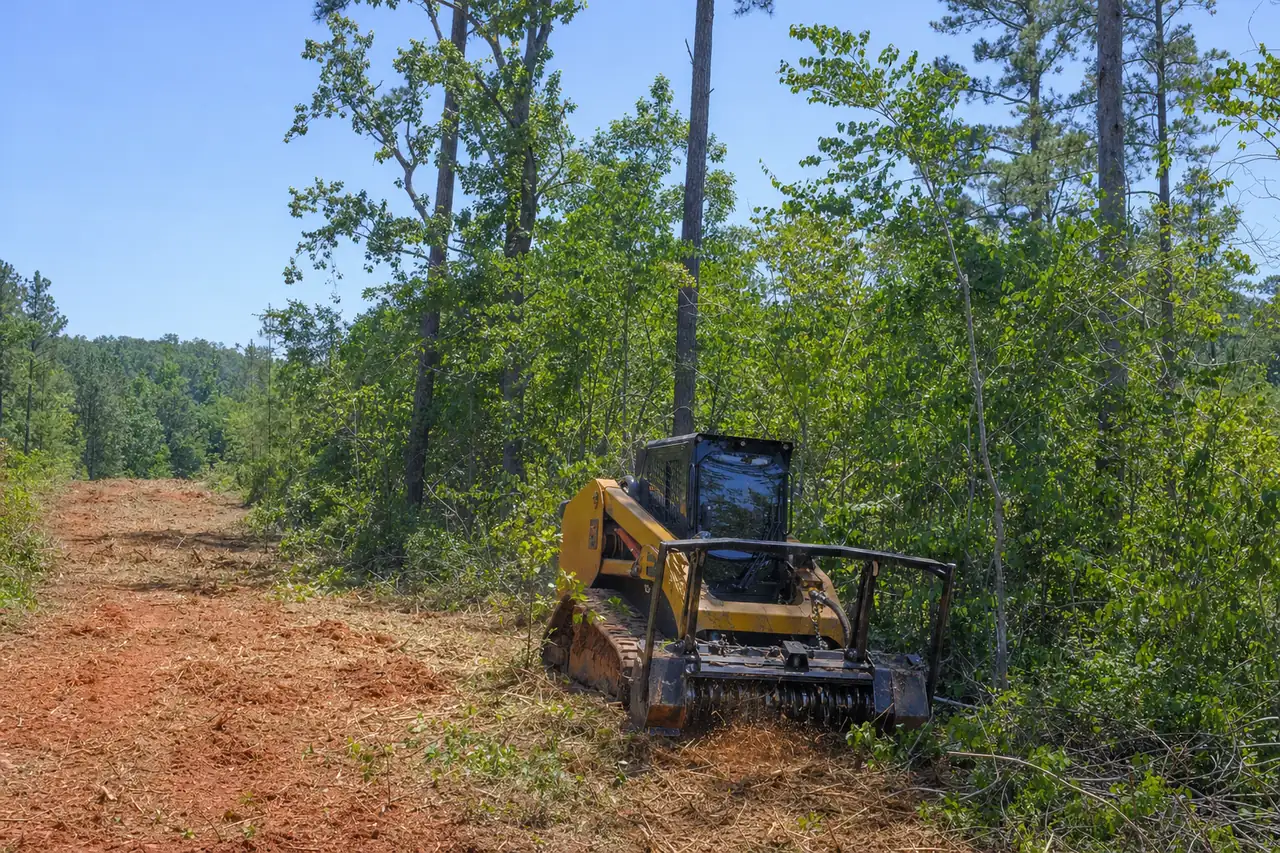
Where a site already has piles, or storm trunks too big for the mulcher, a horizontal grinder turns them into chips on site. The chips can stay as cover or go out by the truckload. Hauling raw debris instead runs about $500 to $2,500 an acre on top of the clearing, which is the cost a burn plan was trying to skip in the first place.
Ranges are estimates for Forsyth County and the surrounding area based on job density, terrain, access and acreage. Your written quote is the only price that applies to your property.
 Forestry Mulching in Cumming and Forsyth County
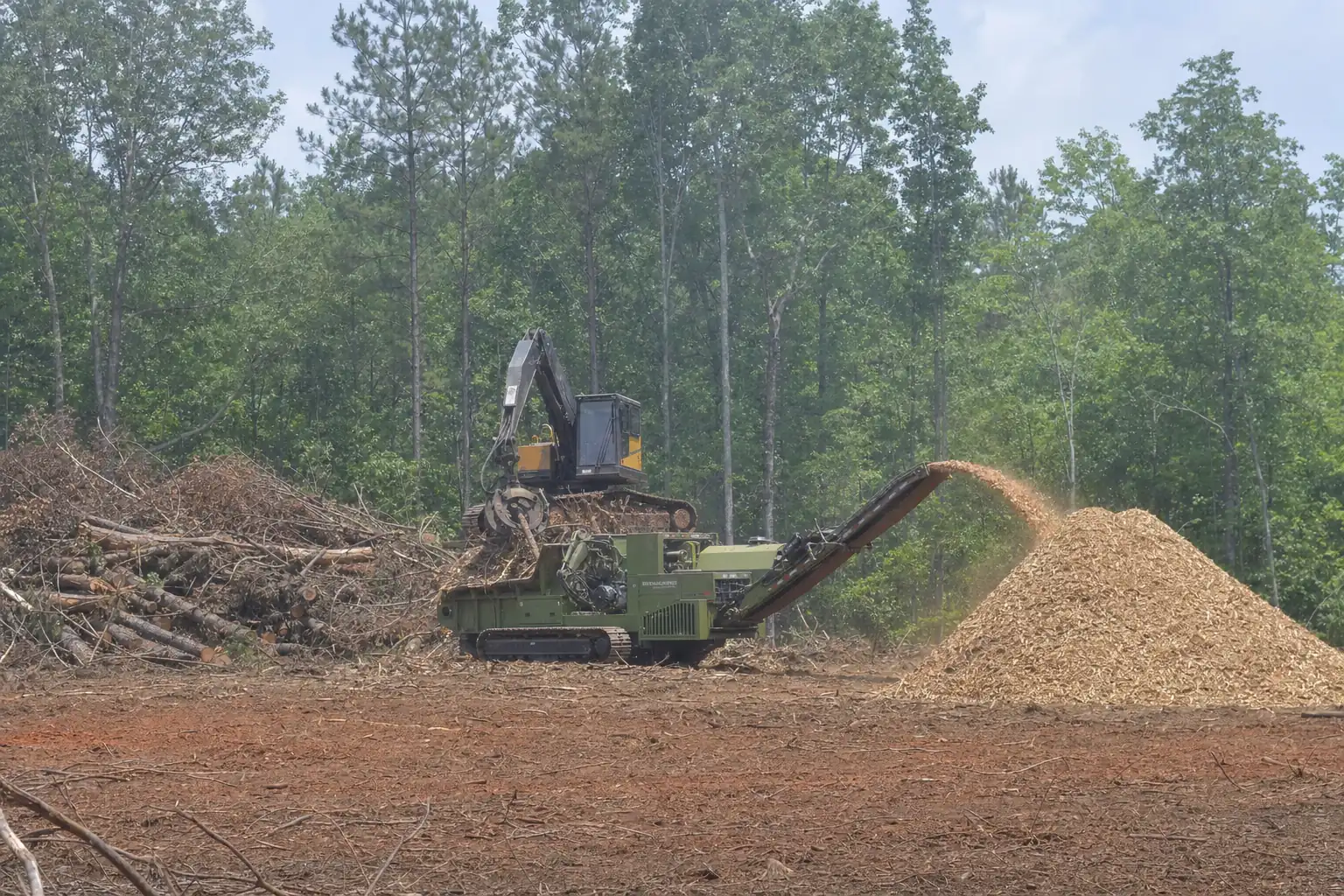 Horizontal Grinding for Debris Piles and Storm Timber
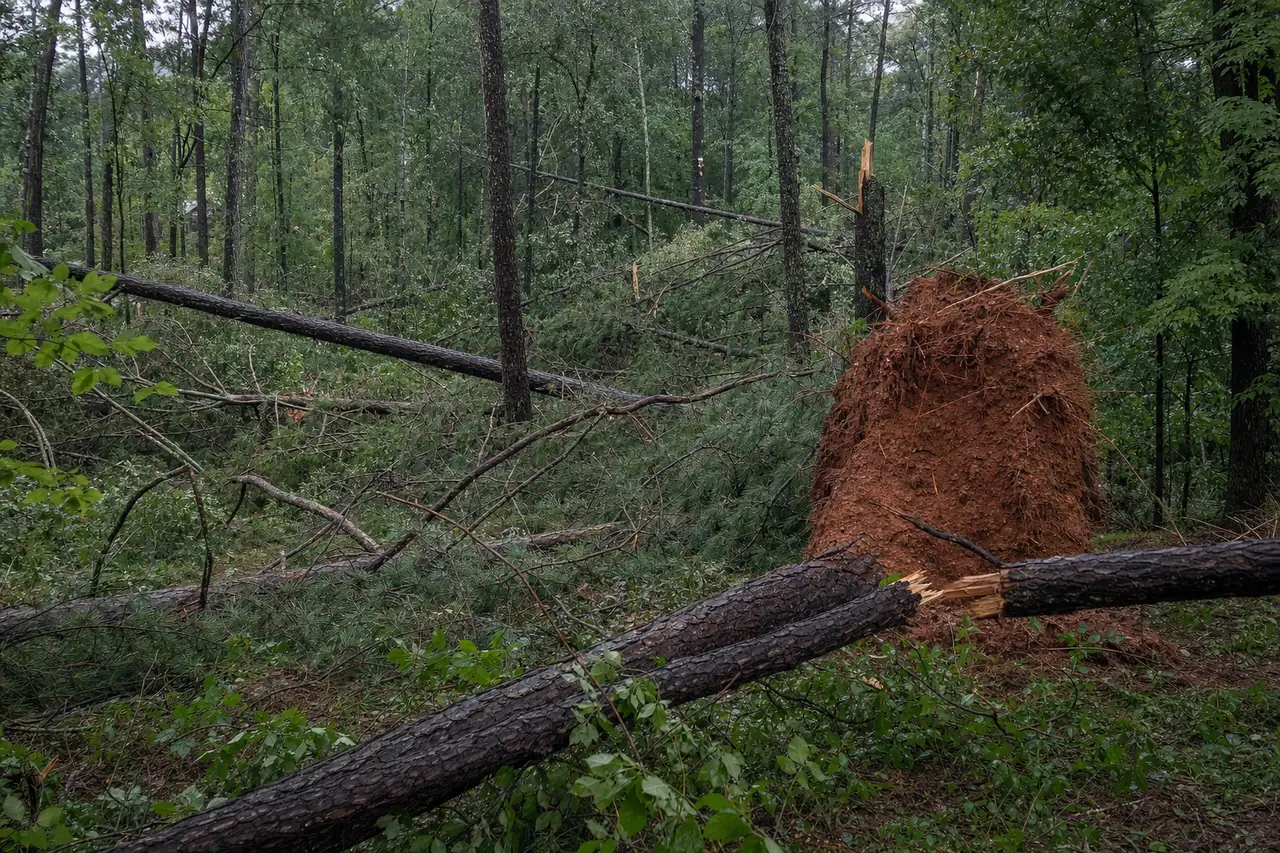 Storm Damage Cleanup and Downed Timber Removal
Summer clearing has its own catches
Taking fire out of the plan doesn’t make summer the easy season. Dry spells are good working ground, and long dry weeks can be the fastest of the year. Full leaf hides rock, gullies and old fence until the mulcher finds them, so a summer walk-through takes us longer. Heat is hard on crews. A summer thunderstorm can soak the clay in an afternoon, and we wait it out the same as in winter.
Spring into summer is also nesting season, and most native birds’ nests are protected by federal law. If you’d like the clearing scheduled around it, say so on the walk and we’ll plan for it. For the season-by-season trade-offs, see the best time of year to clear land.
If a quote you’re comparing plans to burn
Some outfits still quote dozer-and-burn work. Before you sign one in spring, ask three things:
- What month does the burn happen? Anything from May 1 to September 30 can’t burn in Forsyth County.
- How far is the nearest occupied house from the pile? Under 1,000 feet rules out an open burn.
- If it can’t burn, who hauls it, and is that in the price?
A quote that can’t answer those can leave you with a cleared lot and a pile you can’t legally burn until fall. Mulching compared with burning goes through the full comparison.
Planning around the calendar
If you’re set on burning, finish the job and the burn between October and April, on permit days, with the distances met. If you’d rather clear when it suits you, mulching runs any month the ground is dry. Either way, the cleared ground grows back: sweetgum, privet and briars sprout the next spring, so plan for maintenance mowing. The permits, buffers and other rules that touch a clearing job here are on the erosion control and permits page.