Privet & Invasives · 6 min read
Kudzu Is a Three-to-Ten-Year Project. Here’s the Plan.
Kudzu in Forsyth County takes three to ten years of repeated treatment to kill, according to UGA and the Georgia Forestry Commission, because every root crown has to be controlled and the roots run up to 9 feet deep. We cut the vine mat first, then licensed applicators treat each growing season until no crowns sprout.
A kudzu plan for every year of it, in one business day.
The one-day quote
Kudzu usually reaches us after someone has already tried to get rid of it once. A road bank or the ravine behind the house is buried under vines, a contractor mulches it flat in a day, and by the next summer the runners are back over the stumps and climbing into the edge trees again. The owner paid for the part you can see.
The machine work on a kudzu patch is the short part. UGA and the Georgia Forestry Commission put complete eradication at three to ten years of repeated treatment. A plan that says so up front, with the visits written out, gets you further than a one-day job repeated every summer. This post lays out how we run that plan on Forsyth County ground.
What keeps kudzu alive
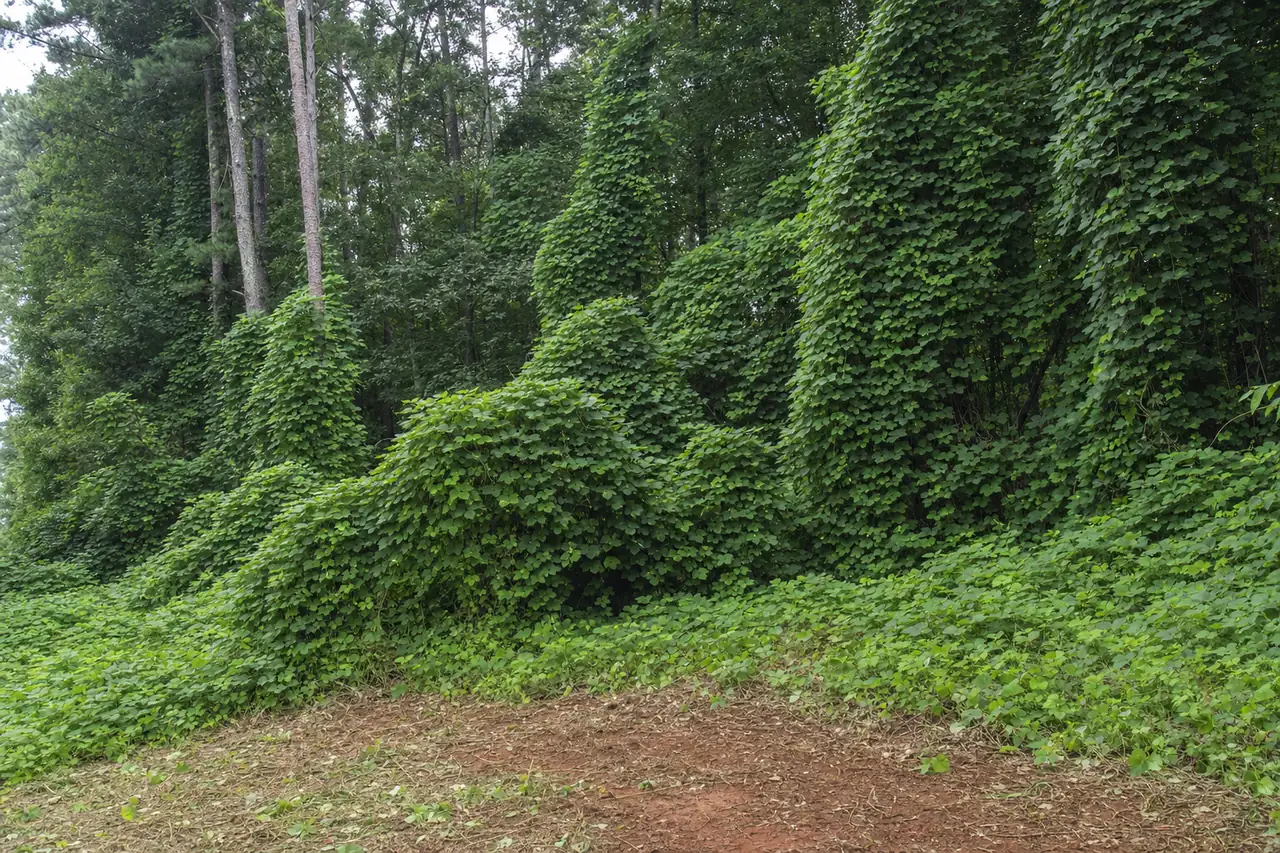
Each kudzu plant grows from a root crown at the soil surface. The roots below it run as deep as 9 feet and store enough starch to push out new vines after every cut. The vines also root where their nodes touch the ground, and each of those spots becomes a new crown. In a mature patch there can be a crown every square foot or two.
Georgia guidance puts vine growth at up to 50 feet in a single growing season. One crown missed in June can cover ground again by September. That is why the whole plan comes down to one job: find every crown and keep treating until none of them sprout. The longer version of the biology is in does forestry mulching kill kudzu?
Year one starts in winter
We like to cut kudzu in the dormant months. Kudzu drops its leaves after the first hard frost, and with the mat brown and thin you can see the ground under it: the gullies, the old fence wire, the logs, sometimes a car or an old well. On a road bank or a ravine, that matters before anyone drives a machine onto it.
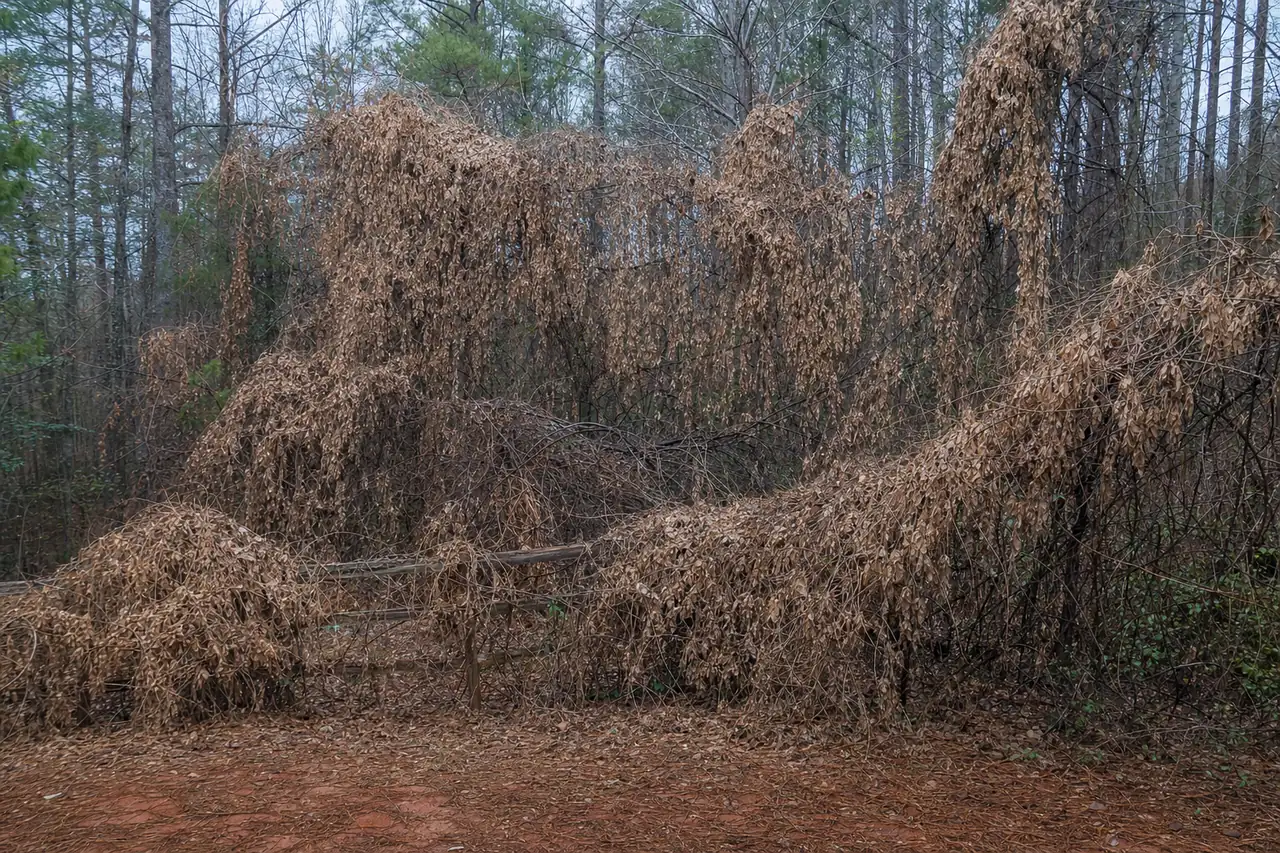
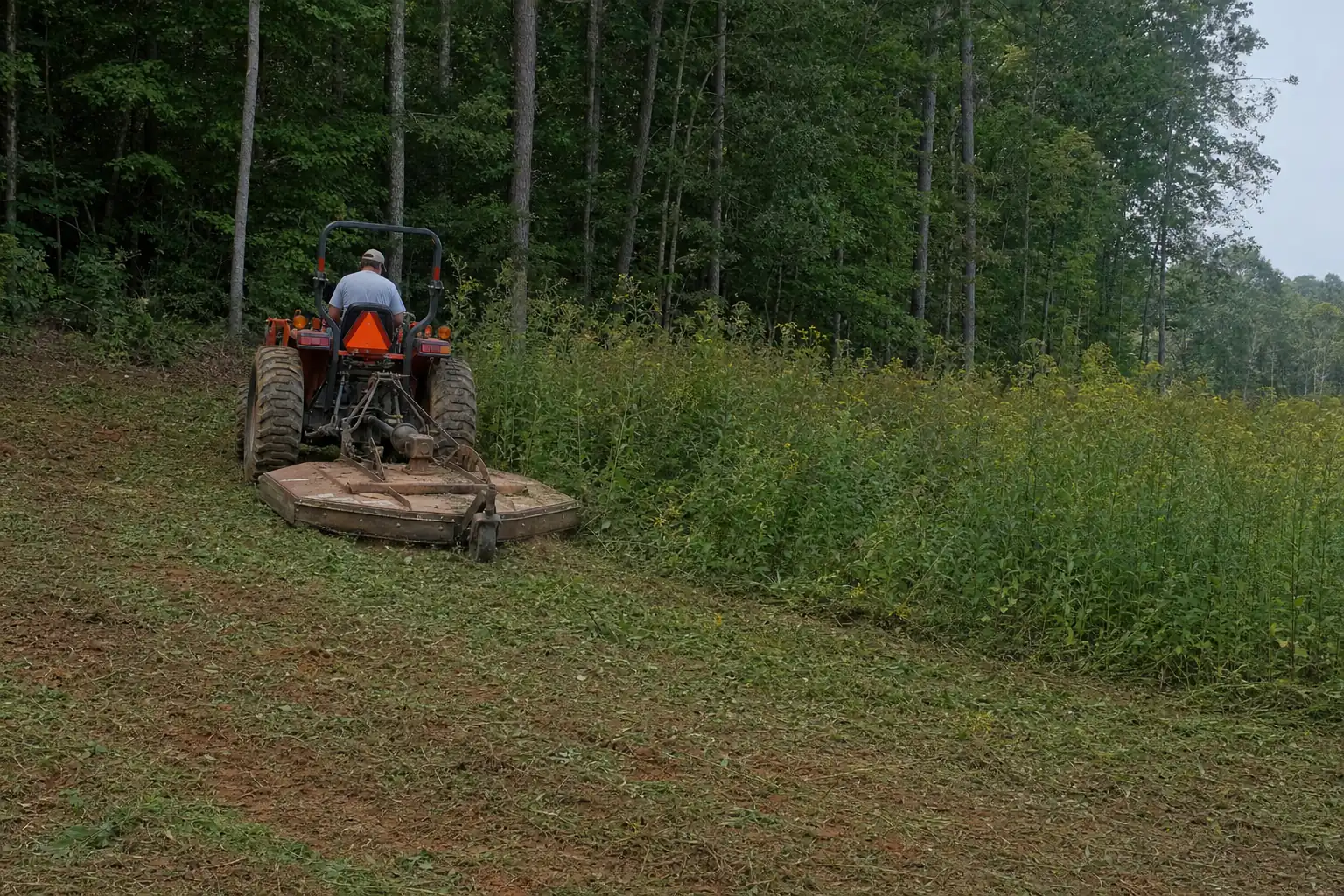
The first visit does three things. A mulcher or heavy mower takes the vine mat to the ground so the crowns show. Vines climbing the edge trees get cut low, so the tops die off in the canopy. And anything buried under the mat gets found and dealt with before the treatment crews walk the patch.
The treatment waits. Kudzu takes up herbicide through its leaves, so the first application goes on in the growing season, once the runners are leafed out. Licensed applicators treat each crown they find, following the product label and its rules near water.
Herbicide applications are performed by licensed applicators in accordance with the product label.
The plan, year by year
Every patch runs a little differently, but the shape of the years is the same. The visits get shorter as the crowns die out.
| When | The work | What you see |
|---|---|---|
| Year 1, dormant season | Vine mat cut to the ground, climbing vines cut low, hazards found | Bare ground and crowns where the blanket was |
| Year 1, growing season | First treatment on the runners from every crown; straw and seed on bare slope | Runners coming up, then dying back |
| Years 2 and 3 | Surviving crowns treated again each growing season | Fewer runners each year, in patches |
| Year 4 onward | A walk each growing season and spot treatment where a crown sprouts | A few scattered runners, then none |
| Done | A full growing season with no crowns sprouting, then mowing to keep it open | Open ground with grass and native cover |
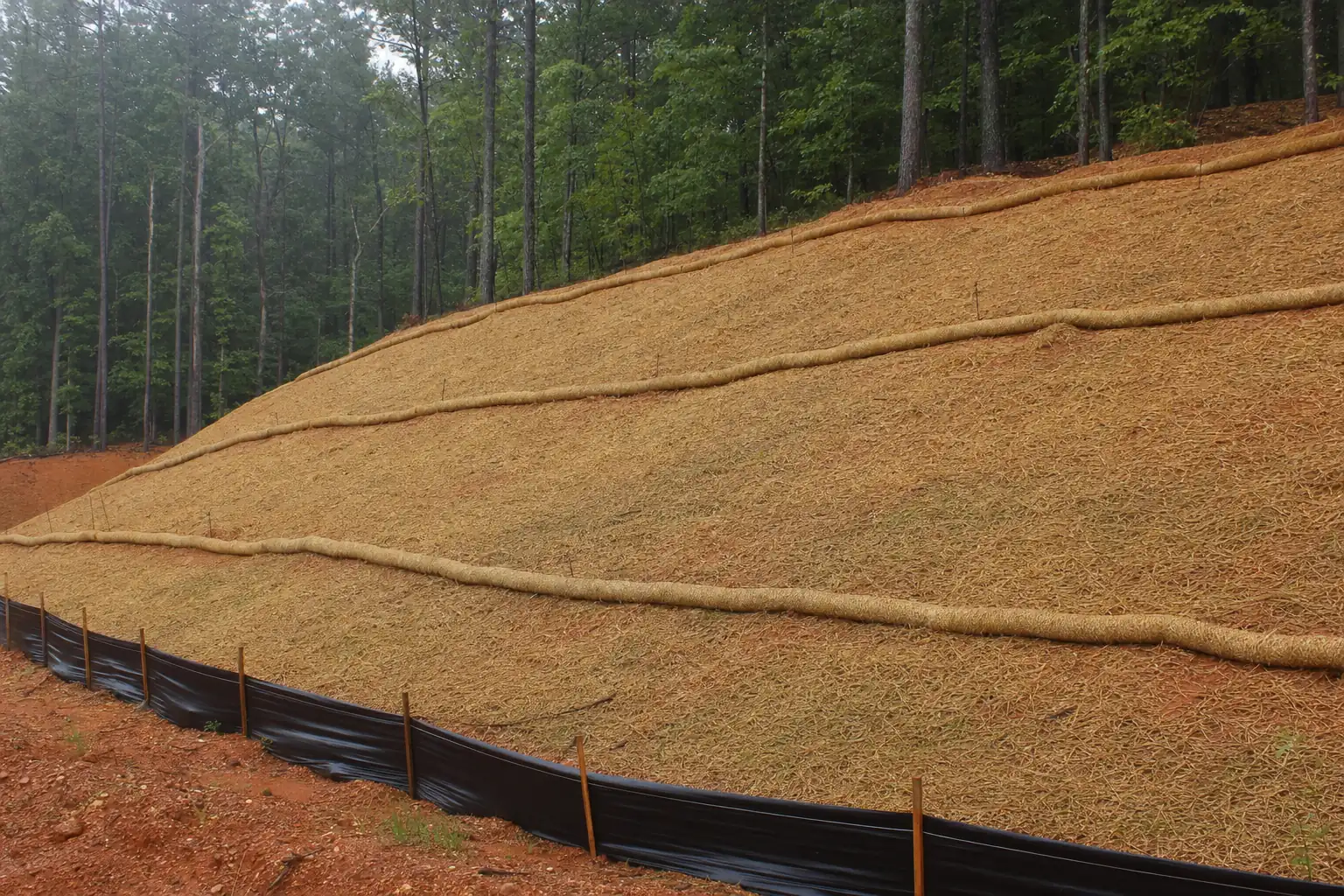
On a slope, the year-one stabilizing work matters as much as the treatment. Kudzu was planted across the Southeast to hold road cuts and gullies, and when it dies back the red clay underneath is bare. Straw and seed hold it through the rain while the crowns die. Where the patch drains toward a creek, silt fence goes in too, and the stream buffers decide where the machine can go. See erosion control and silt fence.
What pushes a patch toward ten years
Three years is a small, young patch that gets every scheduled treatment. Ten years is closer to what an old road bank looks like. A few things decide where your patch lands:
- Age and size. A patch that has been spreading for decades has more crowns, deeper roots and more starch in them.
- Slope. Steep banks and ravines are slow to walk, and crowns hide in the gullies.
- A skipped season. Miss a year of treatment and the surviving crowns rebuild their roots and send runners across the treated ground.
- The neighbor’s side. Kudzu crosses property lines. If the patch continues past your line, runners keep coming back from it.
We plan for the long end of the range and tell you when the patch is done. If it finishes early, you stop paying for visits early. If we wrote three years into a plan for an old bank, you would be hearing from us about year four anyway.
The numbers behind the plan
- Up to 9 ft
- How deep kudzu roots run
- Up to 50 ft
- Vine growth in one growing season
- 3 to 10 years
- Repeated treatment for complete eradication, per UGA and the GFC
What it costs across the years
The first visit costs the most. Mulching vines and light brush runs about $1,200 to $2,500 an acre around Cumming, with a $1,200 to $2,000 minimum for small jobs. Steep banks and odd shapes often go on a machine day rate of $1,800 to $3,000. Treatments are quoted per season and get smaller each year as fewer crowns come back.
Ranges are estimates for Forsyth County and the surrounding area based on job density, terrain, access and acreage. Your written quote is the only price that applies to your property.
All of it runs on one contract: the cutting, the treatments, the straw on the slope and the walks after. A single-machine operator can mow the patch once. The treatments, the slope and the years after it are where kudzu jobs fail, and they need someone holding the schedule.
On larger forest tracts, Georgia’s Invasive Plant Control Program reimburses qualifying landowners for control work that combines mechanical treatment with herbicide. It has acreage minimums and a per-landowner cap. We confirm the current terms with the program office before any application. See does Georgia pay for invasive plant removal?
Program figures and sign-up windows are set annually and are current as of November 4, 2026. We confirm every figure with the Georgia Forestry Commission or NRCS before any application. This page explains how programs work; it is not a guarantee of eligibility or reimbursement.
When it’s done, and after
A patch is done when no crown sends up a runner through a full growing season. We walk it that season to be sure. After that, the ground needs what any opened ground needs around here: mowing once or twice a year so sweetgum, briars and privet don’t take the light the kudzu gave up. We set that up as maintenance mowing on the same contract.
The full service is on our kudzu removal page, and the invasive plant removal page covers privet and the other invasives that tend to grow on the same land.