
Permits & Erosion · 6 min read
The Forsyth County Permit Question, Answered Plainly
In unincorporated Forsyth County, clearing counts as land disturbance. A job that disturbs 1 acre or more, or works within 200 feet of a creek or other state waters, needs a county land disturbance permit before work starts. Smaller jobs away from water are usually exempt but still owe basic erosion control. We settle which applies on the walk.
Get the permit question settled. Quote in one business day.
Five words on the phone
“Do I need a permit?” comes up on most first calls, often before the caller has said how much land they have. A neighbor told them the county wants a permit for everything. Someone else told them the county doesn’t care what you do on private land. Neither is right, and the answer for your land comes down to a few things we can measure.
The plain answer
Forsyth County’s soil erosion ordinance, Ordinance 73, lists clearing of vegetation as land-disturbing activity, right beside grading and filling. A forestry mulcher working through brush counts, even though it leaves chips instead of bare clay. All land disturbance needs a permit unless an exemption covers it, and on clearing jobs the exemption that matters is the small-project one.
The figures behind the answer
- 1 acre
- Disturbance that triggers the county permit and state stormwater coverage
- 200 ft
- Distance from state waters where a smaller job needs a permit too
- $250
- County fee for a clearing and grubbing permit
- Up to $80
- State NPDES fee per disturbed acre
Permit thresholds, fees and buffer widths are those published by Forsyth County and the State of Georgia as of November 4, 2026. Confirm current requirements with the issuing authority before work begins. This is not legal advice.
Under an acre, more than 200 feet from state waters, and not part of a larger plan of an acre or more: that job is exempt. Any other combination needs a permit. All of that is unincorporated Forsyth County. Inside Cumming’s city limits, the City of Cumming issues its own land disturbance permit through its Planning and Zoning Department, and we confirm its current requirements before we quote a city job.
What we measure on the walk
- 1Disturbed areaThe ground the job will clear, grade or open up, drive and staging included. Parcel size doesn't count.
- 2Distance to waterThe nearest creek, branch or lake edge, measured from the bank.
- 3The larger planWhether this clearing is one piece of a subdivision or a bigger project.
- 4What the land is forA house, a sale, a food plot or timber, since that decides which rules apply.
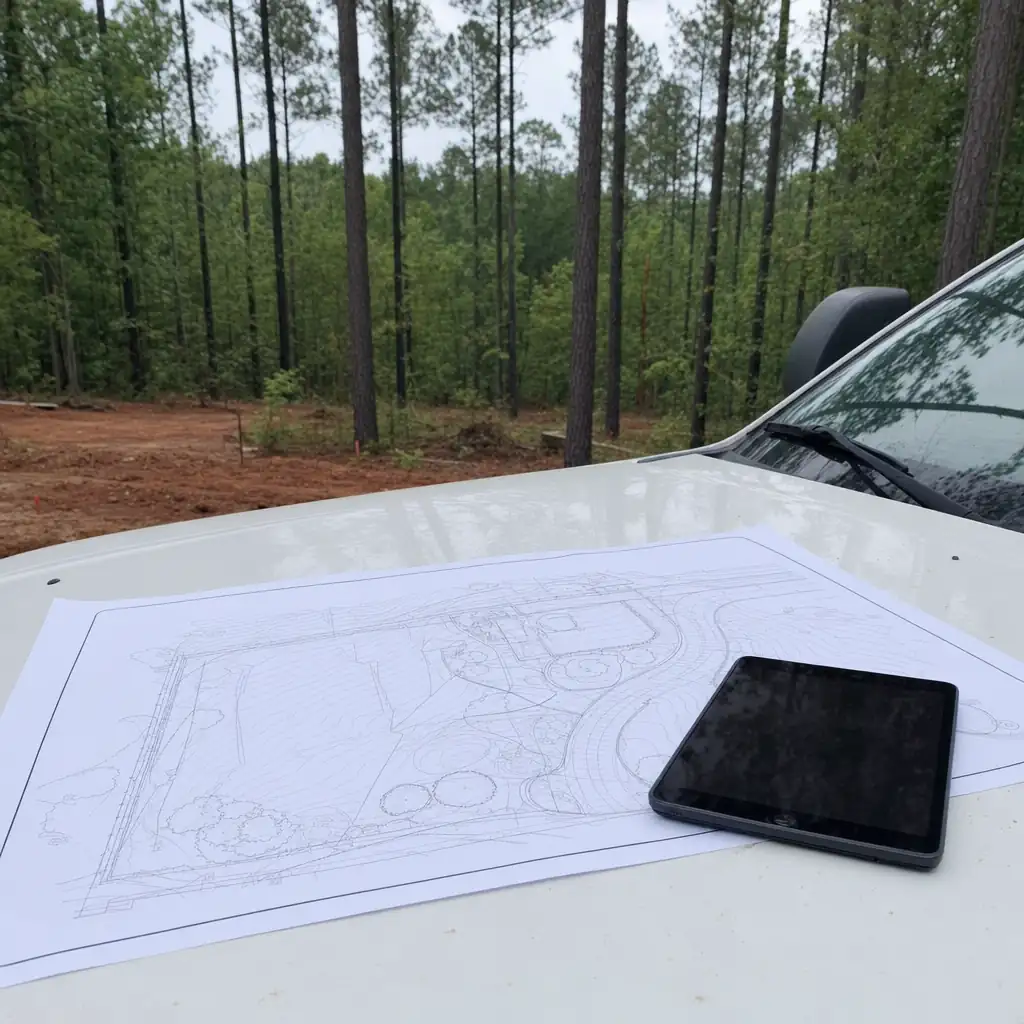
Disturbed area surprises people most. A half acre cleared on a 10-acre tract is a half-acre job. A “half-acre” homesite with a long driveway through the woods, a utility run and a spot to park the machines can pass an acre once the pieces are added up. We mark the area on a sketch, so you see where the job sits before you sign anything.
Water comes second. The east two-thirds of the county drains to the Chattahoochee and Lake Lanier, the northwest third to the Etowah, and creeks like Big Creek and Settingdown Creek gather smaller branches along the way. A wooded tract with a hollow running through it often has a branch closer than the owner thinks. The small-job cases are laid out in do I need a permit to clear less than an acre.
Things we hear, and how the rules read
| What we hear | How the county’s rules read |
|---|---|
| “It’s my land, so it’s my business.” | The ordinance applies to private land. Owning it doesn’t create an exemption. |
| “Mulching doesn’t disturb anything.” | The definition names clearing of vegetation. A mulched acre is a disturbed acre. |
| “We’ll do half this year and half next year.” | Part of a larger plan of 1 acre or more counts as the whole plan. We don’t quote a job in pieces. |
| “It’s only brush, no real trees.” | Brush is vegetation. Area and distance to water decide it, whatever is growing. |
| “It’s farmland.” | The agricultural exemption follows the state’s definition of agriculture and leaves out raising and boarding horses. Clearing for a house isn’t farming. |
If your job doesn’t fit any of those, the walk settles it. If the county’s reading of a site is unclear to us, we ask the county before anyone starts.
When the answer is yes
A permitted clearing job has paperwork ahead of the first machine. Your engineer or surveyor draws a civil set with an erosion plan and a tree plan, and the plans go to the county’s Planning and Community Development department for review. A site of an acre or more also needs coverage under Georgia’s NPDES construction stormwater permit, which carries its per-acre fee. The county’s Department of Engineering hands over the permit at a pre-construction meeting.
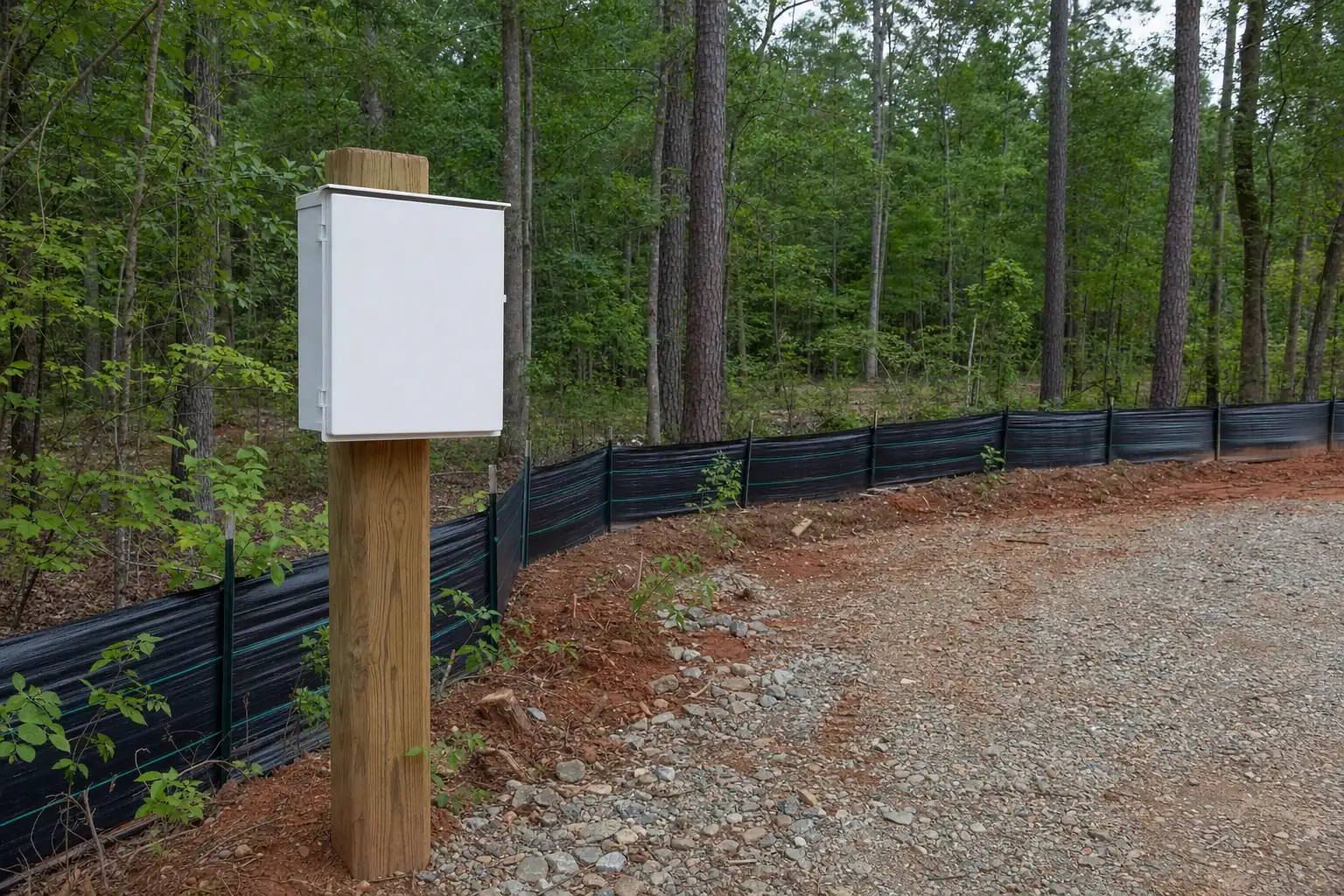
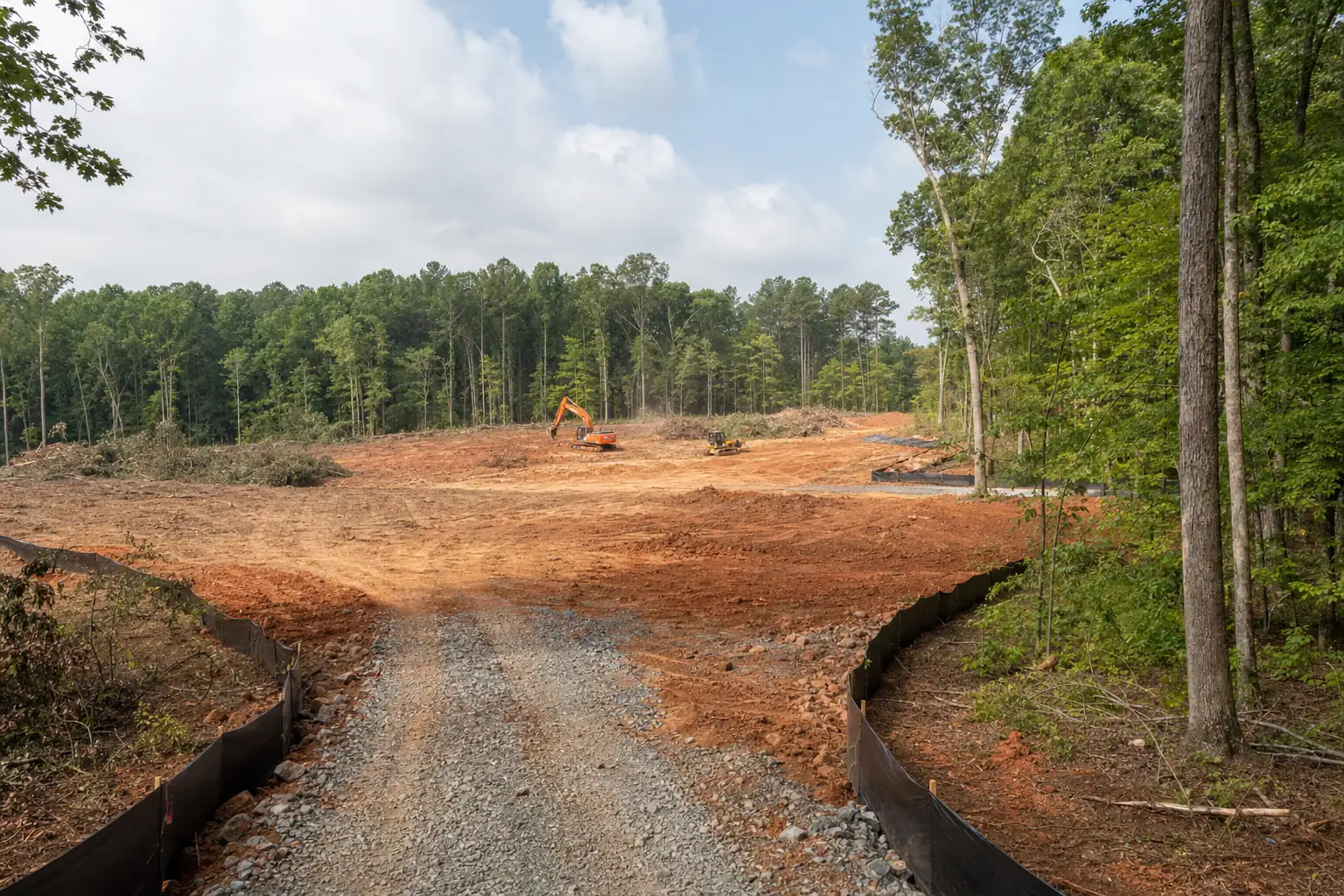
Then our part starts. Silt fence goes in along the low side and a gravel construction exit at the road, before any clearing. Once work starts, the site gets inspected on the permit’s schedule: at least weekly on most sites, and within 24 hours of a half-inch rain. We keep the fence and the exit working between inspections. Silt fence runs about $500 to $1,200 an acre on our quotes, as a line on the same contract as the clearing.
Ranges are estimates for Forsyth County and the surrounding area based on job density, terrain, access and acreage. Your written quote is the only price that applies to your property.
The $250 fee is the smallest cost of a permitted job. The engineering and the controls cost more, and the county’s review adds time to the schedule. Property that needs a land disturbance permit also falls under the county’s tree ordinance, adopted April 2, 2026. The steps from plans to pre-construction meeting are in what a land disturbance permit is and who issues it.
When the answer is no
An exempt job still answers to the ordinance’s minimum erosion practices. Your sediment has to stay on your land, permit or not. On a slope above a road, a creek or a neighbor’s yard, that usually means silt fence on the low side of a job the county never reviews. See do I need silt fence for a small clearing job.
Stream buffers don’t depend on the permit either. Georgia sets a 25-foot buffer along state waters, and unincorporated Forsyth adds a 50-foot undisturbed buffer plus a 25-foot setback along streams. We flag the buffer on the walk, and the machines stay out of it. If stumps are coming out, we call Georgia 811 before anyone digs.
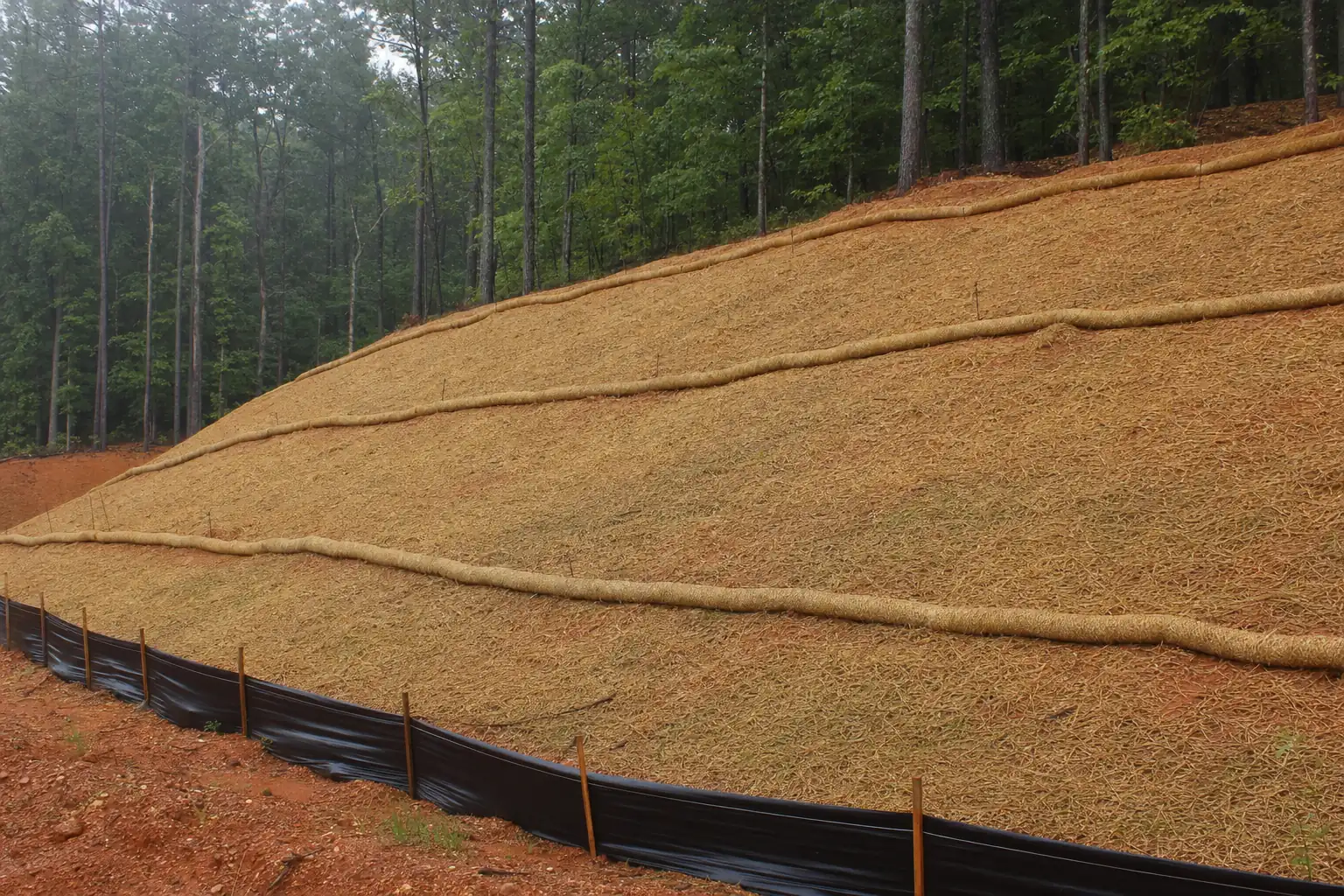 Erosion Control and Silt Fence Installation
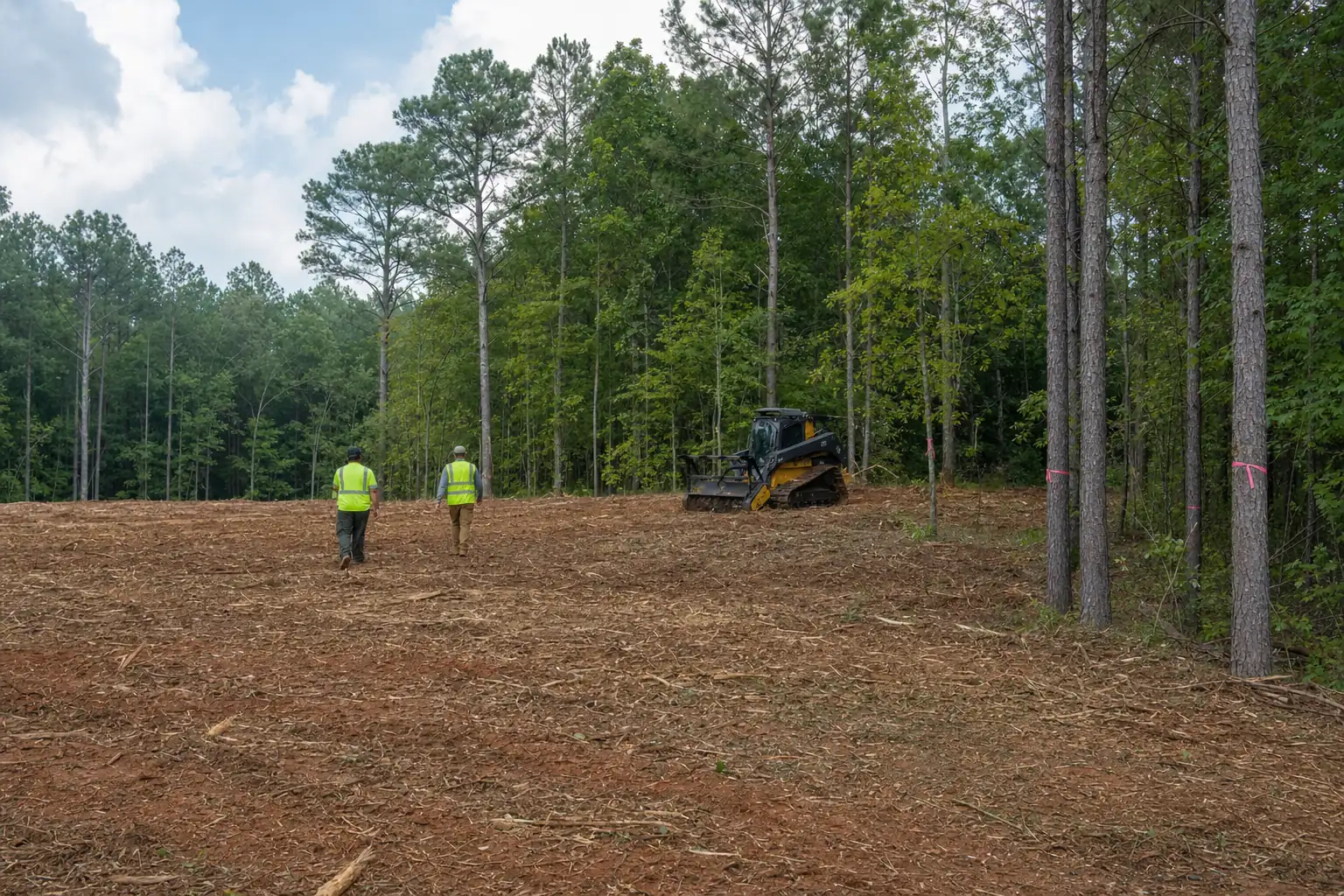 Lot Clearing for New Homes and Small Acreage
 Site Preparation: Pads, Driveways, Utility Runs, Staging
Why we settle it before the quote
Finding out about the permit after the clearing is the expensive way to learn the rules. A site cleared without a required permit can be stopped until the plans and the controls catch up, and a builder with a closing date can’t wait that out. Ordinance 73 also carries fines, and work inside a buffer brings replanting on top. The full permit picture, exemptions included, is in do you need a permit to clear land in Forsyth County.
So our quote says one of two things. Exempt: the clearing, plus any silt fence the slope calls for, on a dry week. Permit needed: we work from your engineer’s plan, build the controls it shows, and clear after the pre-construction meeting. Either way the brush grows back within a season or two, and we plan the maintenance mowing before we leave.
The short version
Under an acre, more than 200 feet from water, and standing on its own: usually no permit, and the clay still stays on your land. An acre or more, or close to a creek: permit first, silt fence before the first tree. Inside Cumming, the city’s rules apply. The rest of the county’s rules for clearing are on the erosion control and permits page.
Go deeper