Cost-Share Programs · 5 min read
The June 15 to July 3 Window: Getting a Cost-Share Application Ready
Sign-up for Georgia's Resilient Forest Incentives Program runs June 15 to July 3, and the landowner files the application. Getting ready means measured forest acres, a map of the stands, a forester's prescription where thinning is likely, each piece of work matched to a named practice, and the current terms confirmed with the program office before you apply.
Get the plan ready before the window. Quote in one business day.
Why the window catches people
Every summer some landowner calls us about the state’s forest incentives program a week or two after sign-up has closed. They read about it, it fit their land, and by the time they had a map and a plan the window was gone. Now they wait a year, and the brush under their pines keeps growing.
Sign-up for Georgia’s Resilient Forest Incentives Program runs June 15 to July 3. Filing the application doesn’t take long. Knowing what to apply for does: which acres, which stands, which practices, and what the program office says about each one this year. If you’re reading this in late spring, there is still time, but not much slack.
Program figures and sign-up windows are set annually and are current as of November 4, 2026. We confirm every figure with the Georgia Forestry Commission or NRCS before any application. This page explains how programs work; it is not a guarantee of eligibility or reimbursement.
The Georgia Forestry Commission sets the dates each year and can change them. We confirm the window, the rates and the minimums with the program office before any application. The sign-up window answer lists what we can confirm for each program.
What goes on the kitchen table
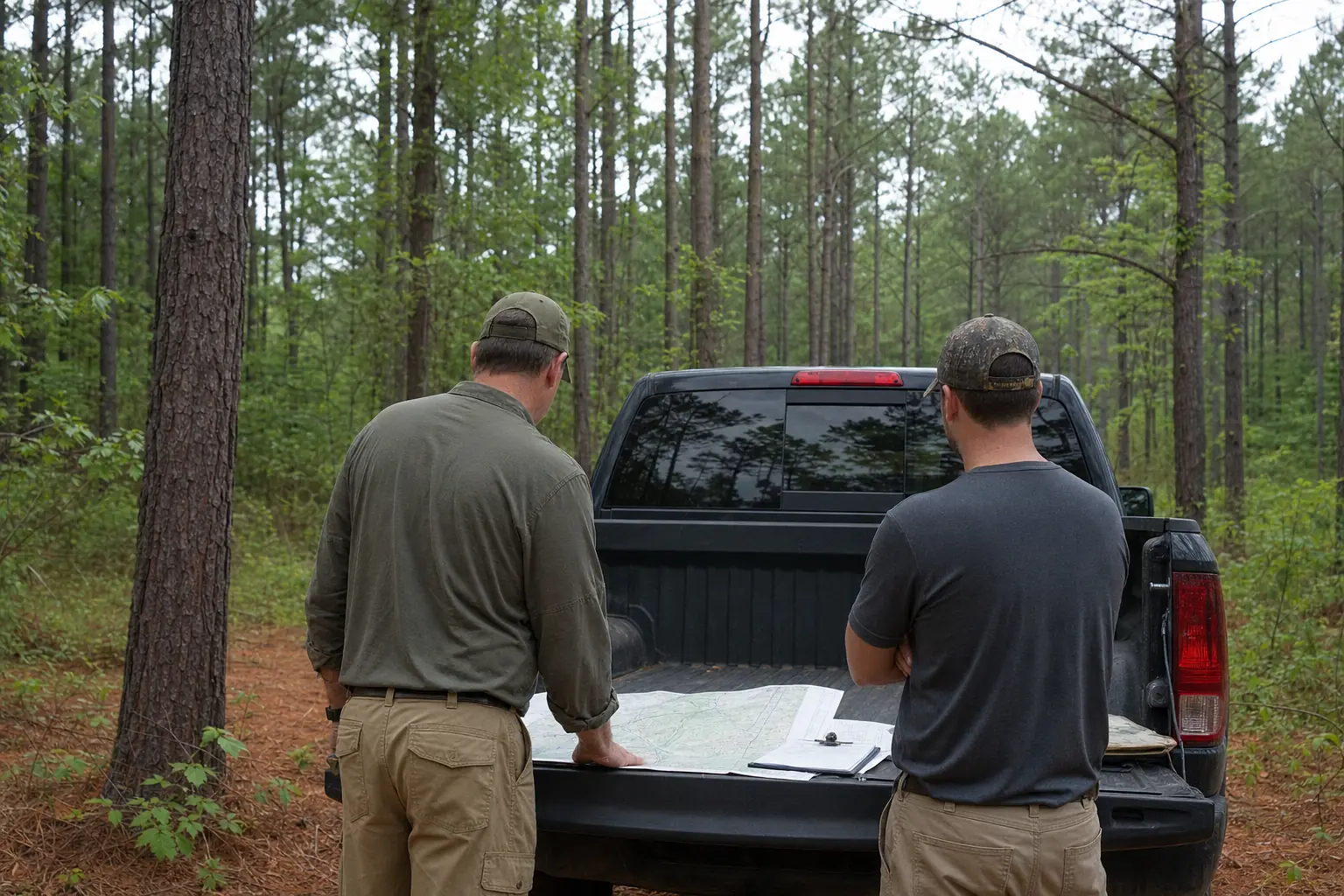
Most of the getting-ready happens with a map spread out and a folder of papers. When the folder is complete, the application itself is a short evening. This is what belongs in it.
| What | Why it matters | Who usually gets it |
|---|---|---|
| Who holds title | The program wants to know who the landowner is | You, or the estate’s attorney |
| Total and forest acres | The program minimums hang on forest acres | We measure them on the walk |
| A map of the stands | Shows where each practice goes, with creeks and roads marked | We mark it up with you |
| A forester’s prescription | Needed where thinning or site prep is likely | Your consulting forester |
| A dated note of the office call | Records this year’s rates, minimums and dates | You, with us on the call if you like |
| A quote itemized by practice | Keeps the scope in your application matched to the work | Us |
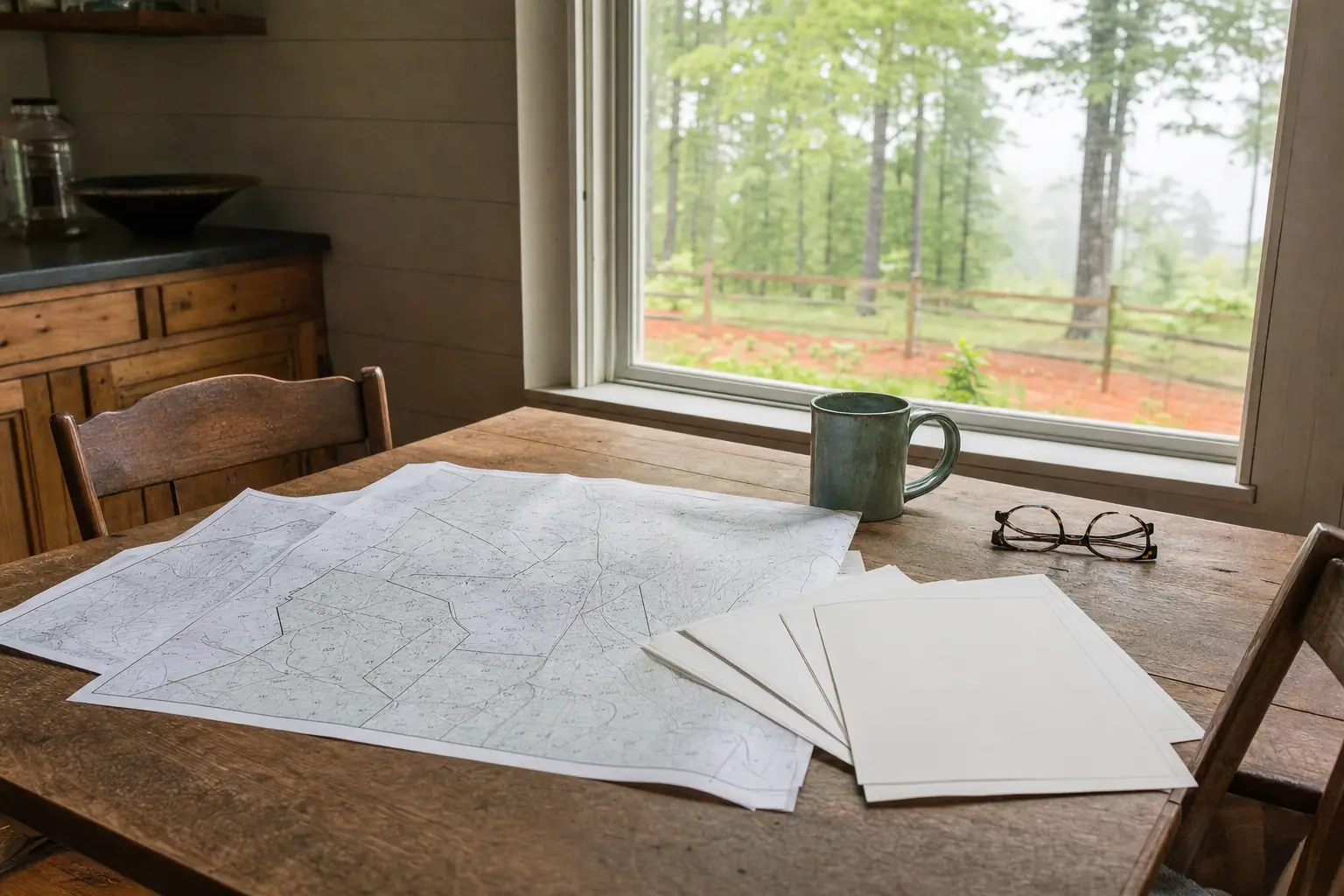
If the land came to you through an estate, settle the title question first. It takes longer than anything else on the list, and the program office will ask. Our page on estate and inherited property covers the owners in that spot.
Work backward from the window
The order matters more than the speed. Each step needs the one before it.
- 1Walk the landWe measure the forest acres, map the stands, and mark the privet, creeks and roads.
- 2Bring in a foresterWhere thinning or site prep is likely, get the prescription written.
- 3Match and confirmSort the work into named practices and confirm this year's terms with the office.
- 4File in the windowYou apply during June 15 to July 3, with our quote itemized by practice.
A forester isn’t always needed. Underbrushing a pine stand or treating privet often goes ahead without one. Thinning and post-harvest site prep usually call for one, because the prescription names the target basal area, marks the trees and flags the streamside zones. If you need a forester and don’t have one, that is the step to start this week. See working with a consulting forester.
The call to the program office
Before anything is filed, someone calls the program office and asks about this year. Last year’s figures are the most common way a good plan goes wrong. These are the questions we go through with you:
- The rate for each practice in the plan, as the program publishes it this year.
- The acreage minimum, and how the office counts your acres.
- The sign-up dates, confirmed for this year.
- The records the office wants with the claim.
- Work started before acceptance, and whether the office will count it.
Write down what you’re told, with the date and the name of the person you spoke to. That note settles a lot of questions later in the year.
Matching the work to practices
Programs pay for named practices, and “clearing the back forty” isn’t one of them. A typical forest tract around Forsyth County sorts out something like this:
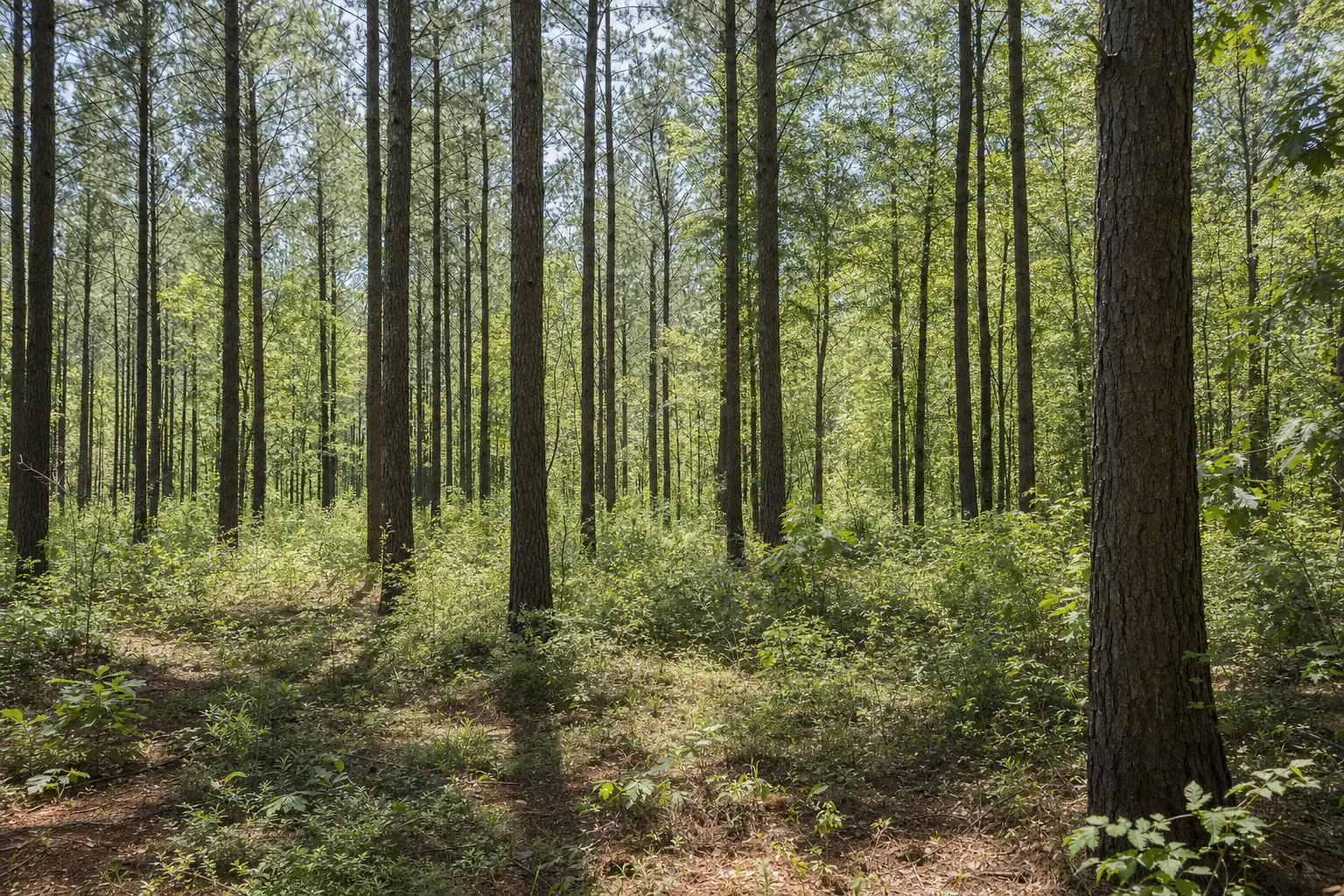
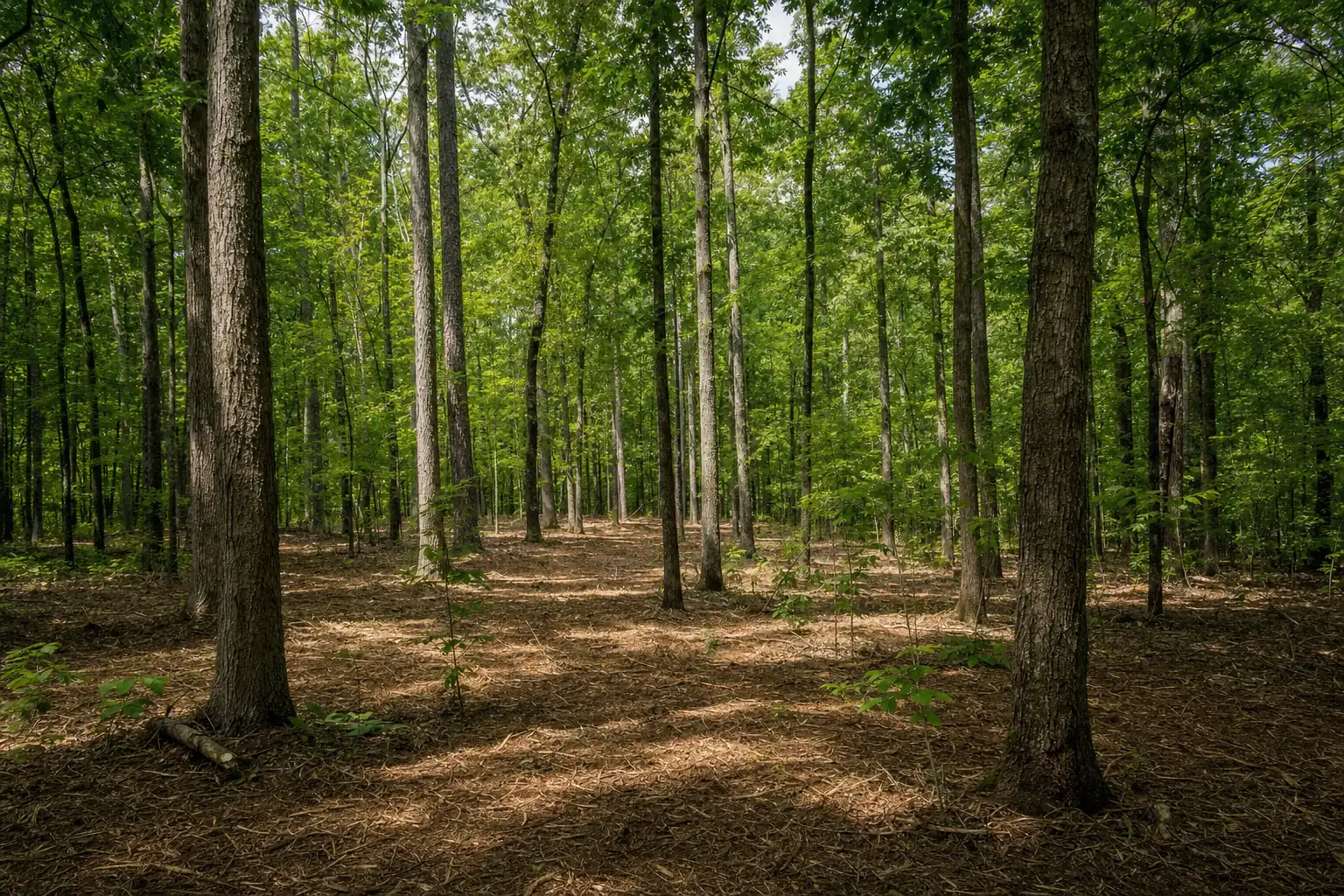
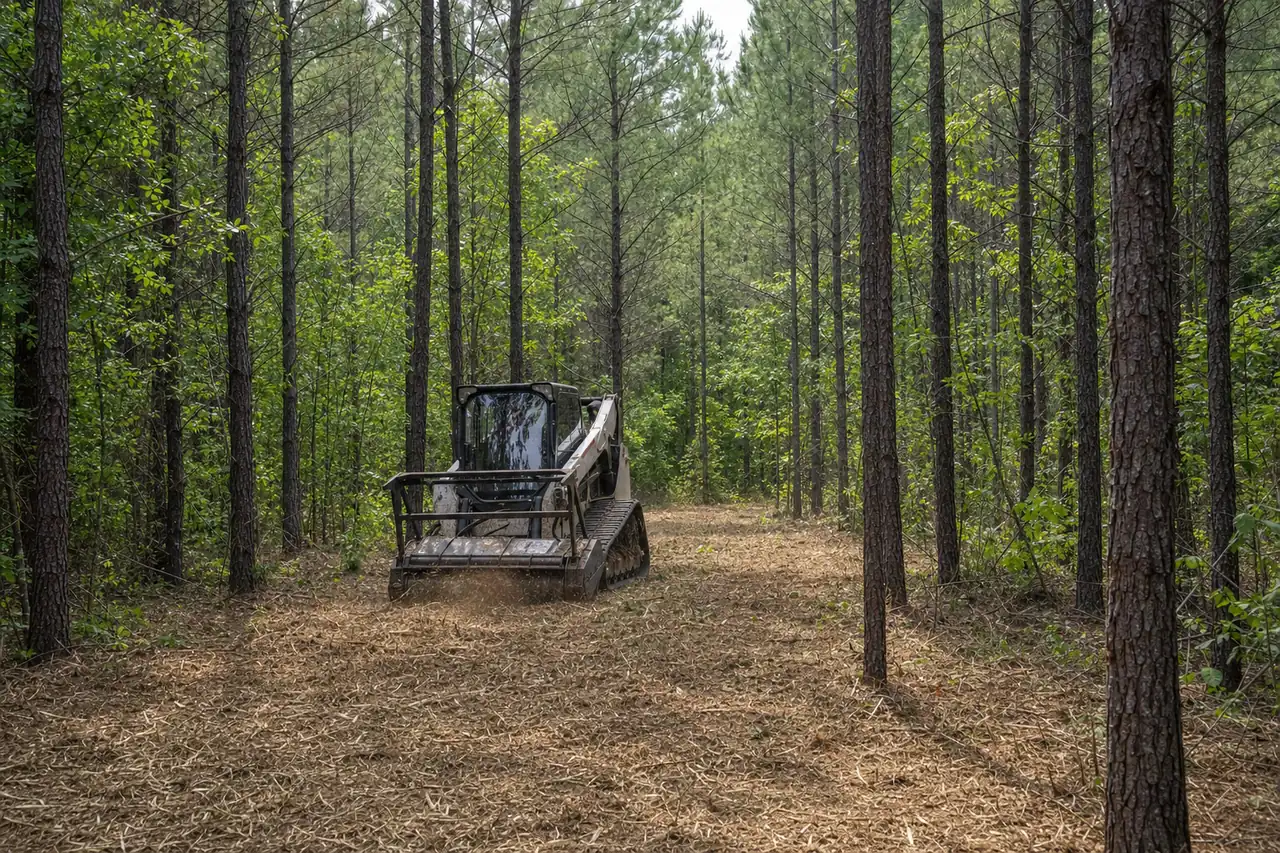
- Brush under the older pines lines up with understory mulching on the state schedule.
- The crowded young stand lines up with non-commercial thinning.
- Privet in the creek bottom lines up with the Invasive Plant Control Program, which keeps its own dates.
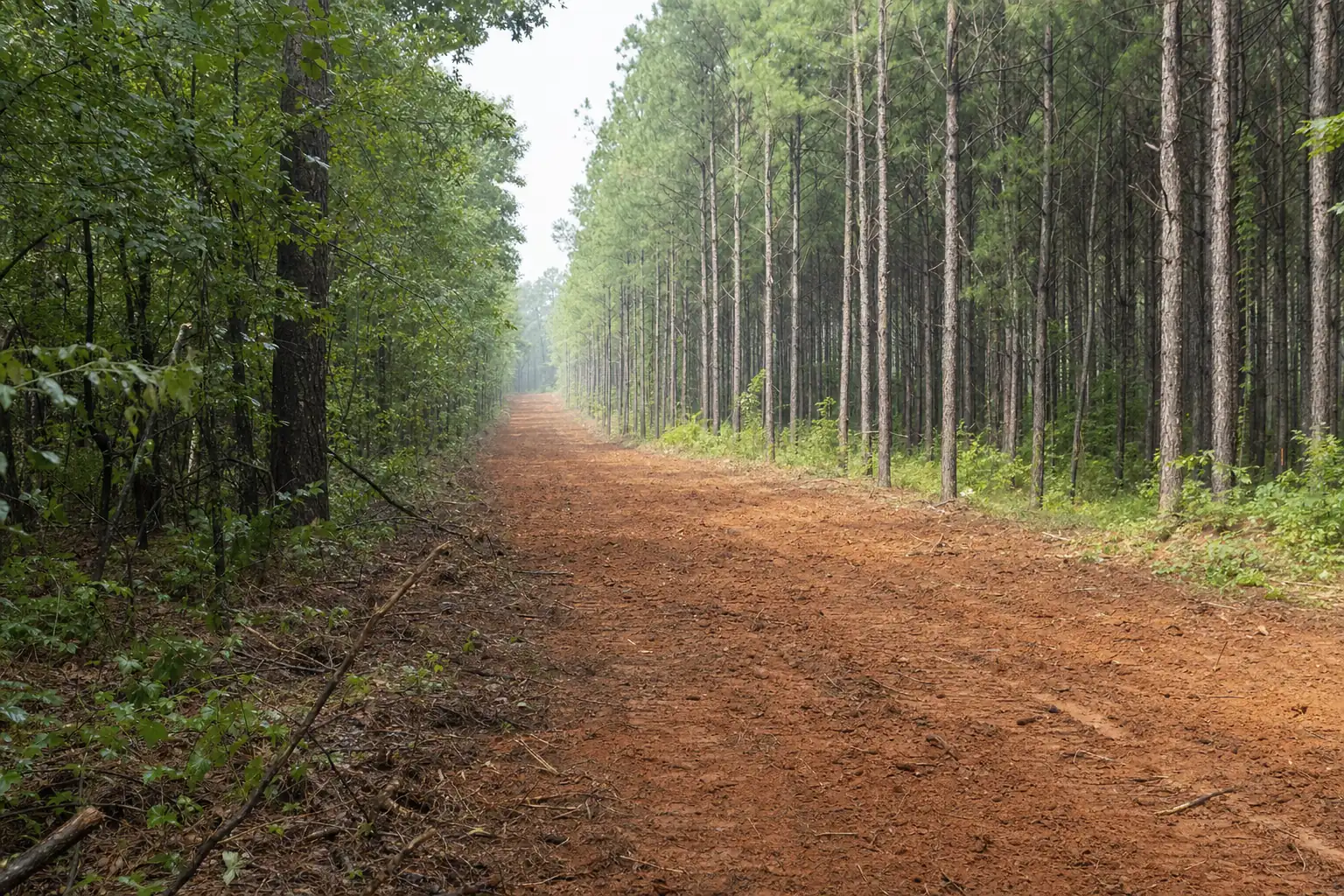
- The lines around the stands line up with the federal Firebreak practice, applied for through the USDA Service Center.
- A food plot or a house site falls outside the programs. We price it on its own lines.
We describe what each practice covers and which of our services does that kind of work. Whether your job fits a practice is the program office’s decision. When the plan draws on more than one program, see using more than one program.
What the quote should look like
A quote for program work should read the way the application does: each practice on its own line, with acres or linear feet, so the office sees the same scope you filed. It should carry no reimbursement figure. The program pays by its own schedule, never as a share of a contractor’s price, and the office confirms your amount after it reviews the application.
The plan usually needs more than one crew: a mulcher under the pines, a saw crew for the thinning, a dozer or disk for bare-soil firebreaks, licensed applicators for the privet. A single-machine operator quotes one of those and tells you to hire three companies for the rest, which is hard to line up before a short deadline. We price the whole plan on one contract, with one point of contact.
 Underbrush Clearing: Open the Woods, Keep the Canopy
 Timber Stand Improvement and Post-Harvest Site Prep
 Firebreak Installation
After you file, or if you miss it
Once you’ve applied, the program office reviews the application and decides. The work follows acceptance, scheduled for dry ground, because tracked machines on saturated red clay leave ruts. We keep each practice’s records as it finishes: acres, dates, a map and photos for your claim. Mulched and thinned ground sprouts back within a season or two, so plan maintenance mowing for the lines and edges you want open.
If the window closes before you’re ready, you have three choices. Plan for next year, with the measurements and the map already done. Look at federal EQIP, which takes applications year-round at the USDA Service Center and groups them by batching deadlines. Or do the work outside a program, if privet is spreading down the creek or a beetle spot is growing next door. Our quote stays the same either way, because it was priced on the work.
The full sequence, with who owns each step, is in how the application actually works, and every program is covered on the cost-share programs page.