Seasonal · 6 min read
Red Clay, Rain and Ruts: Why Winter Is Clearing Season Here
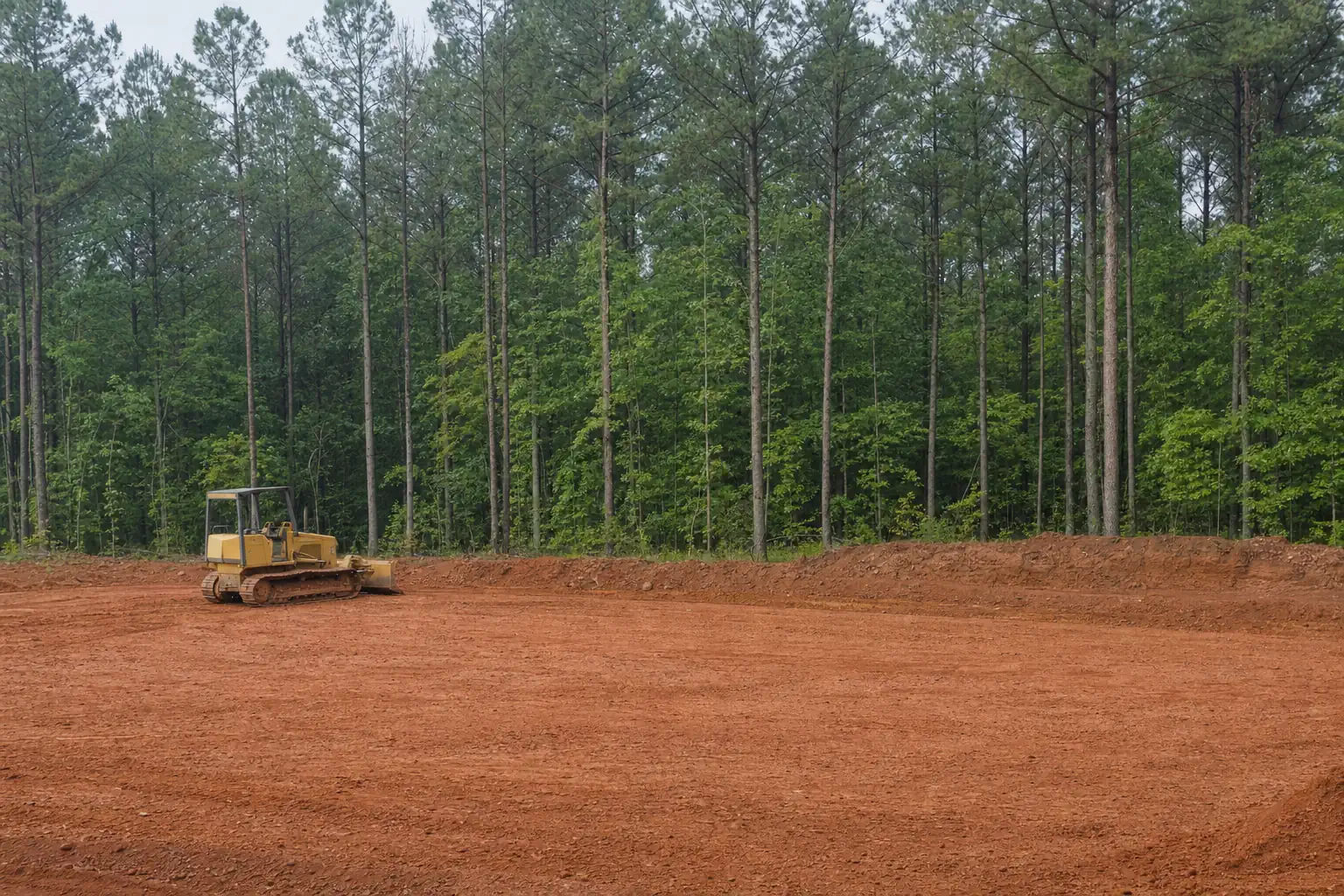
Late fall through winter is clearing season around Cumming. The leaves are off, so rock, old fence and the trees worth keeping show before the machine reaches them. Winter also brings the one real problem: soaked red clay that ruts under a tracked machine. We work the dry weeks, move the date on wet ones and keep the price.
Get on the winter schedule. Quote in one business day.
A January morning on a Forsyth County lot
It rained most of Tuesday. By Thursday the sun is out, the road is dry and the owner is asking whether the machine can come Friday. The answer sits in the ground, not the sky. On a winter morning we walk the lot before the trailer leaves the yard: the drive in, the low side, the creek bottom if there is one. If boots sink and come out carrying clay, the job waits. If the ground is tacky on top and firm an inch down, the machine goes to work.
That walk happens a lot between November and March, and it’s the price of clearing in the season we’d pick for most land around Cumming anyway.
Why winter wins anyway
From mid-November to early March the hardwoods are bare, and you can see the land you’re paying to clear. Rock outcrops, gullies, old fence wire and trash dumped decades ago all show from the road. So do the oaks and poplars worth keeping, which makes the flagging walk faster and the quote sharper. Privet holds its leaves into winter, so a thicket shows up as the green layer in otherwise bare woods.
A few other things line up. Cool days are easier on a crew working a dense thicket all day. Nesting season is months off. A lot cleared in winter is open and waiting when a builder wants to start in spring, and a winter walk gives a spring job the most lead time. Our best time of year to clear land guide sets out every season. For most wooded land here, late fall and winter come out ahead, as long as the clay cooperates.
What winter rain does to red clay
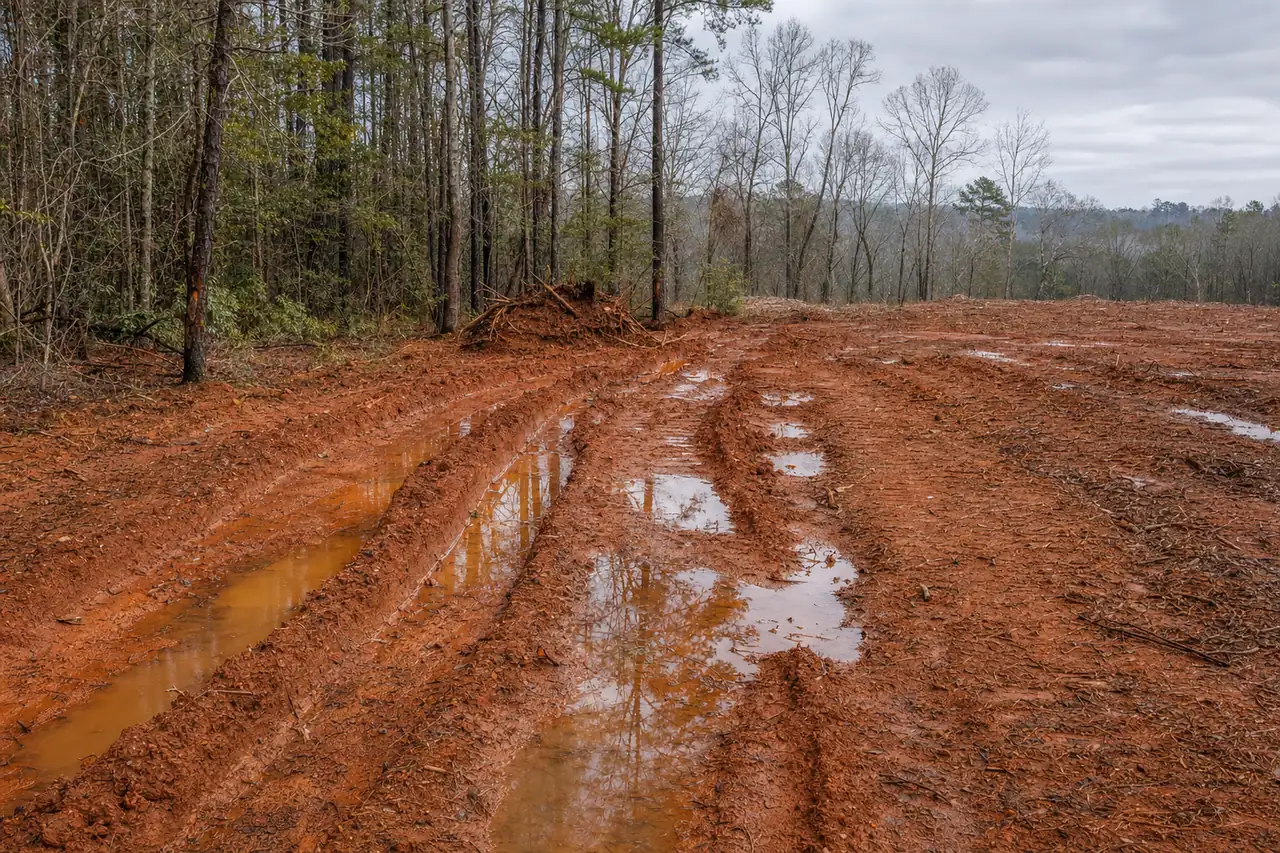
Under most Forsyth County woods sits Piedmont red clay over weathered granite and gneiss. Dry, it carries a loaded track machine all day. The area gets roughly 50 to 55 inches of rain a year, and in winter the low sun and dormant trees pull water out of the ground slowly. Clay that would dry in two days in June can stay soft for a week in January.
Soaked clay turns to grease on top over a soft layer underneath. Tracks spin, sink and cut a groove that gets deeper with each pass. On a slope the machine slides sideways. The ruts then do damage of their own: they channel the next rain downhill and carry your clay with it, and ruts inside the root zone of a keeper tree cut and pack the roots it lives on. The damage to the tree can take a few years to show in the crown.
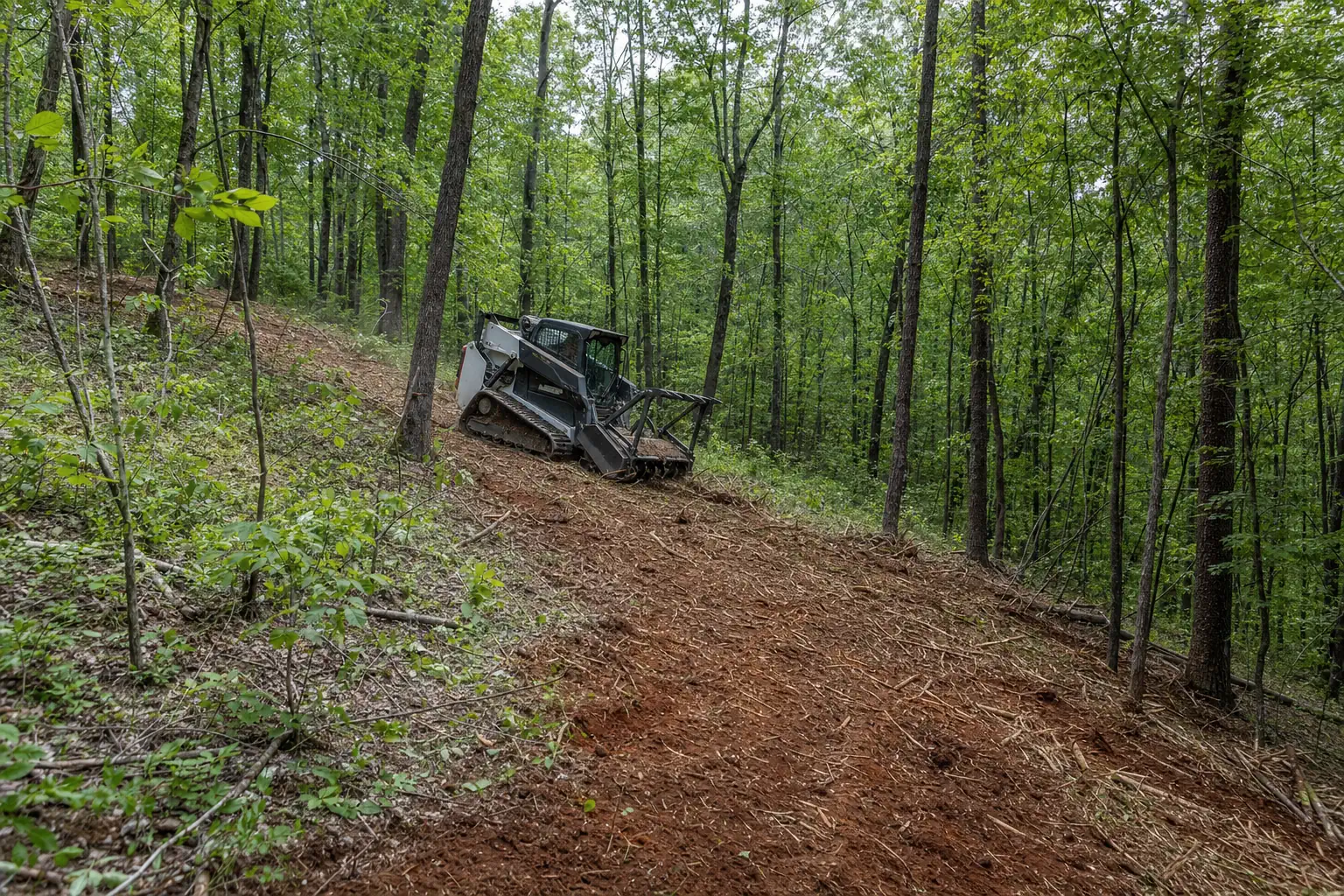
A forestry mulcher has one advantage over a dozer here. It lays a mat of chips ahead of itself and drives on it, which spreads the load on damp ground. That mat does nothing for ground that’s already saturated. More on the ground itself in can you clear land on wet red clay.
Where your land dries last
No lot dries evenly. On the walk-through we look for the spots that will hold a winter job up, so the schedule plans around them instead of finding them with the tracks.
| Spot | Why it stays wet | How we work it |
|---|---|---|
| Creek bottoms and seeps | Water drains to them from the whole slope | Last, or on a dry week |
| North-facing slopes | Little winter sun reaches the ground | After the south-facing ground |
| Flat ground with clay near the surface | Water sits instead of running off | Checked by boot the morning of |
| The way in | Every load crosses it, and yards stay soft | Routed on the walk, off the septic field and well |
| Around keeper trees | Shade, and roots that can’t take a rut | Machine kept off when soaked |
On a bigger tract, that map lets the work go on through a wet spell. Ridges and open uphill ground get cleared while the bottoms dry, and the machine comes back to them later. On a small lot that’s all one slope, a wet week usually means waiting.
Winter rain on a permitted site
If the job disturbs an acre or more, or sits within 200 feet of state waters, it runs under a Forsyth County land disturbance permit. The silt fence and gravel exit go in before the first tree, and the erosion controls get inspected on the permit’s schedule: at least weekly on most sites, and within 24 hours of a half-inch rain.
Permit thresholds, fees and buffer widths are those published by Forsyth County and the State of Georgia as of November 4, 2026. Confirm current requirements with the issuing authority before work begins. This is not legal advice.
In a wet winter those rain inspections come often, and the fence has to be standing and clean for each one. Bare clay is what fills a fence fastest, so a mulched site, with chips over everything outside the pad and drive, gives the fence far less to catch than a scraped one. See how often erosion control gets inspected.
What a rut costs in spring
Track prints in mulch settle out on their own. Ruts deep enough to trip on are a grading job, and grading runs about $1,200 to $3,500 an acre where a whole area needs it. On a slope, a rut that turns into a gully can mean silt fence at $500 to $1,200 an acre on top of that, plus the clay that already left.
Ranges are estimates for Forsyth County and the surrounding area based on job density, terrain, access and acreage. Your written quote is the only price that applies to your property.
Set those against a few days’ wait and the choice is easy. A crew that pushes through soaked ground to hold a date saves itself a return trip and leaves you the repair. A low quote that never mentions weather often turns into a grading bill later. See will land clearing leave ruts.
 Underbrush Clearing: Open the Woods, Keep the Canopy
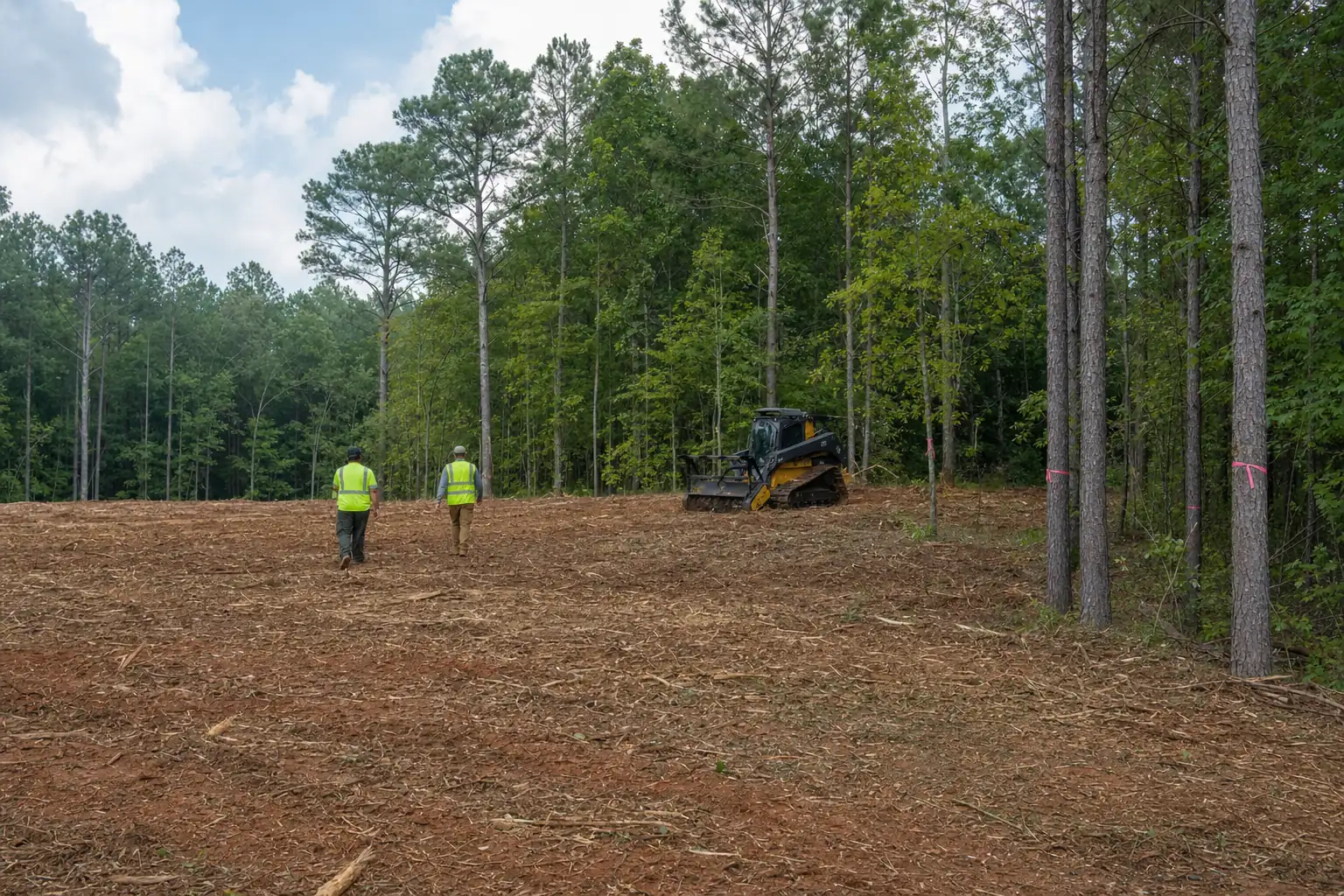 Lot Clearing for New Homes and Small Acreage
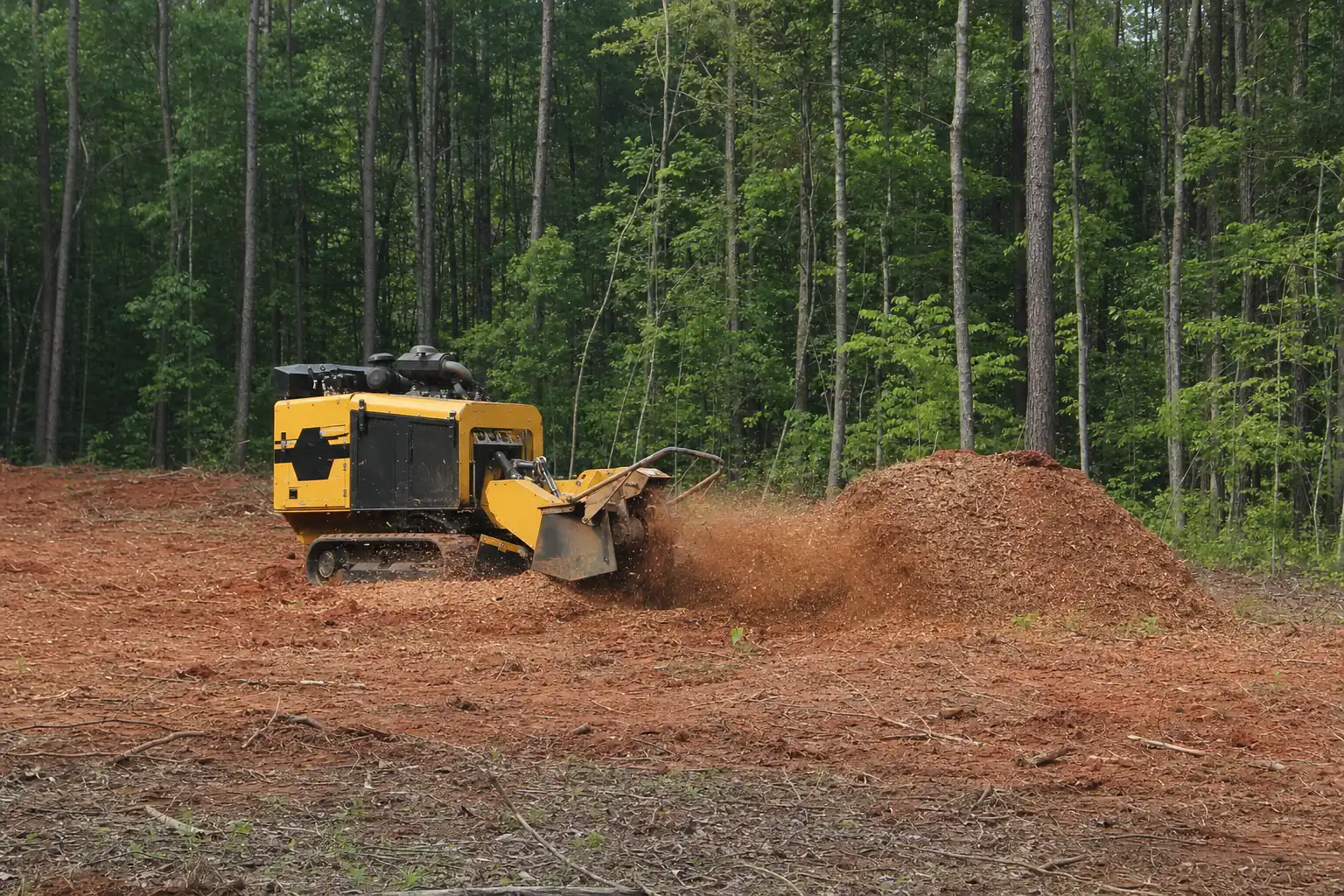 Stump Grinding, Grading and Pad Prep
How we schedule a winter job
- 1Walk it in fallLeaves dropping, keepers flagged, wet spots mapped.
- 2Written quoteScope, finish, price, and how weather delays are handled.
- 3Pencil a dry windowBooked around the forecast and how your ground drains.
- 4Check that morningIf the clay is soaked, we call and move the date, not the price.
Wet weeks stretch the calendar more than the bill. A job with three days of machine time can spread over a couple of weeks in a wet January, and we’d rather tell you that on the walk than on the third phone call. If a builder’s start date or a closing sets the deadline, walk the land with us early enough to leave room for rain. See how long land clearing takes.
Spring comes either way
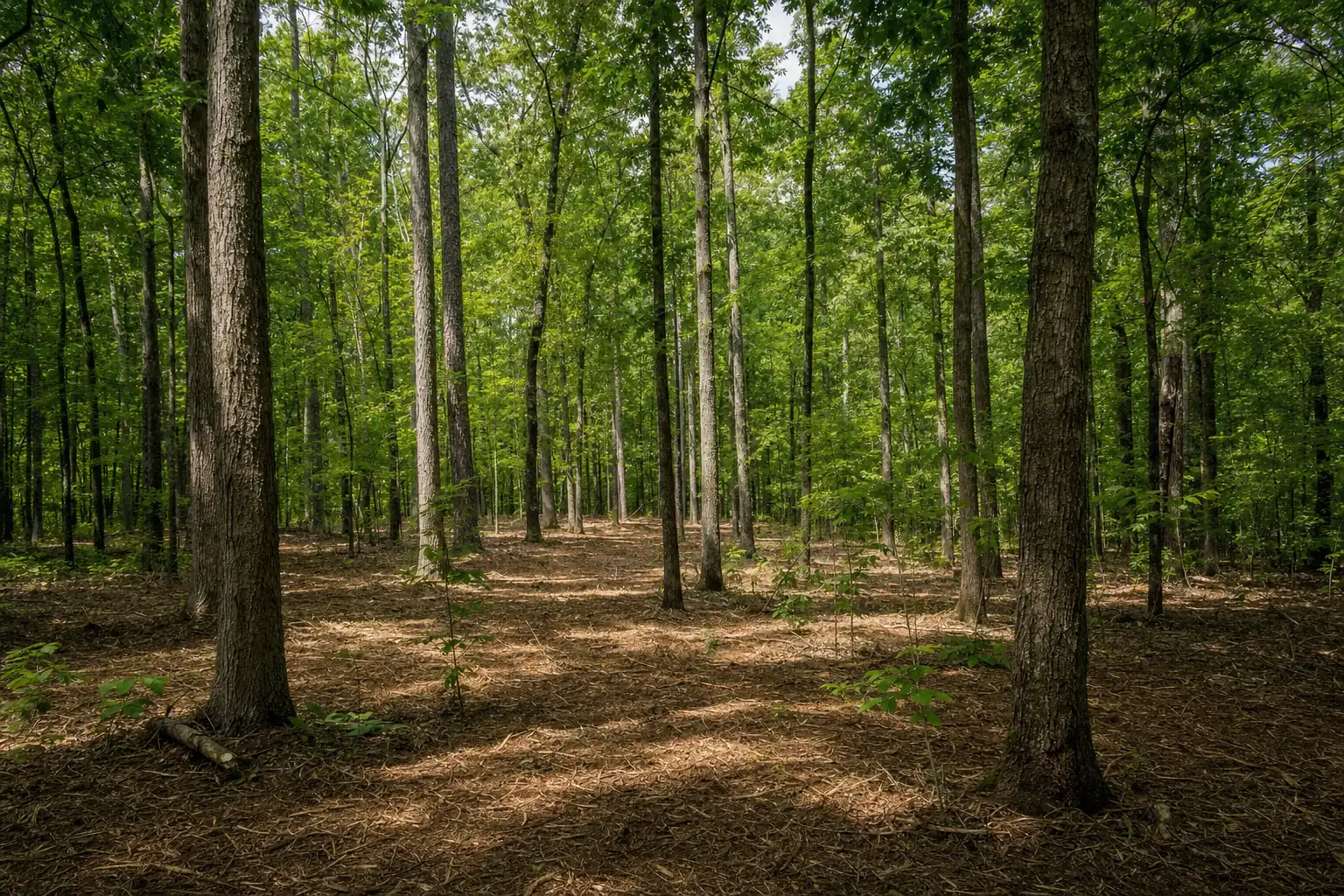
Whatever week the machine finishes, the ground answers in April. Sweetgum, privet and briars sprout from the roots through the mulch, so plan a mowing pass in the first summer; see bush hogging and maintenance mowing. Clear in winter, keep the tracks off soaked clay, and the land you get back in spring is covered, unrutted and ready for what comes next. The rest of how we run a job is on the land clearing page.