Hunting & Timber · 6 min read
Plan the Food Plot in Spring, Clear It by July, Plant It in September
Cool-season food plots in North Georgia go in from late August into September, so the clearing has to be done by July. That gives a soil test and lime time to work. Walk the tract and flag the plot in spring, clear it in early summer, and keep the machines out of the woods once the season opens.
Book this year's plot in one call. Quote in one business day.
The call that comes in late August
Food plot calls spike in the last weeks of August. A typical one: a hunter has a spot picked out at the back of the property, a bag of clover seed in the shed, and a stand already hung where the plot should be. The ground is still woods. He wants it cleared next week so he can plant before the season.
Sometimes we can help. Often the honest answer is that this year’s plot should have been cleared in June, and the best use of the call is to book next summer’s. A cool-season plot in North Georgia goes in from late August into September, and the ground under it needs weeks of work before that. Count backward from planting day and the clearing lands in early summer, with the planning in spring.
What the date you call buys you
The month you pick up the phone decides how much of a plan still fits before the season. This is how it usually plays out on hunting land around Cumming and up toward the Etowah.
| You call in | What fits before planting | What it leaves you |
|---|---|---|
| March or April | A walk with the leaves still thin, plots, lanes and trails flagged, the clearing booked | Every choice still open, one trip for the machine |
| May or June | The plot cleared by July, with stumps handled for how you’ll plant | Time for a soil test and lime before late August |
| July | A plot on light ground, if the schedule and the weather allow | A tight window for lime |
| Late August or September | Lanes on open ground, mowed trail edges, a small plot where the ground is already open | Next year’s plot, planned properly |
The full month-by-month version, with the planting windows for cereals, clovers and warm-season plots, is in the North Georgia food plot calendar. This post is about the three decisions that make that calendar work.
Spring: settle how you’ll plant before anyone clears
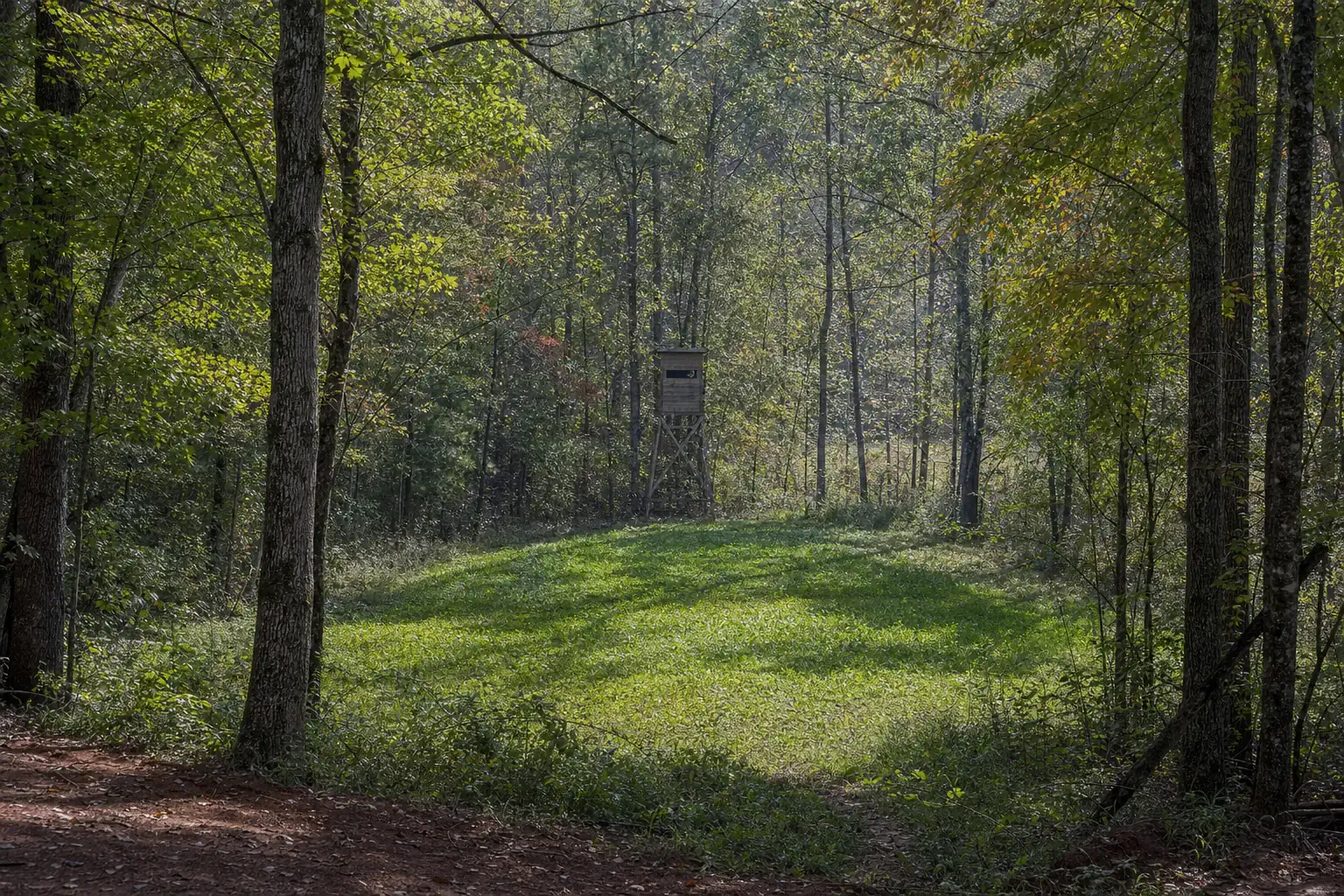
The spring walk is where most of the plot gets decided, and none of it needs a machine. We walk the tract with you, stand at the box stand or the ladder you hunt from, and talk through three things.
- How you’ll plant it. A clover plot you mow and frost-seed for years can keep its stumps at the mulch line. A plot you disk and replant every fall needs the stumps ground below grade or pulled, because the disk catches on every one. That choice changes the clearing more than the acreage does.
- Where the sun hits. A narrow plot boxed in by tall timber grows thin forage. Opening the south edge often does more than making the plot bigger. How big should a food plot be? covers sizing.
- What stays thick. Bedding areas and the screening cover along the road and the neighbor line get flagged first, so the machine never touches them.
We flag plot corners, lane lines and trail routes on that same visit. When the machine shows up in June, the operator works to flags you already agreed to, and you don’t need to be standing there.
Early summer: the clearing itself
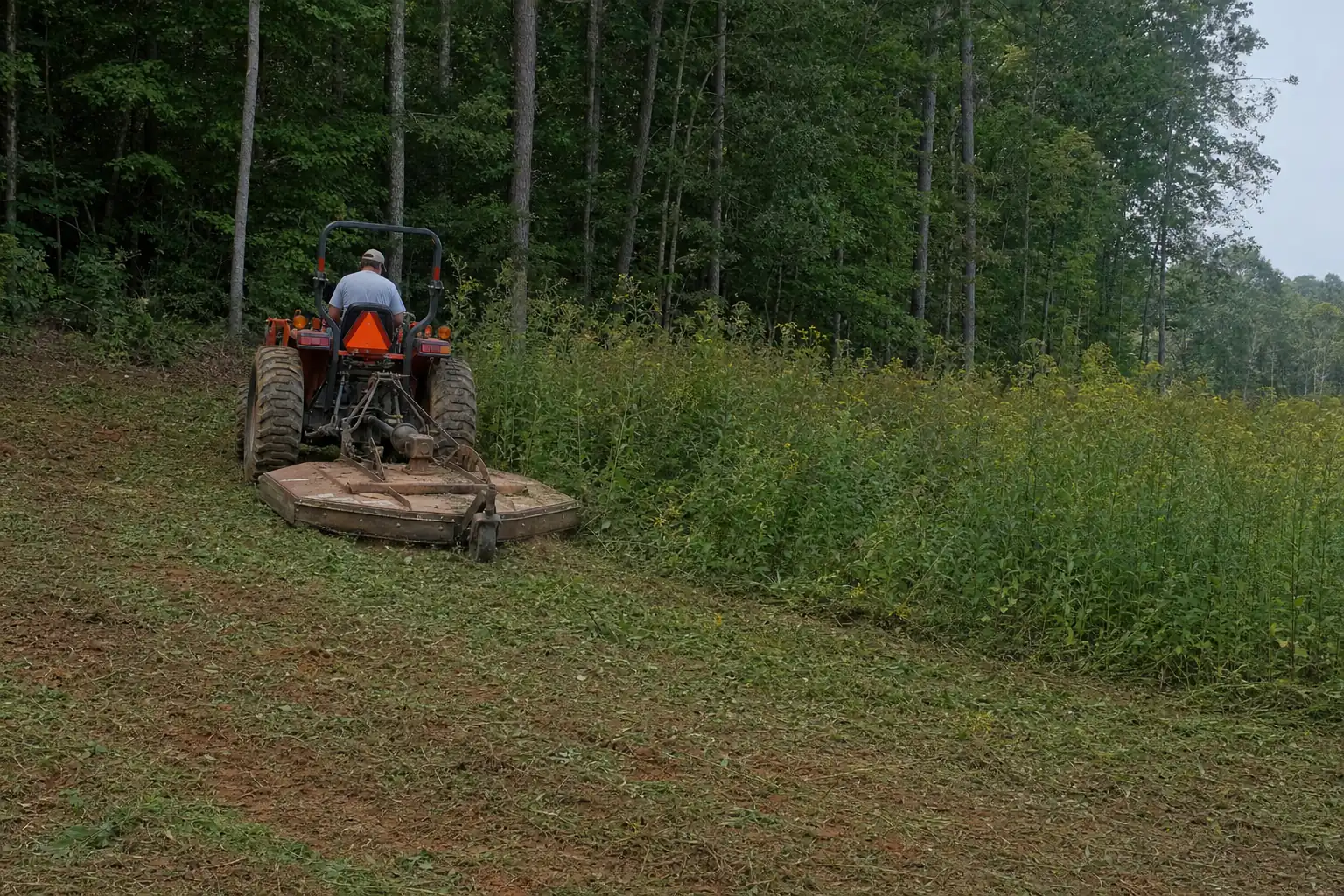
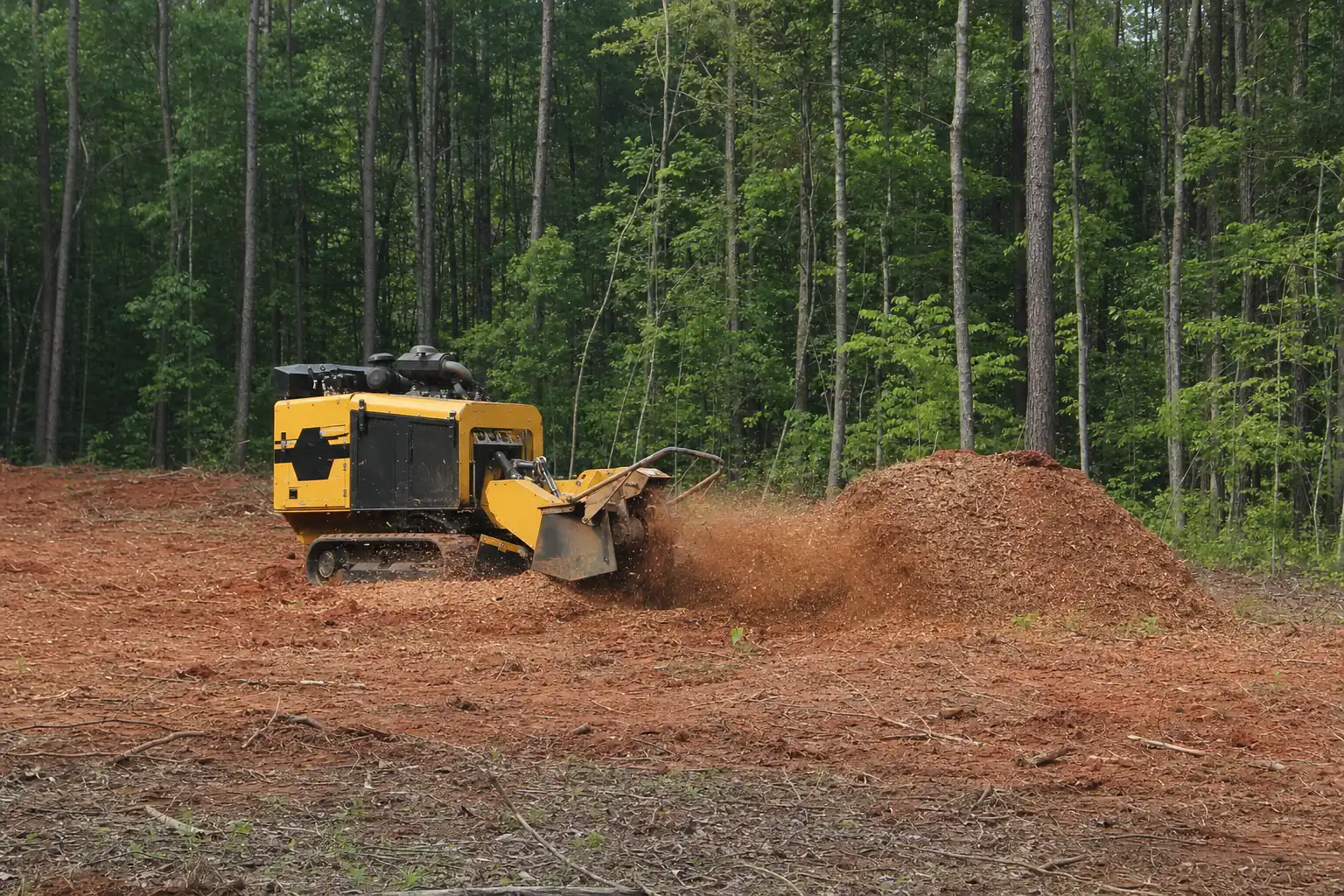
Most plots we open are light brush and mixed growth: privet, briars, sweetgum and saplings, with a few bigger hardwoods along the edge. A forestry mulcher grinds trees under about 8 inches where they stand. Anything bigger gets felled first and the trunk handled on the ground. On a plot you’ll disk, the stumps come out across the seedbed.
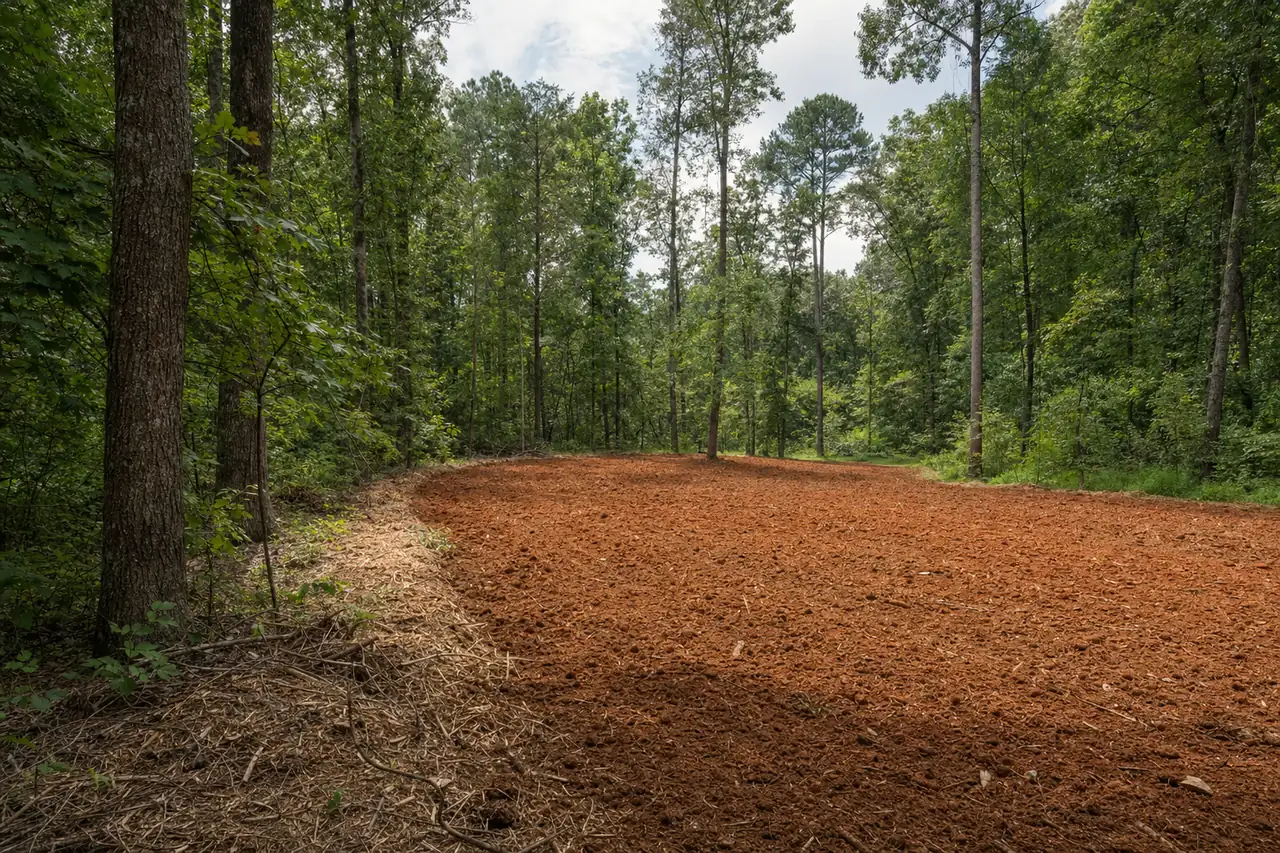
The finish matters as much as the clearing. Seed and lime have to reach the red clay, so a plot gets a finer chip in a thinner layer than a lane or a trail does. On slopes, trails leading to the plot get water bars so summer storms don’t cut a gully down them.
Two rules shape a summer plot job in Forsyth County. Land-clearing burns are banned from May 1 to September 30, so nothing gets piled and burned; we mulch the debris in place anyway. And clearing an acre or more, or any clearing within 200 feet of a creek, needs a county land disturbance permit, with exemptions for farming and forestry. We count your plots, lanes and trails together on the spring walk and tell you which side of that line the plan falls on.
Permit thresholds, fees and buffer widths are those published by Forsyth County and the State of Georgia as of November 4, 2026. Confirm current requirements with the issuing authority before work begins. This is not legal advice.
July and August: why the clearing has to finish early
Pull a soil sample as soon as the plot is open and spread the lime the test calls for. Lime needs weeks in the ground before it does much for a seedbed. A plot cleared in late August and limed that week gets planted into soil that hasn’t changed yet. The forage comes up thin and yellow, and the hunter blames the seed.
That gap between clearing and planting is the whole reason for the July target. It also keeps the machine out of the woods once deer settle into their fall pattern. A tracked mulcher running near your stand in late September moves deer off the very ground you cleared for them. Georgia sets its archery and firearms dates each year in the state hunting regulations, so check the current ones before you schedule any late work.
What a plot costs when you book on time
Plots, lanes and trails price like other mulching work, by trunk size, how thick the growth is, slope and access. Most hunting ground around here falls in the lighter bands.
Plot clearing around Cumming
- $1,200 to $2,500
- Per acre, light brush, privet and saplings
- $2,500 to $4,000
- Per acre, mixed growth with trees 4 to 8 inches
- $400 to $800
- Per acre, stump grinding on the seedbed
- $1,200 to $2,000
- Small-job minimum
Ranges are estimates for Forsyth County and the surrounding area based on job density, terrain, access and acreage. Your written quote is the only price that applies to your property.
Booking in spring helps the price as well as the schedule. Three small plots spread across a tract take more machine time than one plot of the same acreage, because the machine moves between them. Put the plots, the lanes and the trail to the stand on one trip and the haul gets spread across all of it, instead of paying for a rush trip in August.
Next summer: keep the edges from closing in
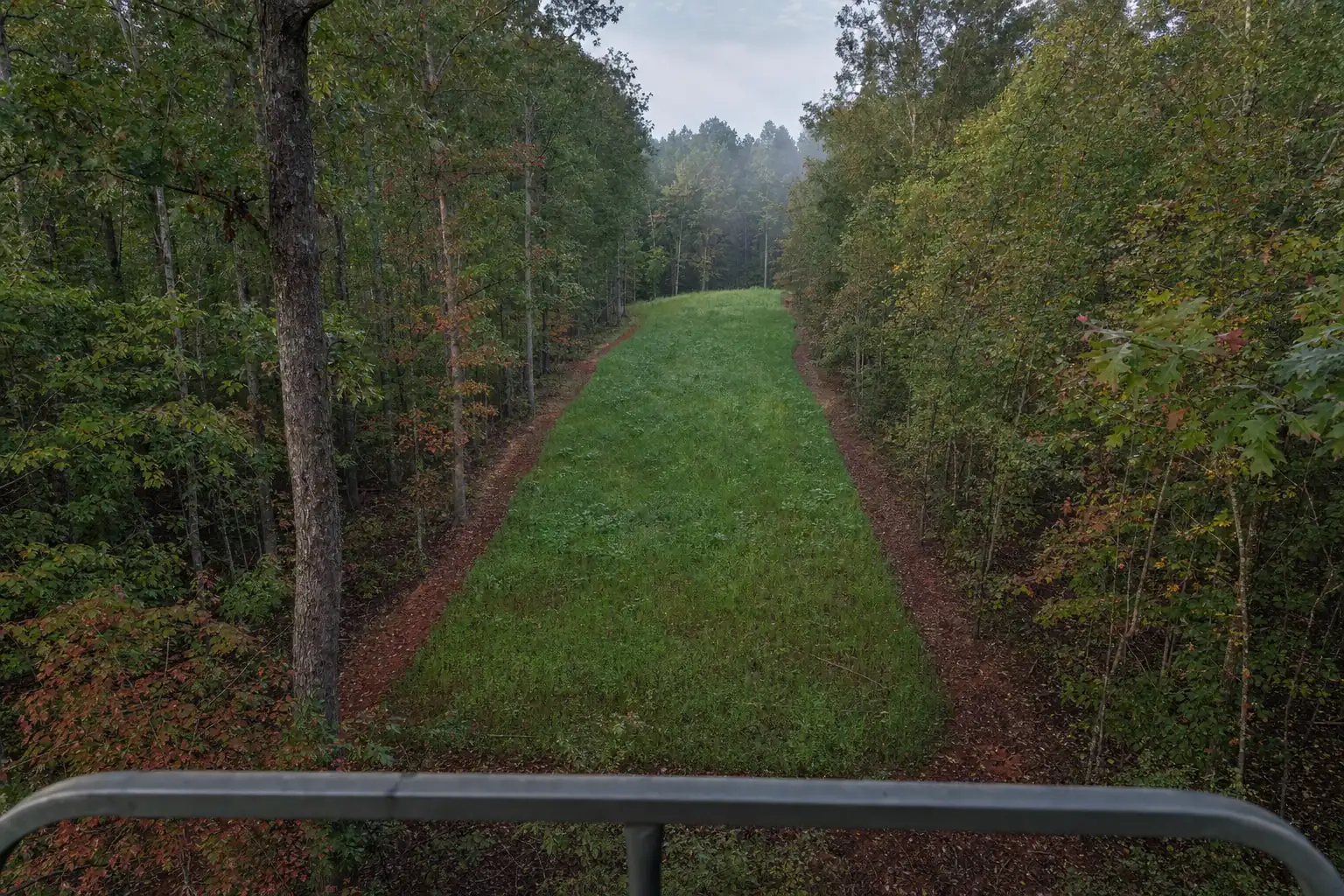
Cleared ground grows back. Sweetgum, privet, blackberry and greenbrier sprout from the roots the spring after clearing, and plot edges creep inward every year if nobody pushes them back. A mowed edge holds. An edge left alone for two seasons is brush again.
One pass in July or August, before bow season, keeps the lanes shootable and the plot margins where you put them. We run that as bush hogging and maintenance mowing, on the same contract as the clearing if you want it. If you’re laying out lanes and trails around the plot this year too, read laying out trails, shooting lanes and screening cover before the spring walk. Everything else we do on a hunting tract is on the hunting and timber land page.