Cost-Share Programs · 5 min read
Does Georgia Really Pay You to Clear Your Land?
Sometimes, and only for forestry. Georgia Forestry Commission programs and federal EQIP reimburse private landowners for named practices on forest land, such as understory mulching, thinning, invasive plant control and firebreaks. Clearing a house lot, a pasture or a building pad falls outside them. Each program sets an acreage minimum, and we confirm current terms with the program office first.
Find out what fits your land, in one business day.
Where the question comes from
We hear it on a lot of first calls. A neighbor mentioned it, or a video said it, or a hunting buddy got a check from the state: Georgia will pay you to clear your land. The person on the phone usually has a wooded lot behind the house and wants to know how to sign up.
The real answer is narrower than the rumor. Georgia and the federal government run cost-share programs that reimburse private landowners for named forestry practices on forest land. They don’t pay to clear land for a house, a lawn or a pasture. The rumor sends people with a two-acre lot looking for money that isn’t there, and it makes some owners with a real forest tract assume the whole thing is a myth and skip a program that fits. Both are worth sorting out before you spend a weekend on applications.
What the programs pay for
Each program publishes a list of practices and the rules that go with it. You do a practice on the list, you document it, and the program reimburses you by its own schedule. These are the programs most Forsyth County landowners ask about, with the figures we can confirm.
| Program | Practices it names | What we can confirm |
|---|---|---|
| Resilient Forest Incentives Program | Understory mulching, non-commercial thinning, site preparation | $150 an acre for understory mulching, $130 an acre for non-commercial thinning, a ten-acre minimum, sign-up June 15 to July 3 |
| Invasive Plant Control Program | Invasive plant control that combines mechanical treatment with herbicide | A three-acre minimum treatment area, an ownership minimum, a cap of $10,000 per landowner |
| Southern Pine Beetle Prevention Program | Prevention work such as thinning crowded pines, and restoring stands after a spot | Terms set by cycle; confirmed before you apply |
| Federal EQIP | Brush Management, Firebreak, Tree and Shrub Site Preparation, Forest Stand Improvement, on Georgia’s forestry practice list | Terms set through your local USDA Service Center |
Program figures and sign-up windows are set annually and are current as of November 4, 2026. We confirm every figure with the Georgia Forestry Commission or NRCS before any application. This page explains how programs work; it is not a guarantee of eligibility or reimbursement.
Those figures change from year to year. We confirm current rates, minimums and dates with the program office before any application, and a figure we can’t confirm stays off our pages. The cost-share programs page covers each program in more depth.
What they don’t pay for
These are forestry programs, and most of the clearing around Cumming is development work. That puts a lot of jobs outside them:
- Clearing to build. A house lot, a building pad, a driveway or a utility run.
- Lawns and pasture. Turning woods into grass isn’t a forestry practice.
- Land under the minimums. A few wooded acres behind a house rarely meet them.
- Work off the lists. Hauling debris, grinding stumps below grade or grading a food plot.
The programs also don’t pay a share of a contractor’s price. They reimburse by their own published schedules, and the schedule sets the amount, not the invoice. That’s why you won’t see a reimbursement figure on a Sawnee quote. The quote prices the work on your land. The program office tells you what it pays after you apply.
Reimbursed, not paid up front
The other catch in the rumor is the word “pay.” Nobody sends a check before the work. The money moves in a set order, and the application is yours as the landowner.
- 1ApplyYou apply in the program's window, or through the USDA Service Center for EQIP.
- 2Get acceptedThe program office reviews the application and decides.
- 3Do the workThe practices get done and documented on the ground.
- 4ClaimYou submit the claim, and the program reimburses you by its schedule.
The order matters. Ask the program office before you start any work you hope to claim later, because its rules on timing are the ones that count. The full sequence, with who owns each step, is in how the application actually works.
Who it fits around Forsyth County
The landowners who qualify here tend to hold the bigger wooded tracts: pine stands out toward the Etowah side of the county, hunting land up toward Dawsonville, family acreage that came down through an estate and hasn’t been managed in years. Many of them don’t live on the land.
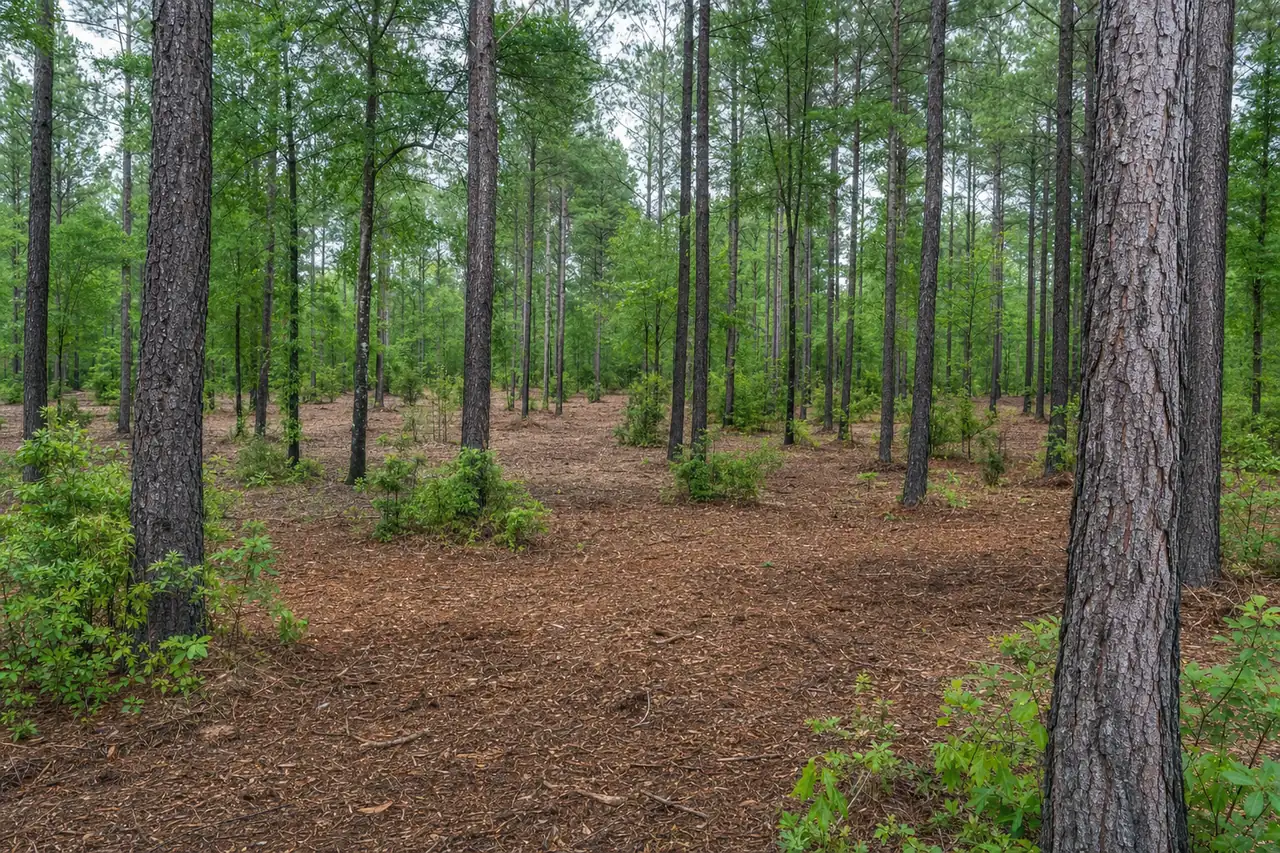
The homeowner with privet across two back acres usually falls short of the Invasive Plant Control Program’s treatment area. A neighbor with a forty-acre pine tract and privet in the creek bottom may well meet it, subject to the program office confirming the ownership minimum. The program office decides in every case. Who qualifies for Georgia forestry cost-share walks through the tests, and the acreage minimums answers the size question.
Where forestry mulching fits
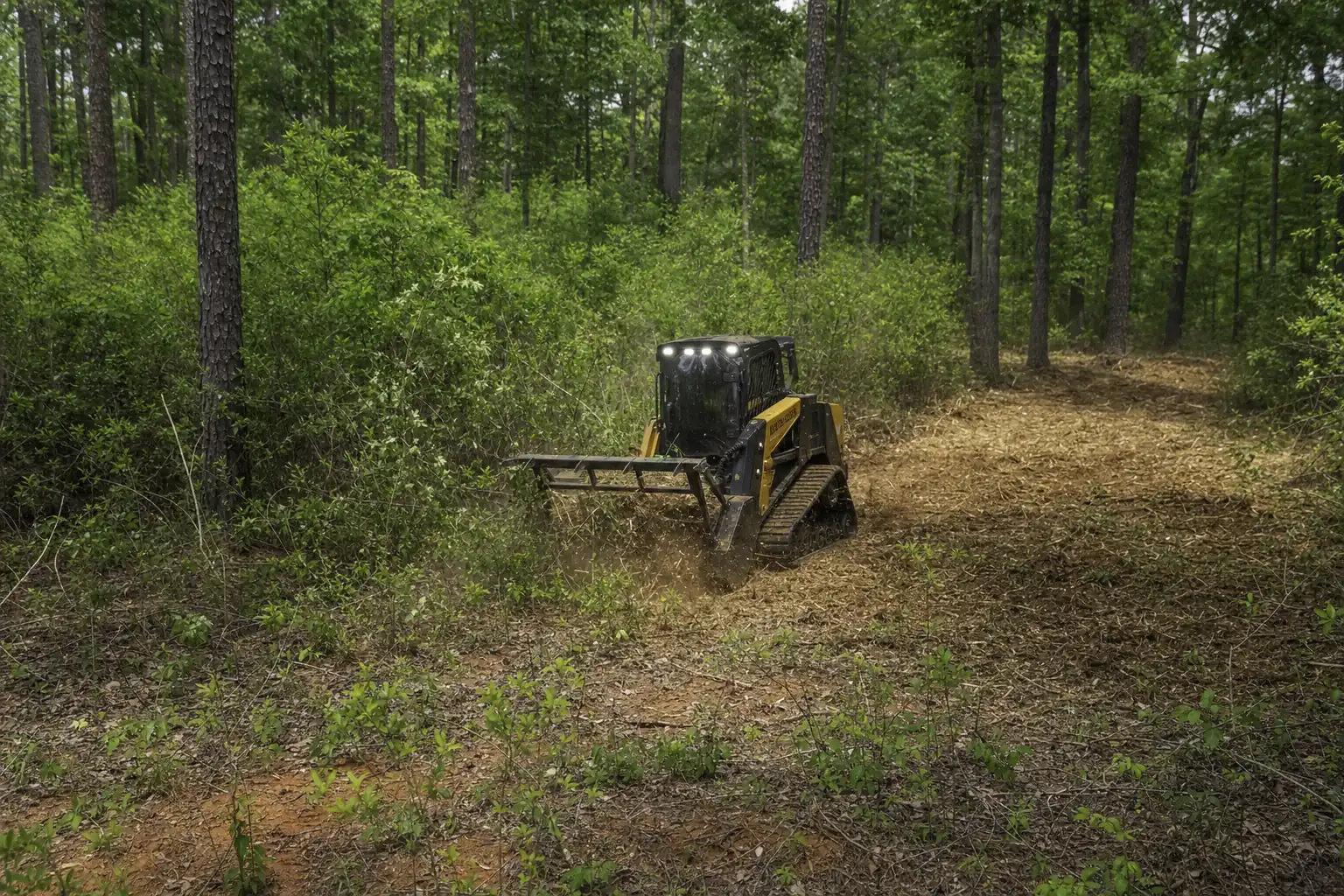
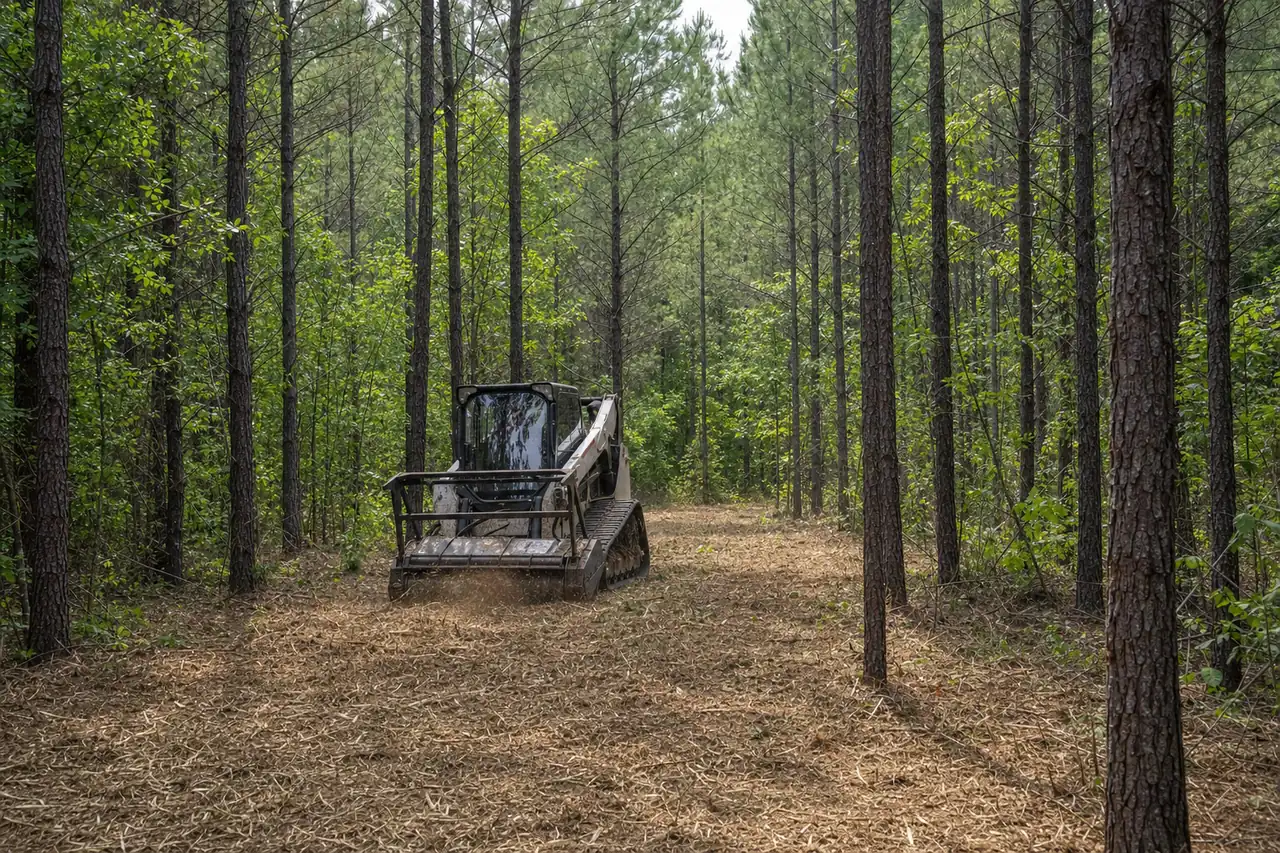
Most of what we do is forestry mulching, so people ask whether the programs pay for mulching. The state’s Resilient Forest Incentives Program lists understory mulching on its schedule: brush and small hardwoods under a standing canopy, ground in place. Federal EQIP works differently: the program office decides which methods meet each practice’s standard. We describe what a practice covers and which of our services does that kind of work, and the office makes the call. More in does cost-share cover forestry mulching?
Mulched ground under a pine stand sprouts back in hardwood within a season or two, so plan for a follow-up pass or maintenance mowing on the lines and edges you want kept open.
A plan needs more than one machine
When a forest tract does fit, the plan rarely stops at one practice. A forester walking a pine tract might call for thinning in the young stand, understory mulching under the older pines, firebreaks around both and privet treatment along the creek. Each of those takes a different machine or a different crew.
A single-machine operator does the piece their machine does and tells you to hire three companies for the rest, each on its own schedule with its own invoice for your file. We run the whole plan on one contract, with one point of contact, and itemize the invoices by practice so each one sits on its own line with its acres or feet. You still file the application and the claim yourself. We do the work and keep the records the program asks for.
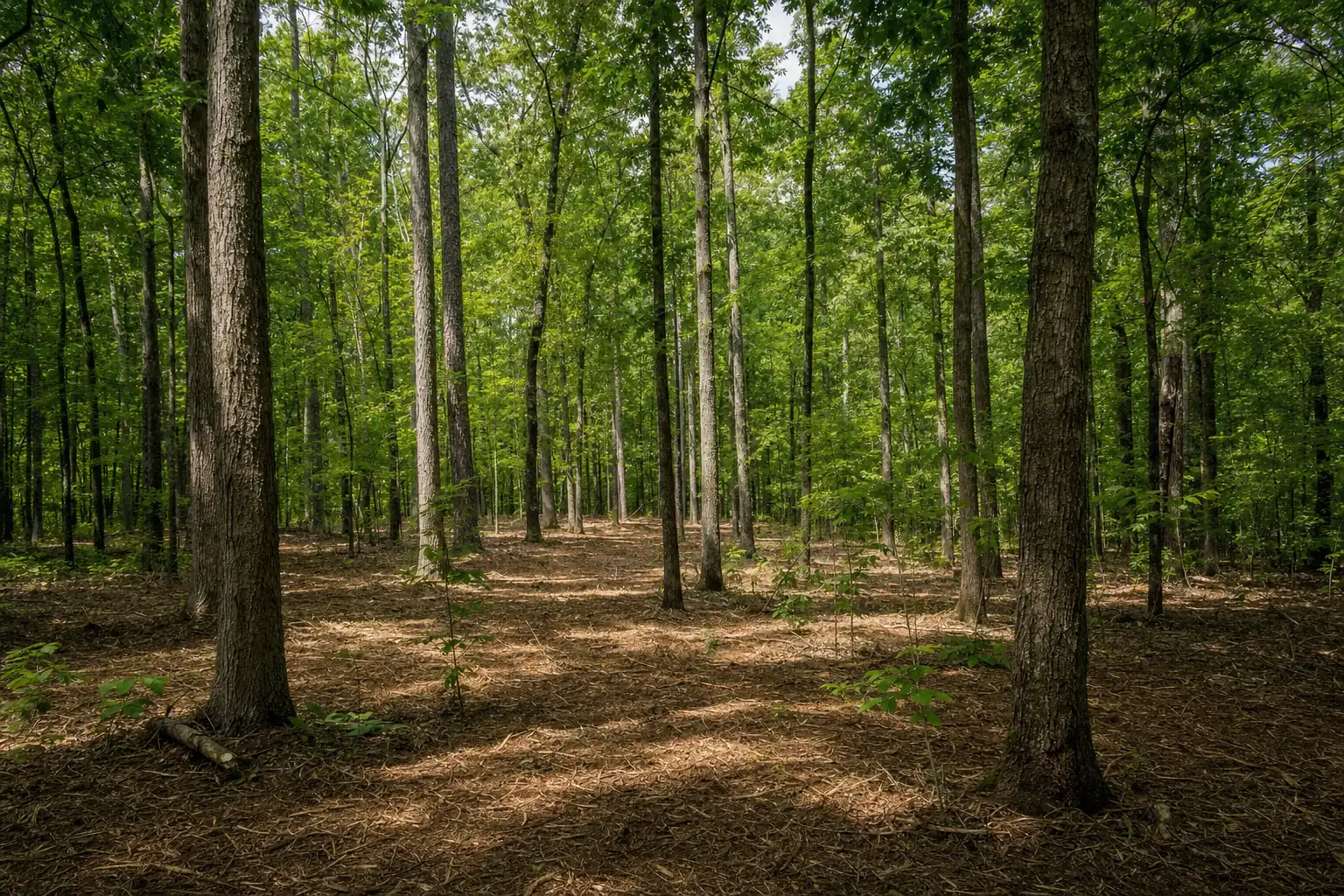 Underbrush Clearing: Open the Woods, Keep the Canopy
 Timber Stand Improvement and Post-Harvest Site Prep
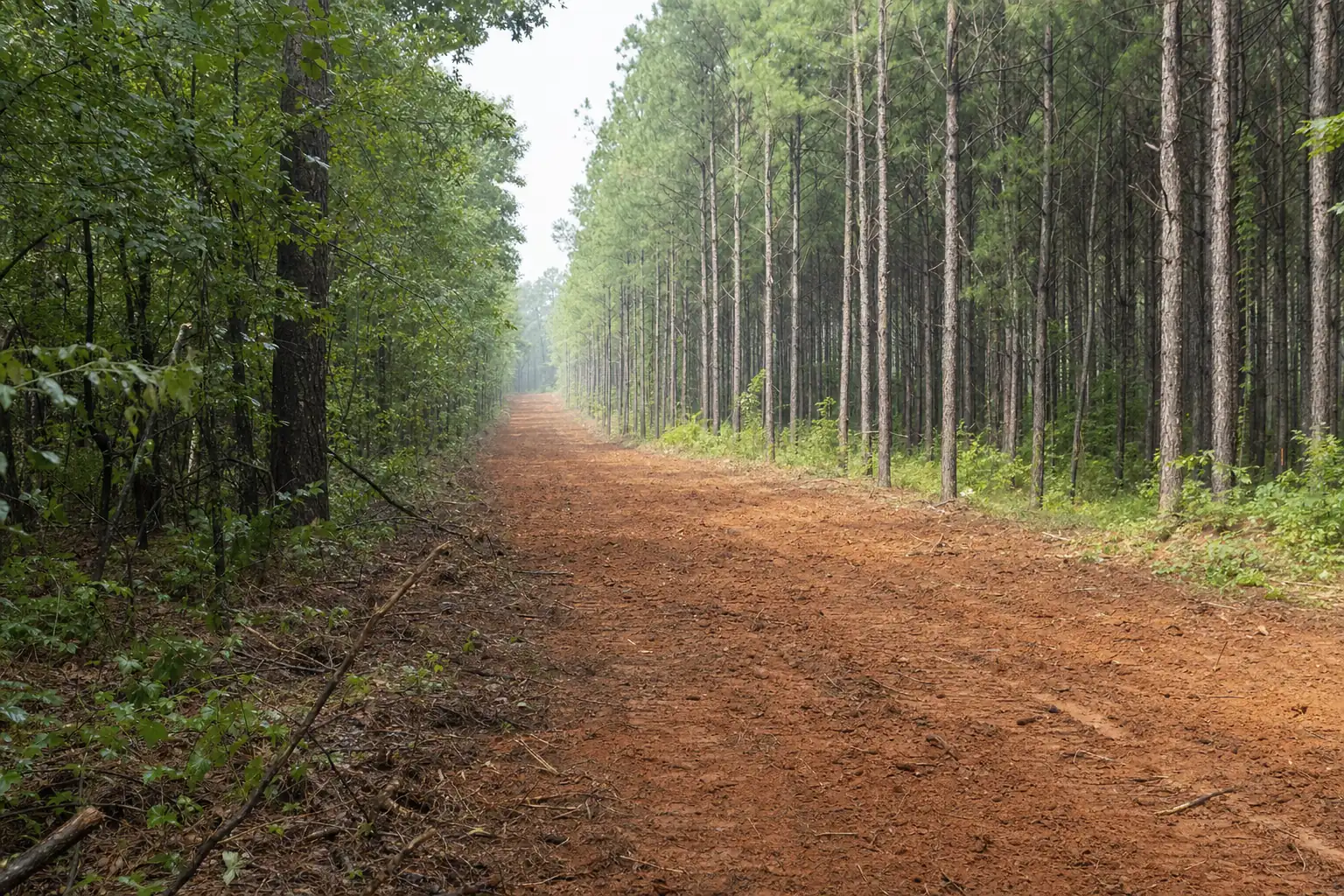 Firebreak Installation
The short answer for your land
If you own forest land over the minimums and the work fits a named practice, a Georgia or federal program may reimburse you for it by its own schedule, after you apply and do the work. If you’re clearing a house lot, a pasture or a few acres behind the house, the programs don’t apply, and the job gets priced like any other. We tell you which case you’re in on the first walk, before anyone files anything.